
Vitaliy M. invades the Sierra Club
-

myles - Posts: 632
- Joined: Fri Oct 05, 2001 8:23 am
- Thanked: 275 times in 175 posts
Re: Vitaliy M. invades the Sierra Club
My understanding is that Clyde was fired from his teaching post after firing "at" some kids joy-riding in his car. Someone is said to have quipped later that he if Clyde had really been shooting at them, someone would have been hit.
-

simonov - Posts: 1395
- Joined: Thu Mar 23, 2006 3:07 pm
- Thanked: 786 times in 451 posts
Re: Vitaliy M. invades the Sierra Club
The fact remains, he was a cranky old bastard.
Nunc est bibendum.
-

Vitaliy M. - Posts: 1015
- Joined: Mon Mar 28, 2011 1:23 am
- Thanked: 288 times in 216 posts
Re: Vitaliy M. invades the Sierra Club
If you only knew how bummed I was to see other people taking it home that morning. If we did not go to all you can eat breakfast and were an hour early... : ( cutest kitty ever. Hope he is happy with those people..
-

Kahuna - Posts: 396
- Joined: Sun Jul 01, 2012 4:43 am
- Thanked: 153 times in 105 posts
Re: Vitaliy M. invades the Sierra Club
Read the link above. It actually gets the story right.
Pavlik's Book
 sources were gathered from Sierra Club records, for the record. Look at the bibliography in the back.
 Skewed towards the SC's position evidently.
The Manning (William) Family and Glenn Dawson are the first to state differently as to the actual course of this particular incident and more in line to what I posted he. Both were long very close acquaintances with Norman. Which as some may actually know, he did not have too many of. Both I have had personal contact with and asked them directly about what the REST OF THE STORY concerning this incident.
Like everything in this world of bio's, sometimes the authors DO NOT research their facts too in depth.
But then don't take my word for it. Glenn Dawson is always warm to seeing anyone at his Nursing Home in Pasadena and Bill Manning still lives in Mammoth and loves sharing his personal stories of having Norman baby sitting his ass till he was 12 years old at his home outside of Big Pine.
For the record, Andy Selters is in the process of writing a far more factual BIO on Norman. Last time I spoke to Bill Manning (who btw was my Boss at the Mammoth/Yosemite Airport and Shipmate from my tour in Antarctica in the early 80's), he is more than available to share his personal side of the story about his 12 years of direct contact with Norman. Norman rented a single bedroom shack from Bills folks for over 15 years at their ranch outside Big Pine.
For the record as well.... anyone that knows anything about Norman, knows straight up that he was most often more bitter about being around city folks that he was pleased. Ansel Adams described him the best in this book, Conversations with Ansel Adams:
Norman was consistently elusive and persnickety. Never really finding time for any of us. He kept to his classics. When he did, he was quick at demanding and had no time for intolerance.
-

AlexRts - Posts: 14
- Joined: Mon Jun 04, 2012 4:35 am
- Thanked: 7 times in 5 posts
Re: Vitaliy M. invades the Sierra Club
Is this event still happening? Anyone planning to go?
-
Vitaliy M. - Posts: 1015
- Joined: Mon Mar 28, 2011 1:23 am
- Thanked: 288 times in 216 posts
Re: Vitaliy M. invades the Sierra Club
Yes, although the thread was hijacked, the event will still happen. I know a few members who will show up. Not sure how many more will...
-

clmbr - Posts: 678
- Joined: Sat Jun 02, 2007 6:21 am
- Thanked: 131 times in 91 posts
Re: Vitaliy M. invades the Sierra Club
If anyone drives from San Francisco and have an available seat or wants to carpool, PM me. I’m located near SFSU.
Thanks
Thanks
-

mrchad9 - Posts: 4545
- Joined: Thu Jul 02, 2009 12:01 am
- Thanked: 1338 times in 911 posts
Re: Vitaliy M. invades the Sierra Club
You jump crevasses on glaciers solo but partner up to drive from San Francisco to Palo Alto?
Zip-a-Dee-Doo-Dah!
Zip-a-Dee-Doo-Dah!
-

kevin trieu - Posts: 979
- Joined: Mon Mar 21, 2005 5:59 pm
- Thanked: 88 times in 64 posts
Re: Vitaliy M. invades the Sierra Club
I'm flying back from the Himalayas to attend this historic event.
-
simonov - Posts: 1395
- Joined: Thu Mar 23, 2006 3:07 pm
- Thanked: 786 times in 451 posts
Re: Vitaliy M. invades the Sierra Club
kevin trieu wrote:I'm flying back from the Himalayas to attend this historic event.

Nunc est bibendum.
-
Vitaliy M. - Posts: 1015
- Joined: Mon Mar 28, 2011 1:23 am
- Thanked: 288 times in 216 posts
Re: Vitaliy M. invades the Sierra Club
clmbr wrote:If anyone drives from San Francisco and have an available seat or wants to carpool, PM me. I’m located near SFSU.
Thanks
If I did not already work in Palo Alto I would give you a ride. If you take BART, I can give you one back for sure.
-
clmbr - Posts: 678
- Joined: Sat Jun 02, 2007 6:21 am
- Thanked: 131 times in 91 posts
Re: Vitaliy M. invades the Sierra Club
Vitaliy M. wrote:clmbr wrote:If anyone drives from San Francisco and have an available seat or wants to carpool, PM me. I’m located near SFSU.
Thanks
If I did not already work in Palo Alto I would give you a ride. If you take BART, I can give you one back for sure.
BART to Palo Alto? Is it even possible? Thanks anyway.
mrchad9 wrote:You jump crevasses on glaciers solo but partner up to drive from San Francisco to Palo Alto?
Zip-a-Dee-Doo-Dah!
It looks like I will be traveling solo again


-
clmbr - Posts: 678
- Joined: Sat Jun 02, 2007 6:21 am
- Thanked: 131 times in 91 posts
Re: Vitaliy M. invades the Sierra Club
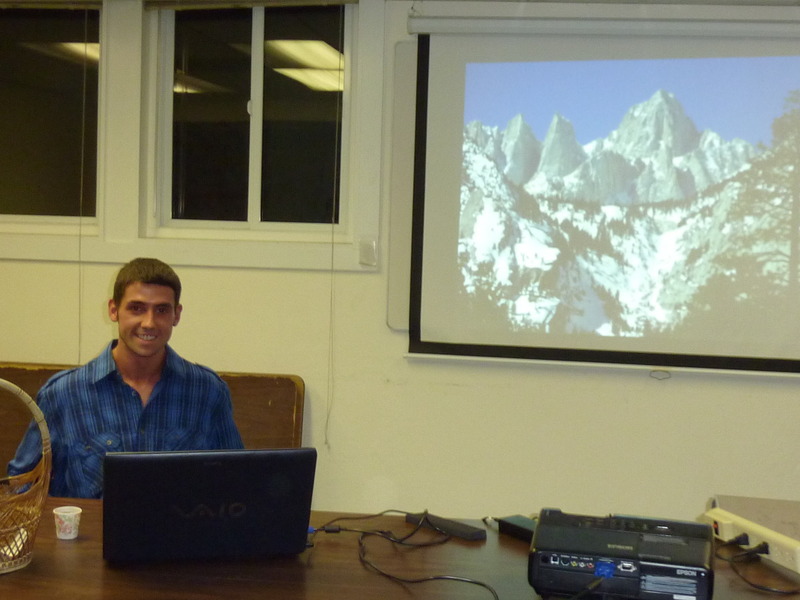
This presentation was a nice event with various choices of sweets to stay energized. I've finally met Vitaliy and Chad in person. Vitaliy presented a lot of slides from his rock climbing accomplishment (5.7 -5.10+) over (only) the last two years. And I mean a lot. It seems like if he is not working, he is climbing.
Good work, keep it up. I hope to see your Himalayan presentation in the future.
It was nice meeting you guys.
Good work, keep it up. I hope to see your Himalayan presentation in the future.
It was nice meeting you guys.
-

Bob Burd - Forum Moderator
- Posts: 4271
- Joined: Sun Jul 22, 2001 10:42 pm
- Thanked: 572 times in 296 posts
Re: Vitaliy M. invades the Sierra Club
He takes great photos and quite an entertaining presenter. It would seem he's a pretty good mountaineer, too. As an aside, Hamik will be happy to know that Vitaliy has found him a new girlfriend named Lisa.
-
Vitaliy M. - Posts: 1015
- Joined: Mon Mar 28, 2011 1:23 am
- Thanked: 288 times in 216 posts
Re: Vitaliy M. invades the Sierra Club
Thank you all for coming out, and Sierra Club for inviting/hosting. Even though it was a bit stressful (speaking in front of an-audience), I had fun meeting some of you for the first time, and catching up with a few other people. Would be cool if this event started earlier and we had more time to socialize, and go home earlier (I like my sleep). Since I prepared to present for two hours, there were a lot of stories I had to skip to show majority of the photos. Had another set of pictures (nature/climbing) from Yosemite Valley/Tahoe that were quite nice too, which I skipped. Hopefully the photos will encourage more people to get out for climbs/hikes in Sierra and Bugaboos. Really photogenic spots. Also, thank American Alpine Club for providing a grant (Live our Dream) for our trip.
Would be great to have meetings where more people share photos from their trips etc. I like social events like that. Conrad Anker will have a slide show in Berkeley today, but I will not be able to make it.
Not sure if I will travel to Himalayas any time soon. To be honest, there is so much I want to do in Sierra (from classic climbs, to hikes (still have not done Rae Lakes Loop!!), to obscure climbs, and unclimbed walls 25 miles from the nearest trailhead) that it will keep me busy for a while. Aside from popular peaks, there are soooooooooo many worthy hikes/climbs around here…So if I do another slide show any time soon, it will most likely be about our local peaks. Maybe next time I will be a bit less nervous (of speaking in-front of an audience), but still excited about showing photos (which I am sure I will be).
Would be great to have meetings where more people share photos from their trips etc. I like social events like that. Conrad Anker will have a slide show in Berkeley today, but I will not be able to make it.
Not sure if I will travel to Himalayas any time soon. To be honest, there is so much I want to do in Sierra (from classic climbs, to hikes (still have not done Rae Lakes Loop!!), to obscure climbs, and unclimbed walls 25 miles from the nearest trailhead) that it will keep me busy for a while. Aside from popular peaks, there are soooooooooo many worthy hikes/climbs around here…So if I do another slide show any time soon, it will most likely be about our local peaks. Maybe next time I will be a bit less nervous (of speaking in-front of an audience), but still excited about showing photos (which I am sure I will be).
-
- Related topics
- Replies
- Views
- Last post
-
- Vintage Sierra Club Bulletins
by bearflag » Sat Jun 12, 2010 10:38 pm - 0 Replies
- 5309 Views
- Last post by bearflag

Sat Jun 12, 2010 10:38 pm
- Vintage Sierra Club Bulletins
-
- Laura Molnar's Sierra Club presentation, Jan 11
1, 2by Bob Burd » Thu Nov 04, 2010 5:31 pm - 28 Replies
- 10049 Views
- Last post by ExploreABitMore
Mon Jan 17, 2011 3:16 am
- Laura Molnar's Sierra Club presentation, Jan 11
-
- Sierra Nevada Section/American Alpine Club 1948
by bearflag » Sun Mar 03, 2019 4:56 pm - 0 Replies
- 2450 Views
- Last post by bearflag
Sun Mar 03, 2019 4:56 pm
- Sierra Nevada Section/American Alpine Club 1948
-
- Sierra Club "Recent" History
by MoapaPk » Fri Dec 24, 2010 6:35 pm - 2 Replies
- 2066 Views
- Last post by MoapaPk
Fri Dec 24, 2010 7:48 pm
- Sierra Club "Recent" History
-
- Mountaineering club for souther California???
by Snowslydder » Mon Jan 16, 2012 8:55 am - 9 Replies
- 10503 Views
- Last post by Snowslydder
Thu Jan 19, 2012 7:44 pm
- Mountaineering club for souther California???
Who is online
Users browsing this forum: No registered users and 0 guests