Introduction
Winters in Washington State often can be brutal in terms of lack of sunshine and rainy days. That being said in the few times it is sunny Washington State turns into the ultimate picturesque winter wonderland. The snow that falls during the bad weather days in the winter tends to cling to every rock and tree branch in the mountains which makes picture taking in winter ultimately amazing. That is why I find winter here in Washington to be the most beautiful of all seasons to hike in the mountains. The 10-20% of the time that the the weather is good in winter there is no other range of mountains I would rather want to be in.
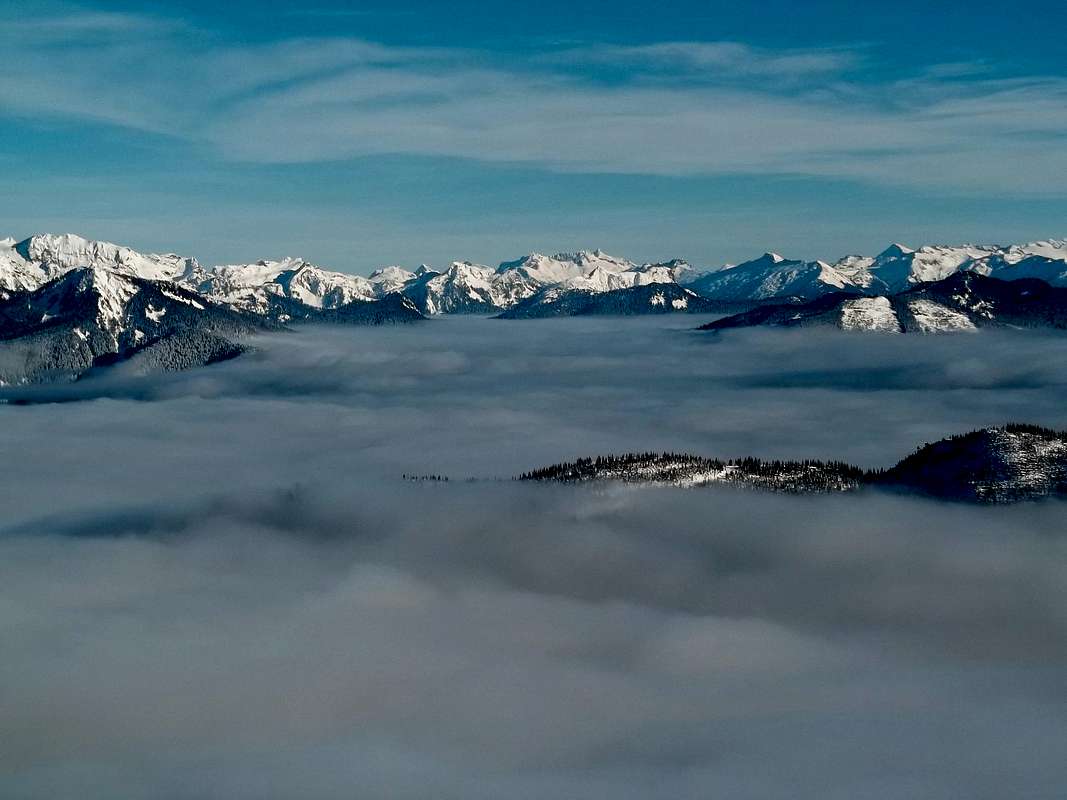
This is especially the case when an inversion layer sets up in the Puget Sound Region. Usually once or twice a year warm air from the south with actually ride up over the cold air in the Puget Sound Region that is trapped at the surface and set a layer of fog or clouds. This can vary from low stratus clouds at 2000 or total fog in the city. What lies above the inversion layer is clear bluebird sky and warmer temperatures. This inversion layer is also a photographers dream in that it often covers the lower elevations with clouds and saves the higher mountains for amazing views. If a hiker or climber can get hit this inversion layer right, he will be in for an amazing treat.
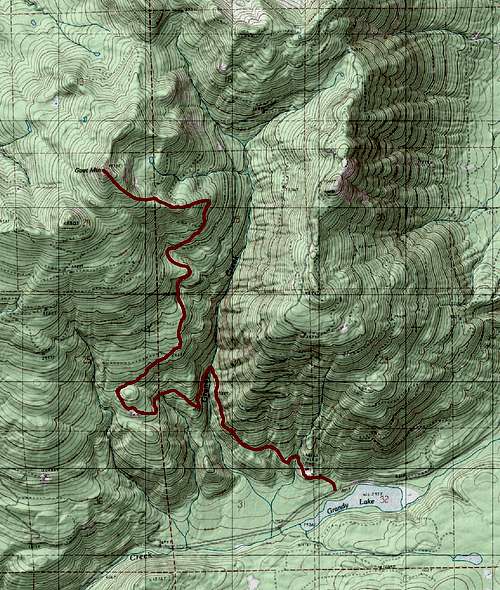
![Map of the Route]() Map of our route up Goat Mountain.
Map of our route up Goat Mountain.Zephyr2us and I noticed this instantly when planning out our week. The weather forecast for the week actually called for the inversion to start to happen. We had been looking at a couple trip reports and we took note of this mountain and decided to give it a go. Our only concern was that we would go above the inversion layer which was supposed to be 4500 feet. We specifically picked this mountain because we knew that there had been a couple of other people on the mountain already and we really had no desire to spend the whole trip kicking in steps. Knowing from what we saw Goat Mountain was a proven good snowshoe we decided to head for the mountain.
Climbing Up In Hopes For Some Sunshine
We got to the trailhead and predictably the weather was cloudy and dark. It really did not look very desirable for hiking but we were hope for that weather break. The start of this trip was a real slog up the forest road. We started about 800 feet and we hit our first little dusty literally immediately. However we would have to go all the way up to 1500 feet before the snow was significant enough to warrant snowshoe. During the road slog up we were greeted with some occasional nice pictures of the lower valley and an occasional cloud break on a larger mountain but the weather was still very cold.
![First view from the roadwalk]() Some views below the inversion.
Some views below the inversion.
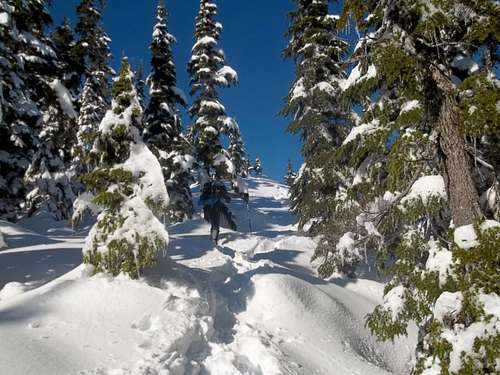
The long road snow slog was a little annoying but the beautiful flocked treats and the occasional breaks in the overcast kept us hopeful. At about 3500 feet we entered the fog level. This was right about the elevation we left the snow slog and headed up the mountain. We decided to take gentler way up the mountain which even though it was slightly beaten in it wasn’t all that gentle. Each step at this point was quiet tough and our hopes for good views started to diminish.
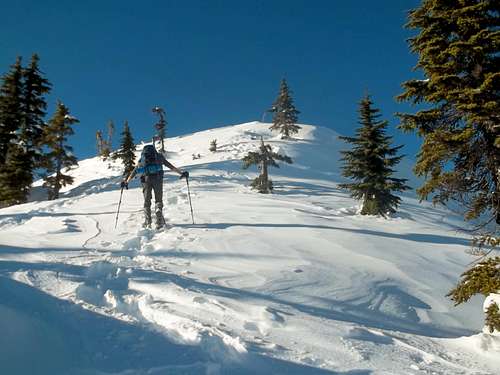
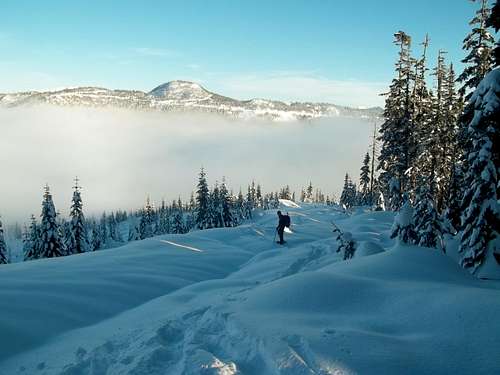
![Typical flocked trees on the higher sections of the mountain]() Hitting the inversion layer Hitting the inversion layer | ![Zephyr2us snowshoeing up the mountain]() Powering above the inversion layer. Powering above the inversion layer. |
All of the sudden we noticed blue just above us. At about 4000 feet we got above the inversion layer and the blue sky above greeted us with a warm and amazing sunshine. This lifted both of our spirits and though we were on our steepest terrain of the day we actually were moving our quickest on the trip. Views of the surrounding countryside were excellent from what we saw in the trees and it inspired us more to get to the summit. Soon we could see the summit area in sight.
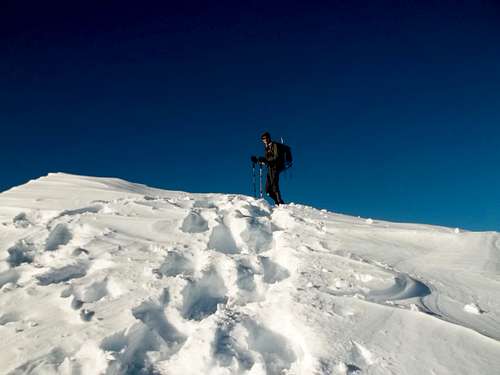
![The summit of Goat Mountain]() Almost on the summit.
Almost on the summit.The Warmth of the Summit
![Zephyr2us on the summit]() Zephyr2us on the summit of Goat Mountain. Zephyr2us on the summit of Goat Mountain. | ![Views from near the summit]() A view while nearing the summit. A view while nearing the summit. |
We continued following the tracks all of the way to the summit where excellent views awaited. We noticed the 50 foot rock outcrop that awaited us and from below it looked quiet intimidating. As we got closer though we noticed that the there was a good path to the summit. The snow started to consolidate which is really makes it easier for that last 30-50 foot section to the summit. We followed the path to the summit where we were greeted with excellent views of the northern Cascade front.
![Looking down the summit ridge]() A look down the ridge. A look down the ridge. | ![Little Billy from Goat Mountain]() A shot back at Little Billy. A shot back at Little Billy. |
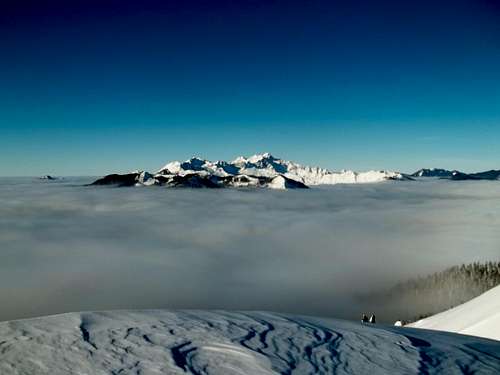
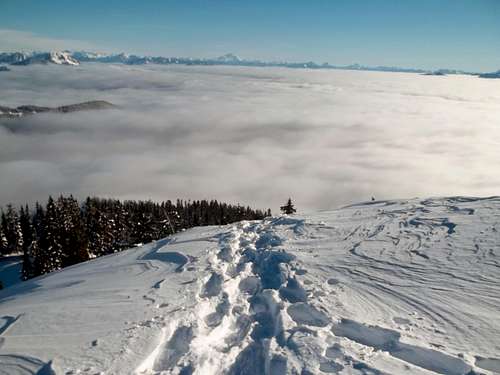
With the inversion layer being about 4000 feet, the cloud layer seemed to separate us from civilization below. Most of the logging was out of sight leaving us dramatic views of Mount Baker, Mount Shuksan and much of the Cascade front. We could see Glacier Peak, Sloan Peak and Whitehorse off in the distance and even see a distant shot of Mount Rainier. The above the clouds effect was in full force on this mountain and we were greeted with incredible views. We had to stay away from the large cornice that hugged the western side of the summit. It looked stable but we didn’t exactly go over to it and test it.
Unfortunately Heading Back into the Clouds
![Looking down our route]() Time to head on down.
Time to head on down.
We stopped at the summit and spent some time on it. In the thirty minutes we were up there we noticed the shadow change on the mountains. We also noticed the fact that is was considerably warmer on the summit than in the clouds below. There was no real wind above making this summit visit a real treat. Compared to the rest of the trip and to what we had experienced over much of the winter this was nirvana. We took that time to soak up the sun but once we noticed that we were out of time we knew it was time to head on down.
We headed back down generally the same way we came up with one noted exception.
![Hitting road above the inversion layer]() Back into the inversion layer.
Back into the inversion layer.
Once we hit the road at 3800 feet we took a different shortcut. The inversion level had now lowered to this point and we were just above the fog. This shortcut shortened the trip but it was much steeper and traction was a lot tougher going down. We instantly hit the fog which felt like being hit with ice. We had to battle through a lot of tree trap shrubs and rough areas as we made it down this supposedly short cut. A couple of times I fell in about waist deep of powder and it were tough getting up. I managed but that “shortcut” was no fun going now.
![View from 2500 feet up]() Some views back below the inversion layer. Some views back below the inversion layer. | ![Sun setting on the mountain]() Sun setting in the mountains. Sun setting in the mountains. |
Once down at the road though we knew we had to speed up in order to make the car before sunset. Luckily the trail on the road was well broken in and we were able to speed down the mountain. We took no other shortcuts and outside of a couple new views we spent little time stopping. Once we got past the bulk of the snow we real took on a jogging pace. We took only 20 minutes in the last 1 ½ miles making it back to the car well before sunset. From there we just headed directly on home.
Conclusion
The only unfortunate thing about this trip was that it was the only trip I did during this special event in the Seattle winter. My later hikes were cancelled one by one due to a stomach virus and others giving me late notice about a trip. I think though I hit this mountain though perfectly because if the fog level was lower this trip wouldn’t have been quiet as special. I was glad that at least this one time I was truly able to enjoy this great break in the weather in the Washington Cascades. I want to thank my always reliable climbing friend Zephyr for making another awesome snowshoe. It was yet another great day in the mountains



 Page Type:
 Date Climbed/Hiked:
 Activities:
 Season:






Comments
Post a Comment