

-
 30445 Hits
-
 82.47% Score
-
 15 Votes
 Page Type:
|
Mountain/Rock |
|---|---|
 Lat/Lon:
|
46.95800°N / 121.87726°W |
 Activities:
|
Hiking |
 Season:
|
Spring, Summer, Fall |
 Elevation:
|
5939 ft / 1810 m |

|
Overview
 Tolmie Lookout Seen From The Summit
Tolmie Peak is located in the NW corner of Mount Rainier National Park, overlooking Eunice Lake, which occupies a bedrock basin scoured by ice approximately 15,000-20,000 years ago. Tolmie Peak is a great day-hiker's destination and offers just the right mix of splendor and accessibility to attract summertime crowds, particularly on weekends.
Of all the lookout peaks in Washington State, only a couple offer such an up-close unobstructed view of Mount Rainier. The trail ends at the lookout and this is the main destination for most hikers. The true summit is about about 10 feet higher and can be reached by following a narrow ridge 300 yards to the east.
There are several ways to get to Tolmie Peak although two of them are seasonal. The Mowich Lake route gains only 950 feet in a short 2.5 miles. The Ipsut Creek route is a bit tougher gaining 3570 feet in 5 miles. Both of these routes join up at Ipsut Pass before going on to Eunice Lake where the lookout and summit are visible at the top of the cliffs above. Due to semi-permanent road cloasures, the Ipsut Creek route necessitates a 4 mile bicycle ride on Carbon River Road (see below).
During the winter when roads are gated, the best option is to take the Boundary Trail. The trailhead is not marked but is easy to find for those who can read a map. It starts at the main bend in the Mowich Lake Road where the road turns from southeast to northeast. This route which follows a ridge crest over the summit of Virginia Peak and Berry Peak is often done as a snowshoe. It's accumulative gain is 2900 feet over 4 miles.
Getting There / Route Options
USGS - Golden Lakes & Mowich LakeGreen Trails - Mt. Rainier West - No. 269
Mowich Road Park Entrance:
From Puyallup:
- Drive 13 miles east on state Route 410 to Buckley
- Turn right (south) onto state Route 165 and proceed through Carbonado
- Just beyond the Carbon River Gorge bridge, bear right onto Mowich Lake Road. If seeking the Boundary Trail, continue only 11 miles from this junction.
- Follow the road about 17 miles to its end (CAUTION: Watch for logging trucks - The road is narrow in places)
- The trailhead is on the left (north) side of the road, near Mowich Lake
Carbon River Park Entrance:
From Puyallup:
- Drive 13 miles east on state Route 410 to Buckley
- Turn right (south) onto state Route 165 and proceed through Carbonado
- Continue straight on the Carbon River Road to the entrance.
 The View From Eunice Lake
2010 Update -- The Carbon River Road is still closed at the Carbon River Ranger Station due to the flood damage of 2006. Motorized travel is not permitted but bicycle and pedestrian traffic is allowed beyond the entrance.*
Great page providing information about the November 2006 flood damage and the future of the Carbon River Road
Note: Portions of state Route 123 (Cayuse Pass) and Route 410 (Chinook Pass), and all roads within Mount Rainier National Park, are closed in winter (The Boundary Trail is still accessible). The one exception is the road between the Nisqually entrance and Paradise, which is kept open as conditions permit. For current road conditions, contact the Park at (360) 569-2211 or visit the link below:
Mt. Rainier National Park Road Status page
WA State Pass Report
Red Tape
Entry to Mt. Rainier National Park sometimes requires a fee. Passes can easily be purchased at ranger stations. Prices as of November 2008:- Individual Entry (Bike, Foot): $5 (7 Day Pass)
- Private Non-commercial Vehicle: $15 (7 Day Pass)
- Annual Pass (This park only): $30 (Good for 1 Year)
- Annual National Parks Pass: $80 (Good for 1 Year)
- Access Pass (Blind/permanently disabled): Free (Good for life in all National Parks)
- Senior Pass (62+ years of age): $10 (good for life in all National Parks)
Permits are not required for day hiking. However, camping overnight in the wilderness at Mount Rainier requires a permit. In the summer, permits can be obtained at any ranger station in the park during their hours of operation.
 Eunice Lake
Obtain permits at: the Longmire Wilderness Information Center at Longmire, the Jackson Visitor Center at Paradise, the Ohanapecosh Visitor Center at Ohanepecosh, the White River Wilderness Information Center at the White River Entrance, the Sunrise Visitor Center at Sunrise and the Carbon River Ranger Station at the Carbon River Entrance.
In the winter, permits are available at the Longmire Museum every day and the Jackson Visitor Center on weekends. Self-registration during the winter is available at the Carbon River Ranger Station, Ohanapecosh Ranger Station, and the Highway 410 entrance arch at the park's north boundary.
When To Climb
 Tolmie Peak In December
Any time of year depending on snow conditions and avalanche danger. Make sure to check http://www.nwac.us/ for avalanche forecasts if you are going in the winter. A high clearance four wheel drive vehicle might be necessary on the Mowich Lake Road depending on how much snow has fallen at lower elevations.
Mowich Lake Road opens each spring/summer when the snow is clear and closes in the fall. Please see "Getting There" section for a link to road conditions in Mount Rainier National Park.
Camping
Neither Tolmie Peak nor Eunice Lake have wilderness camps.The subalpine meadows and shore around Eunice Lake are easily damaged. Some of the heather communities in Mount Rainier National Park have been carbon dated to 10,000 years old! PLEASE minimize your impact on this delicate environment by hiking only on the constructed trails and resting or picnicking on rocks near the trail. No camping is allowed.
No day-use permits are required, but you'll need a wilderness permit if you're camping elsewhere in the backcountry. They're available for free October through May on a first-come, first-served basis at park visitor centers and ranger stations. From June 1 to Sept. 30, the wilderness permits cost $10, plus $5 for each person in the party 17 and older.
Mountain Conditions
Mt. Rainier Text ForecastLongmire Conditions & Forecast
History
William Fraser Tolmie was born on 3 February 1812 at Inverness, Scotland. He was educated at private schools in Edinburgh. He spent two years, 1829-1831, in medical school at the University of Glasgow but never reached full MD status.
|
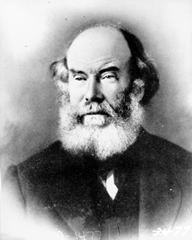
In September 1832, Tolmie signed a five-year contract with the Hudson's Bay Company (HBC). He was hired to serve in the dual capacity of clerk and surgeon for the Columbia District. On 15 September 1832, Tolmie set sail for North America in the HBC supply ship, Ganymede2. Tolmie arrived at Fort Vancouver in May 1833, where he was greeted by the Chief Factor of the Columbia District, Dr. John McLoughlin.
In August 1833 with a desire to get a closer view of Mount Rainier, Tolmie arranged a "botanizing excursion" to the area, with Lachalet, a Nisqually Indian, and Nuckalkat, a Puyallup Indian. Three other guides joined the party. They traveled through thick forest into what is now the northwest part of Mount Rainier National Park. Tolmie wanted to get a better view so he climbed the nearest peak with Lachalet and Nuckalkat. Tolmie Peak is named for this ascent, although it is not known for certain which peak was summited. To justify the trip Tolmie discovered a new species of saxifrage which is now known as Tolmie's Saxifrage (Saxifraga tolmiei). Tolmie was the first European to explore the Puyallup River valley and the foothills of Mount Rainier.
In 1859 the Hudson's Bay Company transferred Tolmie to Victoria in British Columbia. He served on the HBC Board of Management from 1861 to 1870 and later became active in politics as a member of the House of Assembly for Vancouver Island.
For a more detailed biography please see this page.
External Trip Reports
- December 2010 Trip Report (Boundary Trail approach)
- October 2010 Trip Report
- August 2010 Trip Report
- July 2010 Trip Report #2
- July 2010 Trip Report #1
- August 2009 Trip Report
- September 2008 Trip Report
- August 2008 Trip Report
- July 2007 Trip Report
 2 Routes