

-
 20070 Hits
-
 82.48% Score
-
 15 Votes
 Page Type:
|
Mountain/Rock |
|---|---|
 Lat/Lon:
|
50.82780°N / 115.4083°W |
 Activities:
|
Mountaineering |
 Season:
|
Summer |
 Elevation:
|
9140 ft / 2786 m |

|
Overview
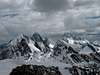
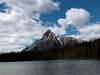
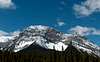
Mount Shark is part of the Spray Mountains located in the heart of Kananaskis Country off of Spray Lakes road. Of more consequence, it’s approach is located off of the trail system that takes you back into Assiniboine Provincial Park from the east. Mount Assiniboine is the cornerstone mountain for this section of the Canadian Rockies. If you have a clear summit day on Mount Shark, you will have a great close up look at Assiniboine and it's east facing hanging glaciers. Mount Shark was named after a WWI destroyer, which is the common theme of the mountains in this area of Kananaskis.The most unique aspect of the mountain, and it will entertain you on the approach, is Karst Springs. Karst is a distinctive topography in which the landscape is largely shaped by the dissolving action of water on carbonate bedrock. As rain water peculates through the soil in certain areas, it picks up more than its normal share of CO2 to form a weak solution of carbonic acid. This process can form considerable underground caves and springs over many years. Karst Springs is one of the most scenic in North America.
The only published route is this scramble.
 |  |  |  |
Getting There
From the Canmore Nordic Center, drive 36 km south on the Spray Lakes Road (gravel). Turn right at signs for the Mount Shark Cross Country and Biathalon Range as well as the Mount Shark Helipad. Follow this road 6.4 km to a parking area at the end. I have seen moose twice in previous outings in the open marsh to your left as soon as you attain this road.Red Tape
There are no permit requirements to enter, climb and/or park in Kananaskis Country. This is active grizzly country however. I have seen black bears cross my path on this approach before and also have observed fresh tracks and scat of Grizzlies. Take bear spray. There is a Banff National Park warden cabin 3 km further west from Watridge Lake, but no park headquarters on Spray Lake Road.When To Climb
Going in early season, i.e. May, (the book says July on) works out best for this mountain due to the bushwhacking involved. The snow is manageable; I took snowshoes but did not need them. Any hard pack on the ridge actually makes the trip smoother (as long as you are not treading on a cornice).Camping
You could live it up and stay at the Engadine Lodge (back at Spray Lake Road). The closest campground is further into the wilderness about 5 km at Big Springs, which is a nice spot along Bryant Creek. Interesting beta: to get to Assiniboine Provincial Park from the east, you start in Kananaskis Country, but will be traveling through a section of Banff National Park. Big Springs is a Banff backcountry campground. You will need your campground and backcountry permits secured prior to camping there.So you could make this a day trip and camp somewhere back out in Kananaskis Country (get back in your vehicle) or proceed on foot to other objectives in the Assiniboine area.
 1 Routes