


 Page Type:


RyanS - Apr 5, 2006 8:57 pm - Voted 10/10
Very interesting stuff, ScottGreat pictures and text. Definitely a vivid demonstration of glacial retreat.
With these glaciers in the 48 states, I often wonder to what extent they are simply relics of the Little Ice Age, destined to die.

mpbro - Apr 6, 2006 1:02 am - Hasn't voted
Re: Very interesting stuff, ScottNo Ryan, they are incontrovertable proof of human-induced global warming! You see, everything on earth had been hunky-dory for the last 4.5 billion years, before we humans spoiled it. Look out, the sky is falling! ;-)

brentonjweaver - May 2, 2006 12:17 am - Hasn't voted
incontrovertable proof of human-induced global warmingThe earth naturally fluctuates in temperature over thousands of years. I am not arguing that humans are aren't having an impact on global warming, but we are still very much at the end of the last ice age. Even in the past 1000 years there have been warmer periods than we're currently experiencing(see here:http://www.biocab.org/Global_Warming.html). We are still in the cold end of the scale, and things could get much, much hotter before they get cool again. There are also arguments that when the north pole melts, the new body of "warm" water will produce enough moisture to cause moutain glaciers in alaska and siberia to grow to the extent that we will thrown into another deep ice age. Other arguments to support that we're on the verge of another ice age say that we're disrupting ocean currents to the point where it will cause an ice age in the northern hemisphere(http://www.biocab.org/Global_Warming.html). Again, I'm not saying that we're not having an impact, just that this is also part of a very complex cycle.

Gangolf Haub - Apr 5, 2006 10:13 pm - Voted 10/10
Sad... but the story is the same everywhere all over the world

cedad - Apr 6, 2006 12:17 pm - Voted 10/10
ImpressiveIn one century a real glacier with crevasses melted completely and this happens everywhere. I agree with mpbro, mankind is responsible for this and we are like musicians playing on the Titanic before the crash with an iceberg

Travis Atwood - Apr 6, 2006 12:23 pm - Hasn't voted
Nice workGreat article Scott. I had no idea that our glacier had such a history. It is defiantly as sad story though. Thanks for the post.

Velebit - Apr 6, 2006 1:54 pm - Voted 10/10
Sad storyGreat article Scott but sad story!

ktnbs - Apr 7, 2006 1:39 pm - Hasn't voted
Goodstuff to read....thanks

bighornhunter - Apr 7, 2006 4:04 pm - Voted 10/10
Great informationThanks for the awsome information. I didn't know that the timp glacier used to be that big. It just says that the world climate is really changing.

madsjim - Apr 9, 2006 3:48 am - Voted 10/10
Great articleI wonder if the earth had not globally warmed up after the ice age, we'd still be hunting mammoths and saber toothed tigers?
iamnotclimbwild - Apr 11, 2006 7:01 am - Voted 10/10
Well Written!You definitely have a talent.

dillweed - Apr 11, 2006 6:26 pm - Voted 10/10
very interestingScott, interesting read.
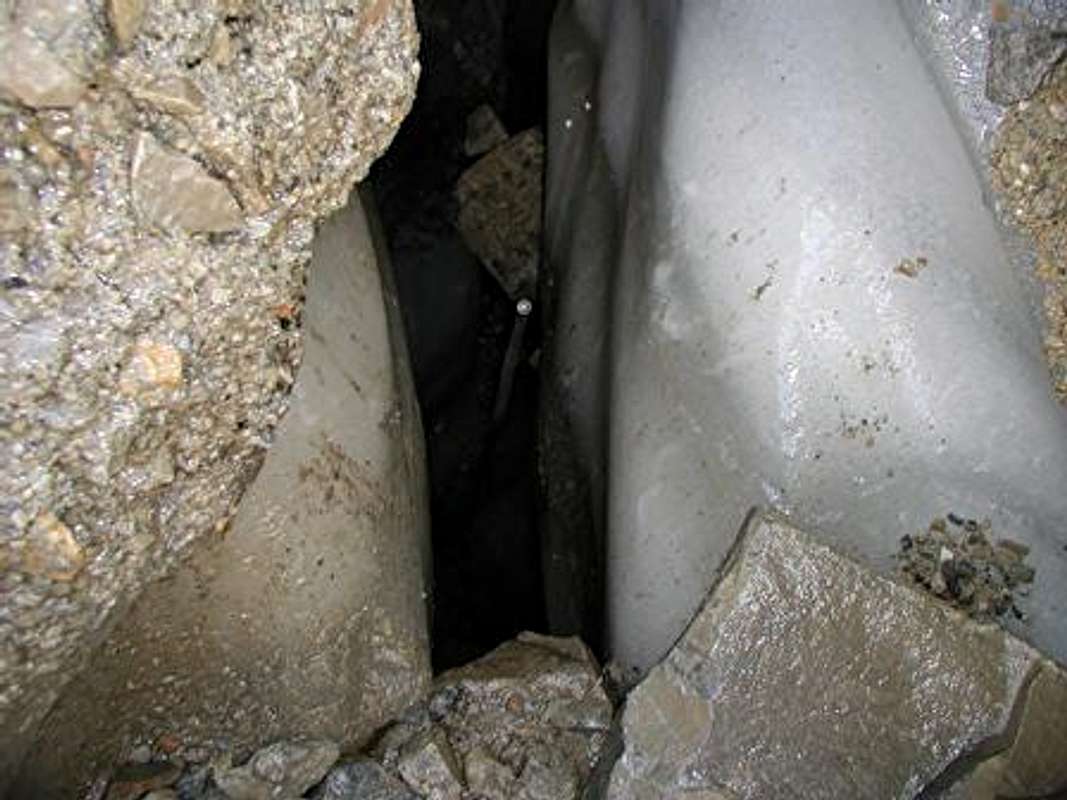
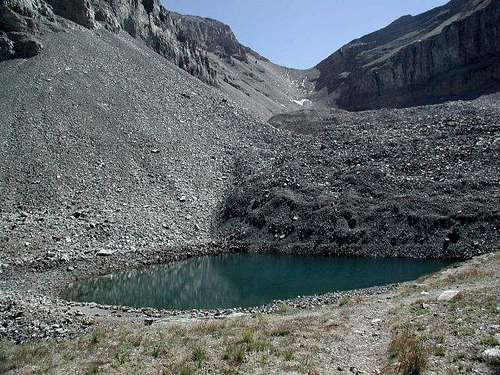
I have been on Timp nearly every year for 20 years, and I have long thought that there was glacial ice below the talus. If you are on the "glacier", say in September, and put your ear down next to the talus rocks, if you are in the right spot you can hear water trickling down the slope, and sometimes it feels very cold - as if there is ice under the rocks. One reason I suspected this was the color and opaque nature of Emerald Lake - something that you only find in glacial runoff.
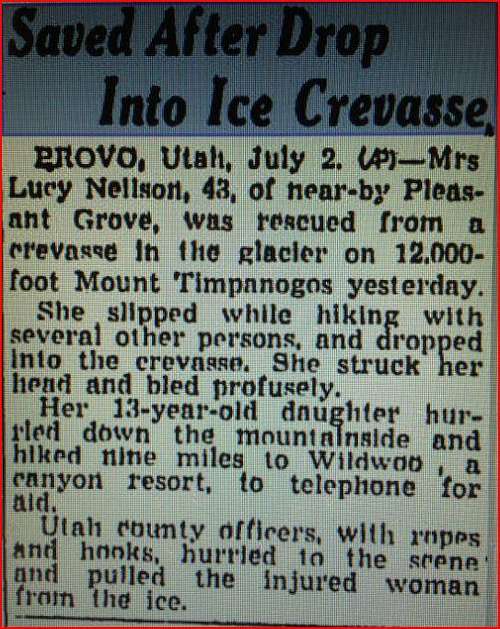
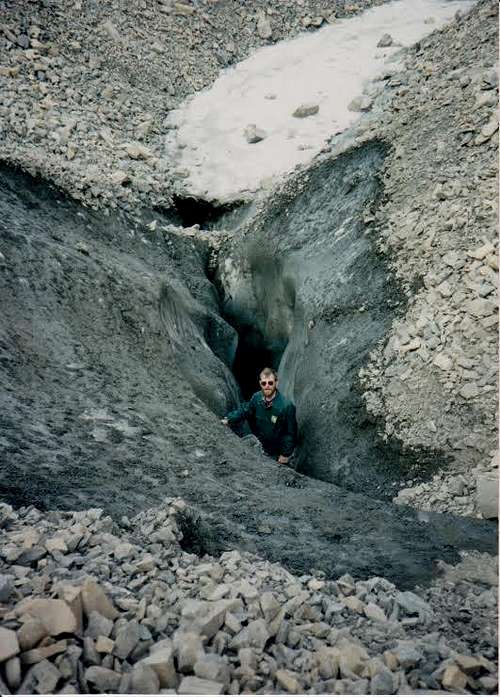
I am curious, where did you learn about the crevasse that opened up in 1994? I would love to read more about it.
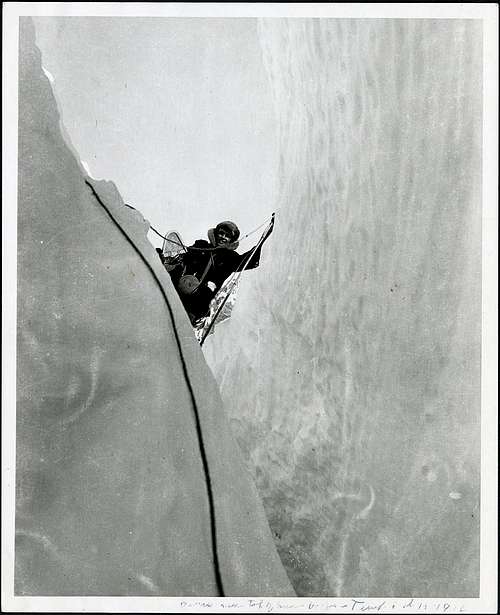
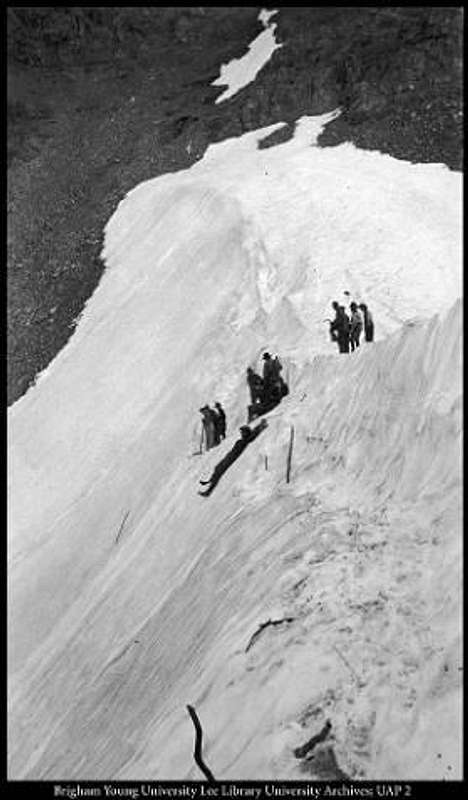
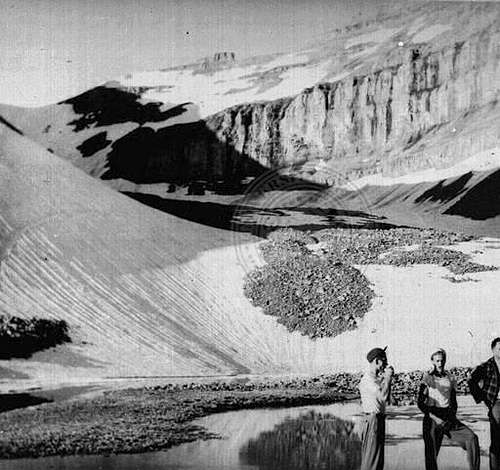
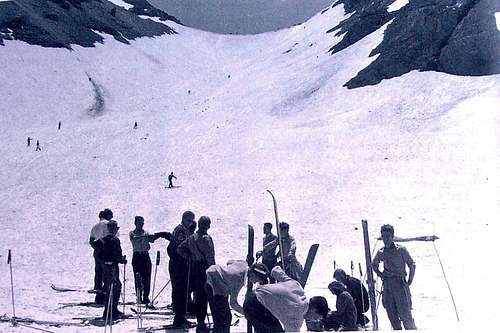
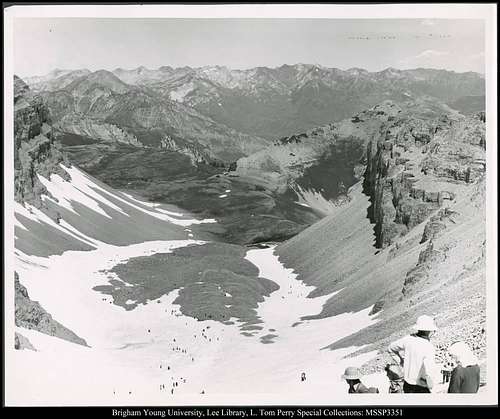
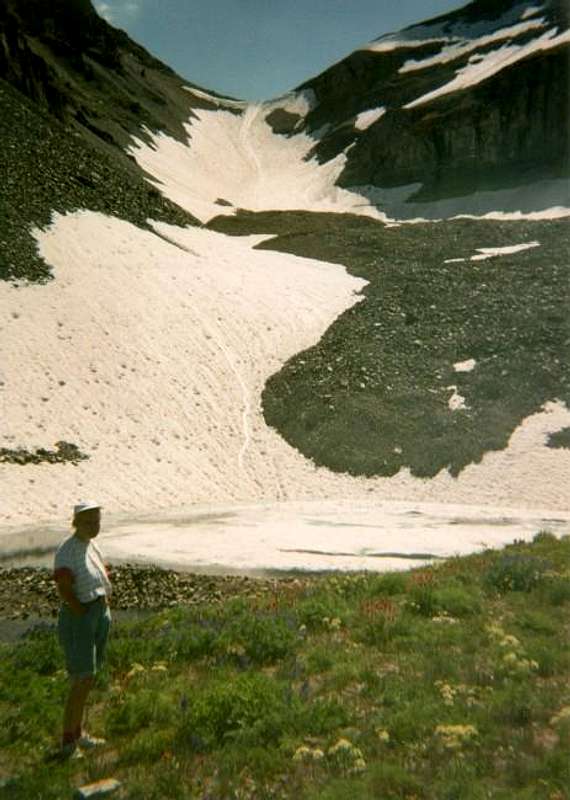
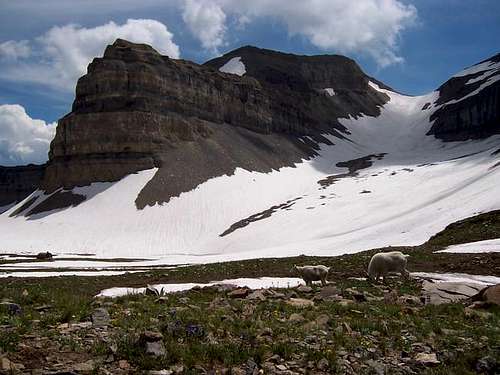
One thing though, your pictures tell a misleading story - the time of year of the photos is inconsistent. They might lead the readers to think that the disappearance is more drastic than it really is (but I am not arguing that it is not disappearing, because it is). There are still July's that look like the July of 1940 - although they are probably much less likely now, unfortunately.
Thanks for the interesting story - keep up the good work.

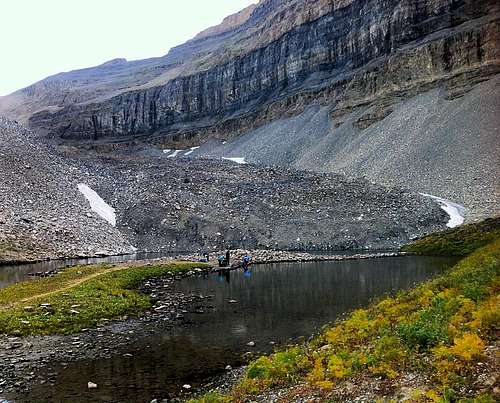
Emerald Lake, in late June

Scott - Apr 11, 2006 7:03 pm - Hasn't voted
Re: very interestingI am curious, where did you learn about the crevasse that opened up in 1994? I would love to read more about it.
I head it from several climbers as well as one printed article. I can try and find the article at home and PM you about it.
One thing though, your pictures tell a misleading story - the time of year of the photos is inconsistent. They might lead the readers to think that the disappearance is more drastic than it really is (but I am not arguing that it is not disappearing, because it is).
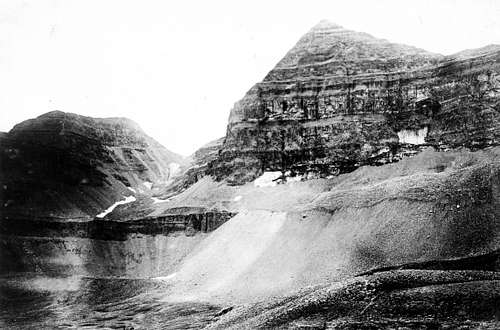
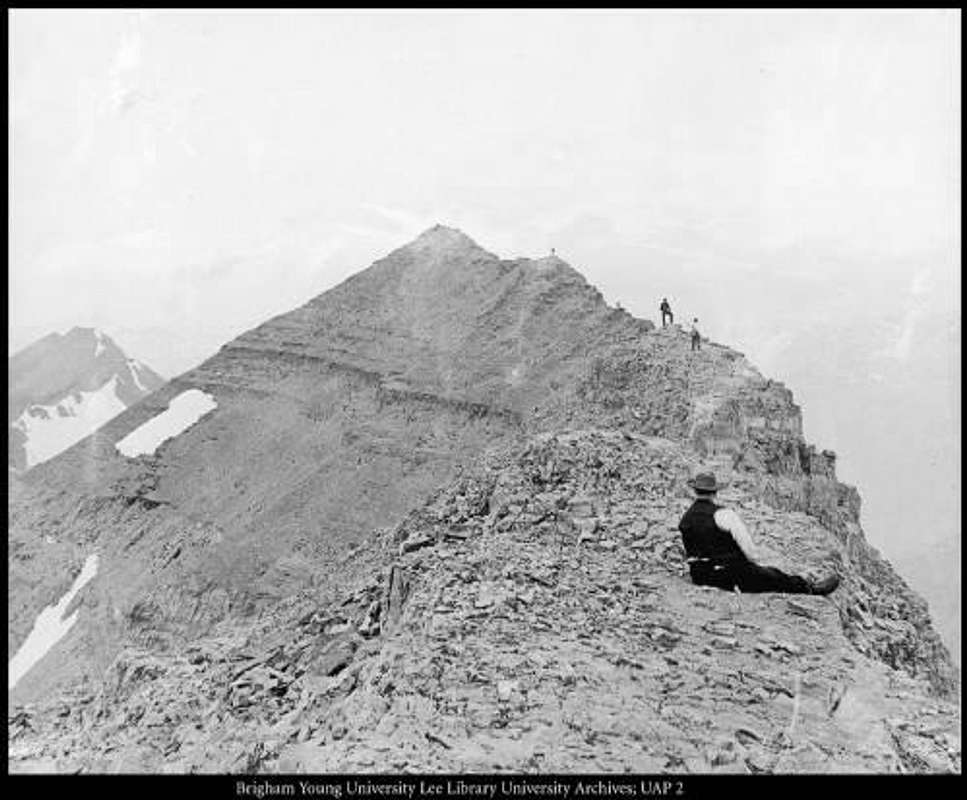
I agree. While it would be better to use photos all from the same month of the year, I haven't any (or I would have used them). The September 2003 photo was used because it showed all visual traces of the glacier, snow, and ice, were gone. I first climbed Timpanogos at age 7 in 1981, so those would be the earliest photos I personally could have. The others are from other sources way before I was born, and none were from September, but from July 30 and August.
The older photos above also were printed in the book Climbers and Hikers Guide to Mount Timpanogos, but the book doesn't have any history on the glacier itself, just the annual Timp hikes.
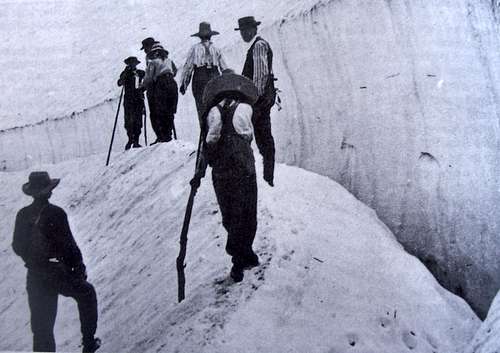
For an interesting read about the crevasses that used to exist, try finding the 1912 trip report of an ascent of Timpanogos. At that time, the normal route up the mountain was right up the glacier and there were apparently a series of crevasses to walk around. I have never seen the TR online, but if you ever see it, it is an interesting read.
dillweed - Apr 11, 2006 8:25 pm - Voted 10/10
Re: very interestingRight on. I own the book - it's got a lot of good info, including my favorite part - deaths on Mt. Timpanogos. Timp is by far my favorte mountain of them all. She seems to have a personality all her own. It's no wonder that it is Utah's most hiked summit.

ZachW - Apr 12, 2006 2:03 am - Hasn't voted
nice articleFrom what I can see it looks to be a rock glacier, much like the one on Nevada's Wheeler Peak. A rock glacier is a piece of ice that is covered with talus and moves much slower than a normal glacier (to the tune of about a half inch a year). The rock and debris insulates it and they can survive for a very long time for that reason. Thanks for the article. I have been wondering about the status of this glacier for a couple years now.
Scott - Apr 12, 2006 4:32 pm - Hasn't voted
Re: nice articleThanks for the compliment! If you are interested, here is a litte more on rock glaciers:
From what I can see it looks to be a rock glacier, much like the one on Nevada's Wheeler Peak. A rock glacier is a piece of ice that is covered with talus and moves much slower than a normal glacier (to the tune of about a half inch a year).
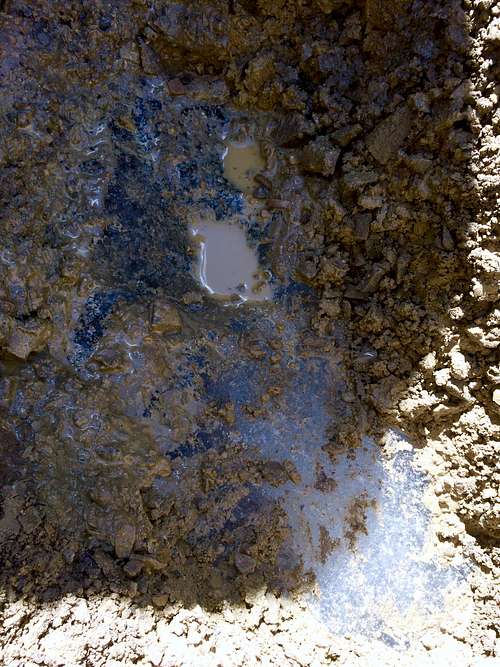
Well, sort of. A rock glacier is actually rocks cemented together by ice that flow slowly like a glacier. A rock-covered glacier is a glacier/ice sheet covered with rocks/debris. It is hard to tell the difference between the two. Apparently, since 1994 at least, test on the ice in the crevasse, show that this is probably a rock-covered glacier. For now.
There is some controversy over the Wheeler rock glacier you mention as well. The upper end next to the headwall is known as the Wheeler Glacier, but sometimes known as an icefield, glacier, or "glacierette". It does have visible and real crevasses, albeit small, so it seems to be a very small glacier. The lower end is known as a rock glacier as you say, but some geologist think it is actually a rock-covered glacier. Apparently the same controversy exist on the Dove, on the north side of Longs Peak in Colorado as well.
Sam Dunford - Jan 7, 2016 1:31 pm - Voted 10/10
Re: nice articleGeologists actually consider both ice-cemented rocks and rock-covered glaciers to be rock glaciers. Those two forms are actually more like ends on a spectrum than separate categories, a lot of rock glaciers contain both massive and interstitial ice. In fact, one might consider even ice-cemented rock glaciers to be true glaciers, since they form in much the same way except with a lot more debris involved.
ZachW - Apr 14, 2006 12:49 am - Hasn't voted
wheeler peak glacierI went to Great Basin at the end of last September to see for myself.A ranger told me that the previous winter brought 300% more snow than normal. There were no crevasses. There was still glacier ice under about a foot of firn that I hacked through with my ice axe.I did see what appeared to be several rock glaciers from the summit of Wheeler Peak. I still cant get over the fact that there is a glacier in Nevada.
Scott - Apr 15, 2006 1:14 am - Hasn't voted
Re: wheeler peak glacierIf you ever make it back, the only place I'm aware of that has crevasses, are some small ones one the cirque headwall. At the cirque headwall, above the rock glacier, there is a really big Y-couloir that contains a glacierette/small glacier/icefield. Only if you climb a ways up the couloir will you see any crevasses (and they are small, but are in ice rather than snow). Late season its pretty icy, but early season, it will be snow and easier. If you ever make it back, the Y couloir and headwall makes an interesting trip, but use exteme caution with the rockfall danger.

mauri pelto - Apr 16, 2006 2:08 pm - Voted 10/10
valuable documentaryAs a glaciologist who is always on the lookout for new interesting information on glacier changes this is a wonderful portrayal of the death of a glacier. I am not certain whether the relic ice is ice cored moraine or a rock glacier now. To be the latter there must be some movement. This glacier is not alone, many others in the Pacific Northwest and Rockies are being lost.
Comments
Post a Comment