An Afternoon of Photography in Utah’s Bryce Canyon National Park
Carved below the eastern rim of the Paunsaugunt Plateau, Bryce Canyon is a geologic wonderland. Standing as what may be Earth’s most famous example of pinnacled badlands, eons of erosion and weather have carved a natural amphitheater filled with pinnacles, spires, columns, arches, and bridges.
Humans, maybe alone on this planet in having the propensity for being awestruck and inspired by such natural wonders, have applied fanciful names to these features and refer to many formations as temples or castles. In our arrogance we’ve seemingly attempted to take credit, as if it is humanity that is somehow responsible for the existence of this masterpiece of nature.
Bryce Canyon National Park is certainly one of the world’s wonders and draws tourists from all over the world. And, on one particular day during early October of this year (2007), I was one of those tourists. Only able to spend a few hours, I, like many others, was interested in seeing as much as possible. I also hoped to take some good pictures in the little time available, knowing full well that it would take weeks, maybe months, to really to do the area photographic justice.
To improve our chance to experience as much as possible, my wife and I hiked in the canyon using some of the many trails maintained by the Park Service. Designed to accommodate many not-so-able-bodied tourists, in comparison to what I’m used to in the Bitterroot Mountains, the trails seemed easy and in some places reminded me of sidewalks.
This is the photographic record of our few available hours in Bryce Canyon National Park.
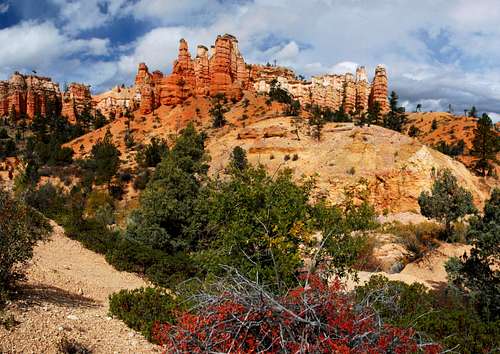
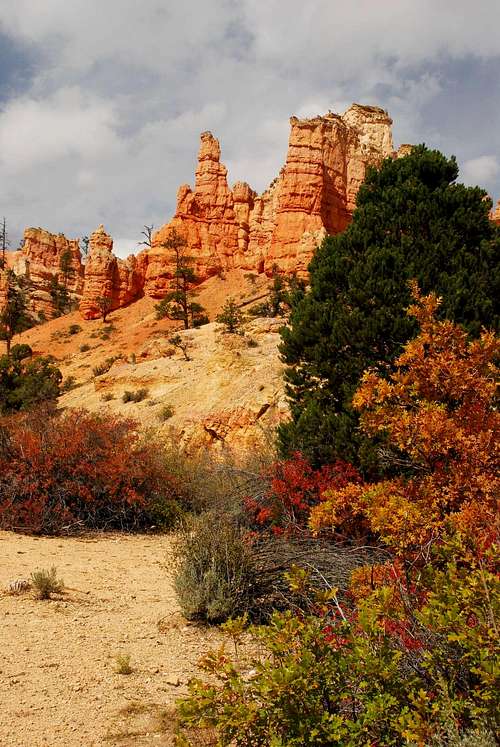
As we drove into the park, I saw a pull-out around which there was a bit of red fall color. Stopping, I framed a shot horizontally, then walked a few yards to the right and tried a vertical framing of the same formations.
Fall Color Near Bryce Canyon
Fall Color and Pinnacles
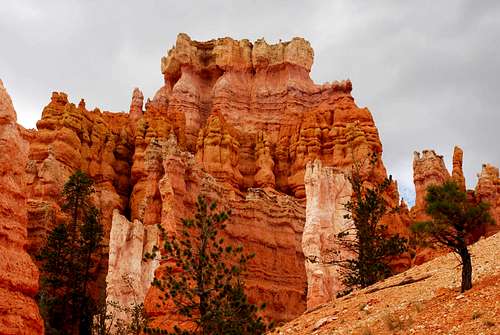
When I first looked into the canyon, I was awestruck and stood open-mouthed for a long time, attempting to get my mind around what lay before me, formed over the eons. Eventually I began taking pictures of a cliff and spires highlighted by a shaft of sunlight. A moment later a closer group of spires was highlighted for another picture.
Pink and Orange Cliffs
Illuminated Columns
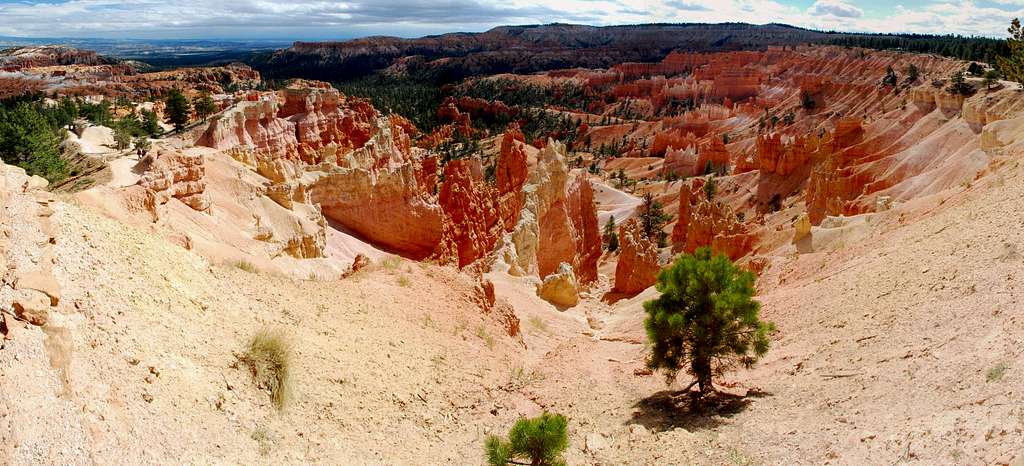
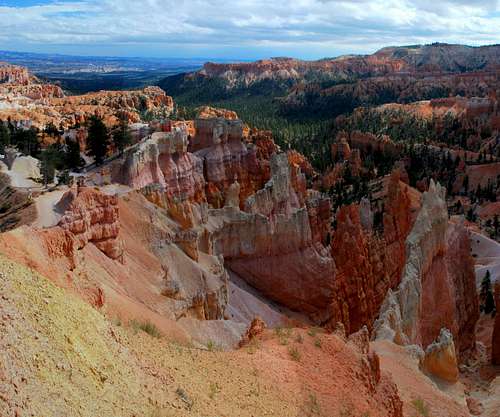
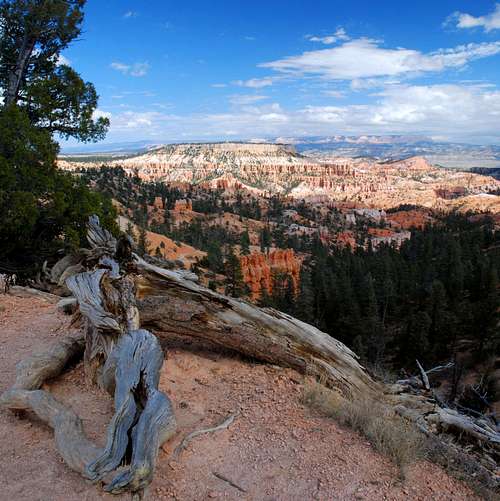
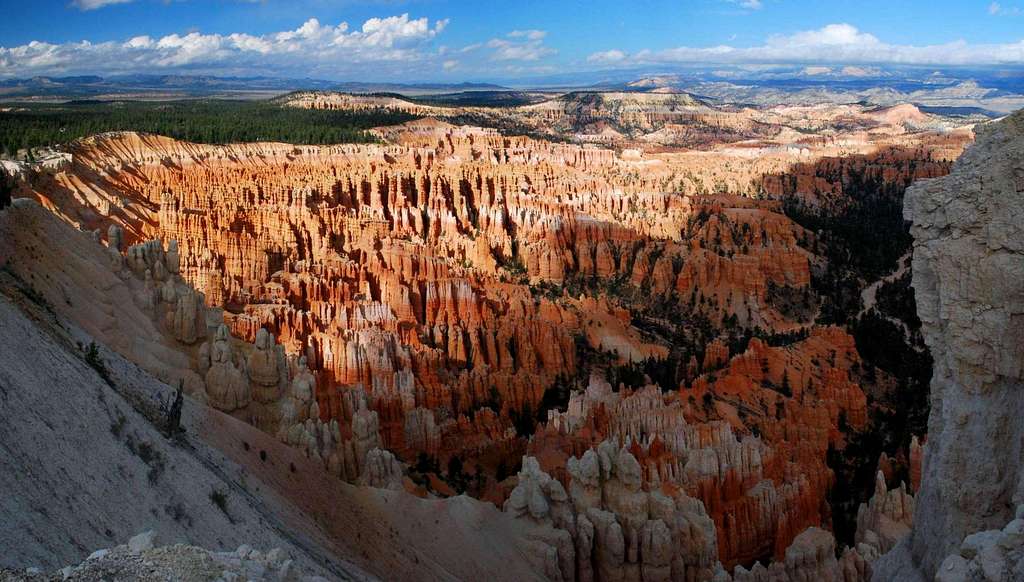
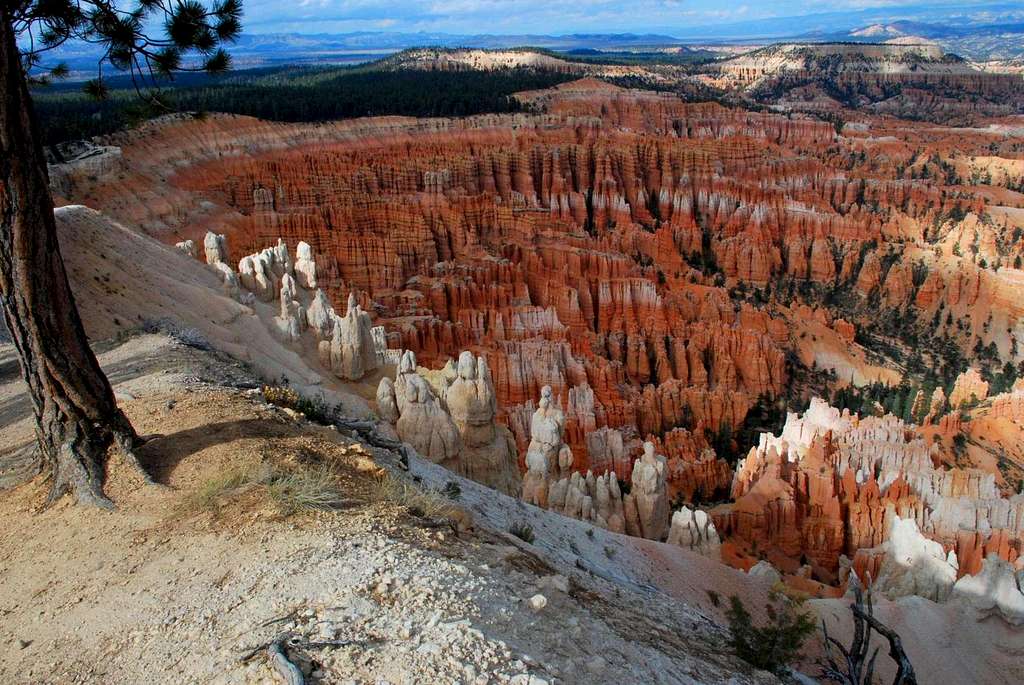
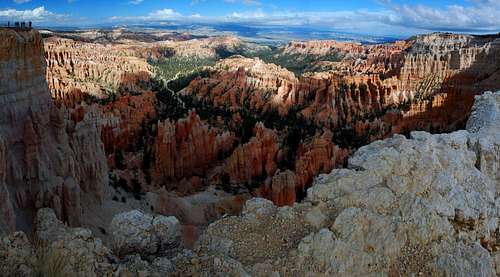
I took a series of shots to later be formed into a panorama of The Amphitheater. I then realized a smaller section of The Amphitheater might prove more interesting. I shot The Amphitheater again, this time with a dead tree in the foreground to give perspective.
The Amphitheater from Sunrise Point
Sunrise Point
Dead Tree at Sunrise Point
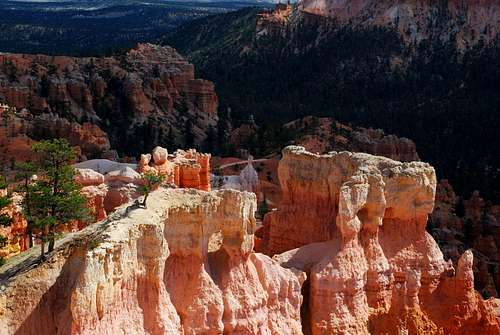
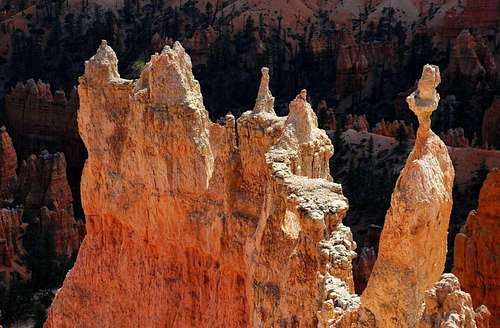
The late-afternoon sun highlighted a fin and its spires. I shot once, then again of a particularly interesting spire in the ever-changing light.
Spires and Fin
Illuminated Spire
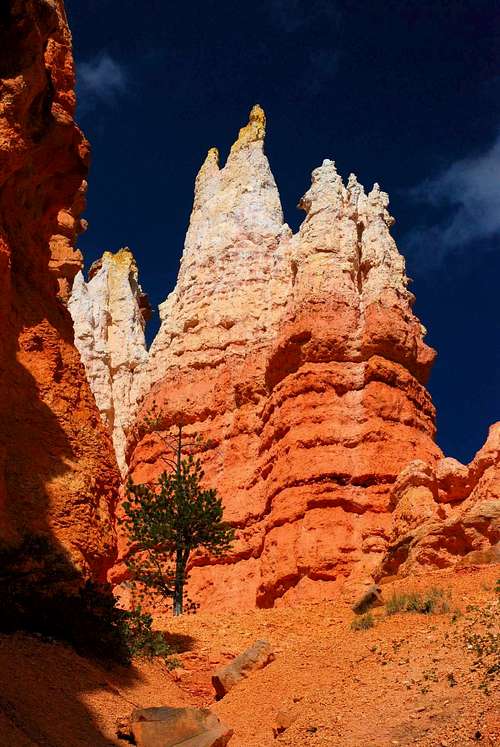
A small tree growing atop a tower attracted my attention. Backlit by a ray of sunlight, it appeared orange in the reflected light of a nearby cliff. I framed a shot.
Tree on the Tower
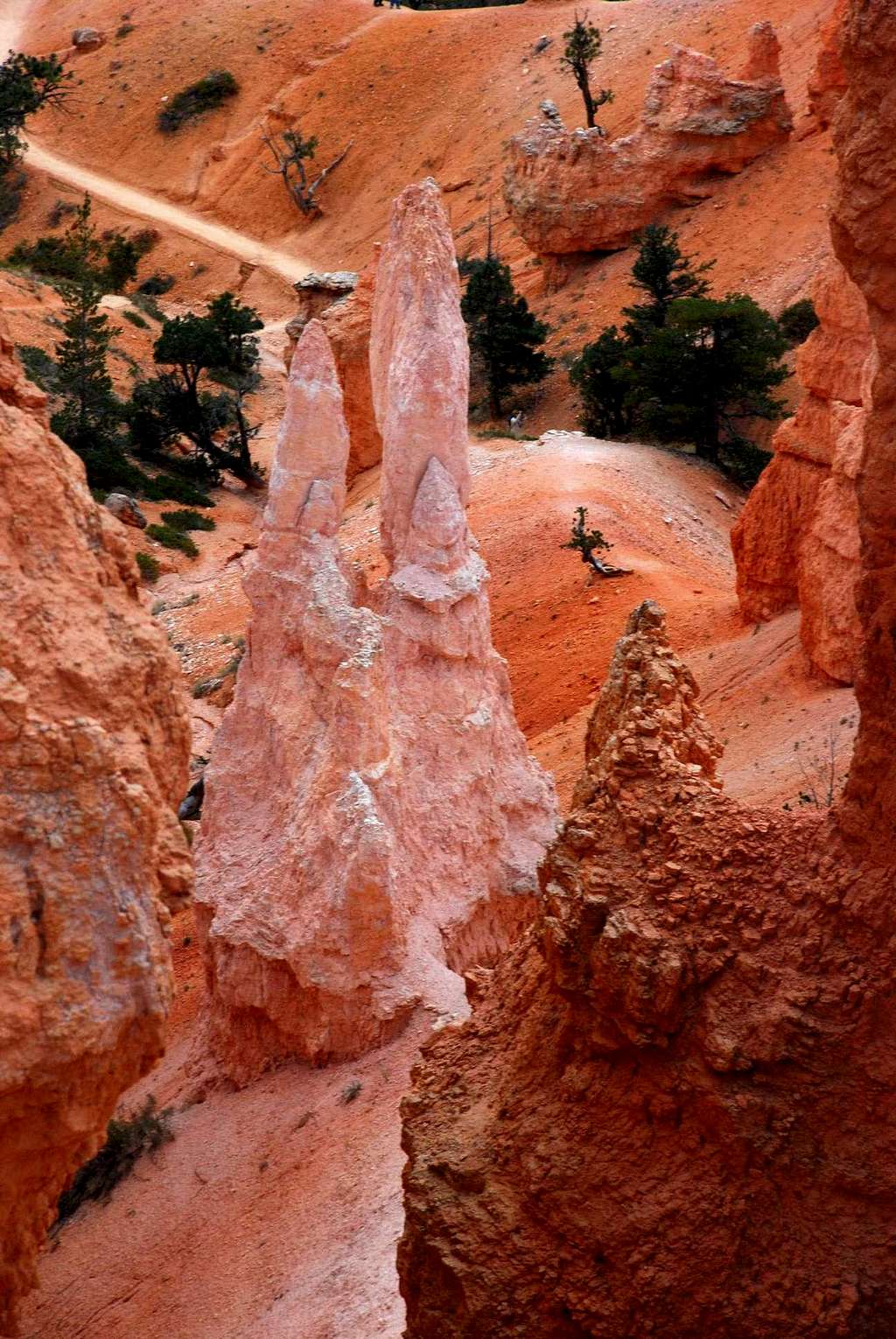
Pink Spires
A small set of spires near a trail on the canyon floor caught my eye. In shadow, the rock appeared pink.
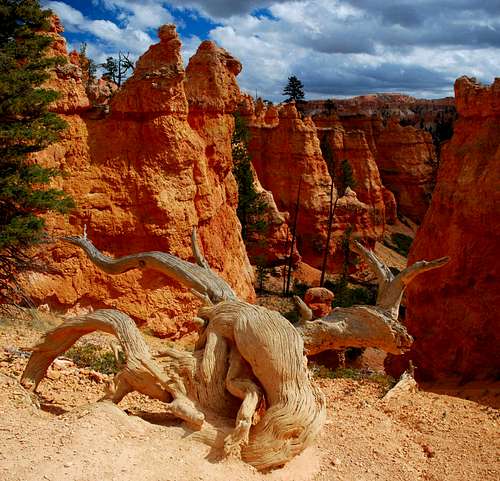
As we descended toward the canyon floor, I saw a long-dead tree along the trail. I framed a shot of a grouping of spires, using the tree for perspective.
Dead Tree and Pinnacles
Having reached the canyon floor, I spied some spires crowned with gold. Farther along the trail I shot them again in different light.
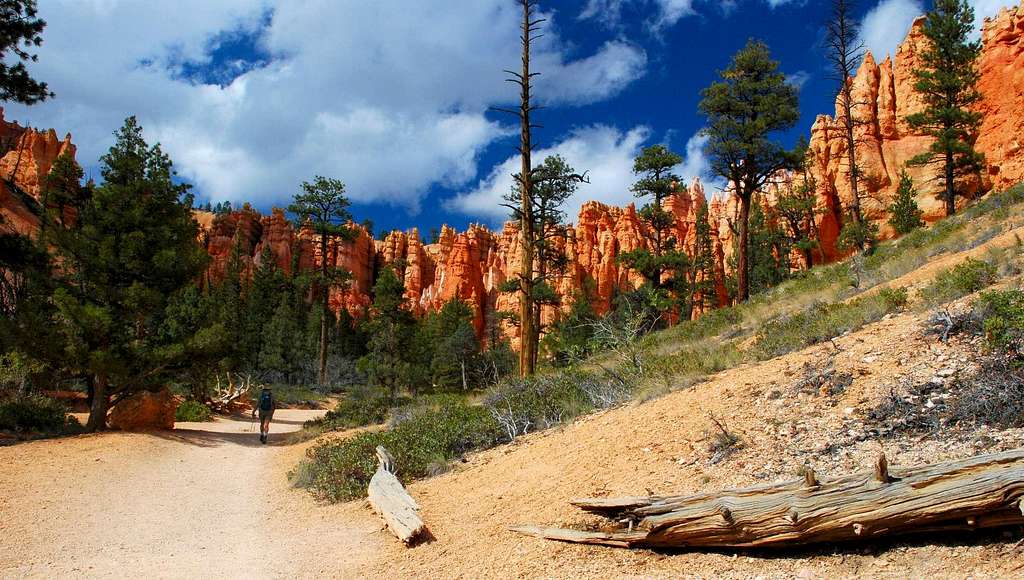
Queens Garden Trail
Gold-Capped Towers
Hanging back, I took a picture of my wife, Linda, walking ahead on the trail. It was a chance to give human scale to the geological wonders surrounding us.
The Navajo Loop Trail
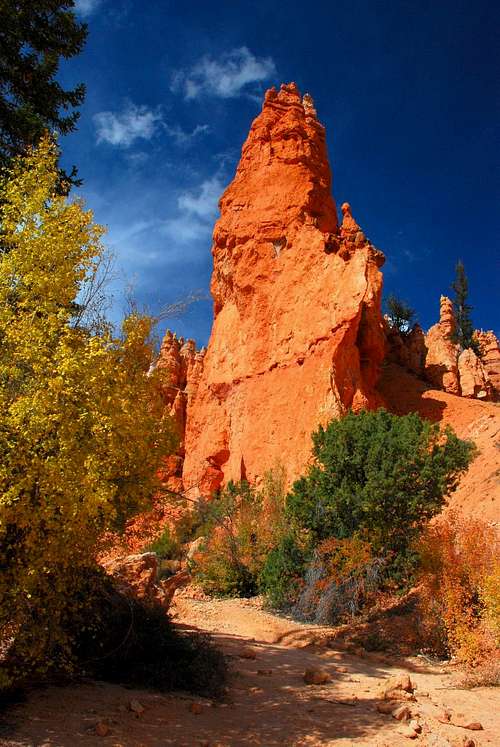
Ahead I could see a spire bathed in golden sunlight. Just past the spire I looked to the right and saw a group of orange and white spires capped with gold, then zoomed in for a close-up.
Spire in Golden Light
Gold, White, and Red-Orange
Gold-Capped Pinnacles
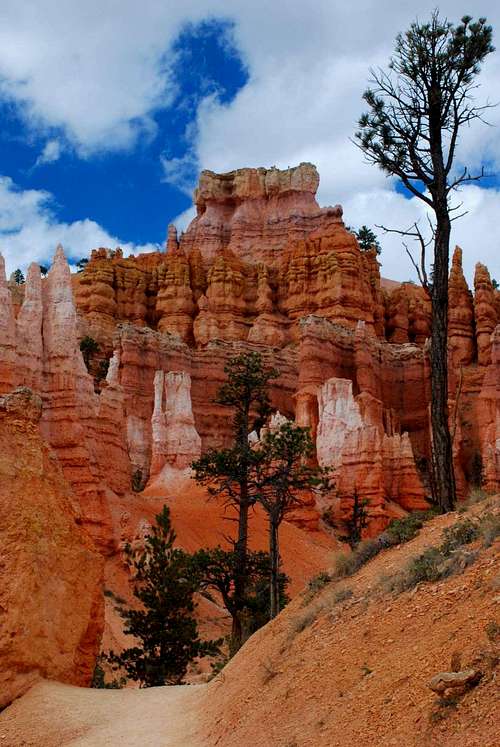
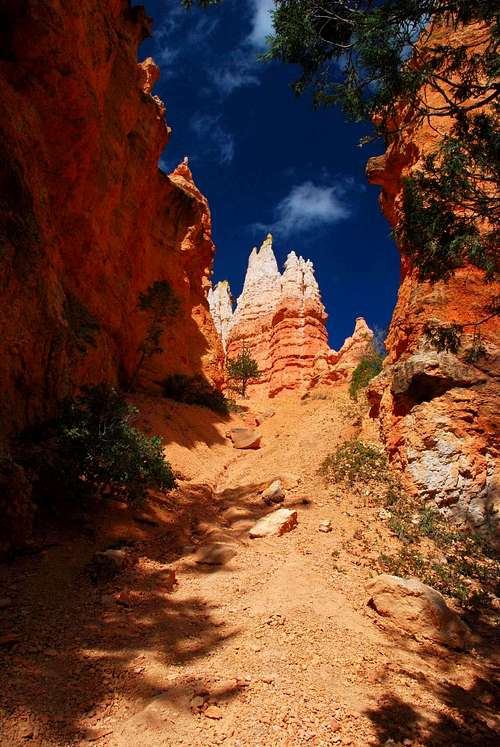
Trail from Sunset Point
While climbing back to the rim of the canyon through a narrow slot, I searched for a picture opportunity. The shot didn’t come until I looked down, having almost reached the rim.
Walking along the rim, stopping periodically to take pictures of The Amphitheater, I worked for a special play of light on the spires as the sun peeked through the swiftly moving clouds. But the grandeur of the place was overwhelming and the shots didn’t seem to work as I wished.
The Amphitheater
The Amphitheater from the Rim
Illuminated Amphitheater
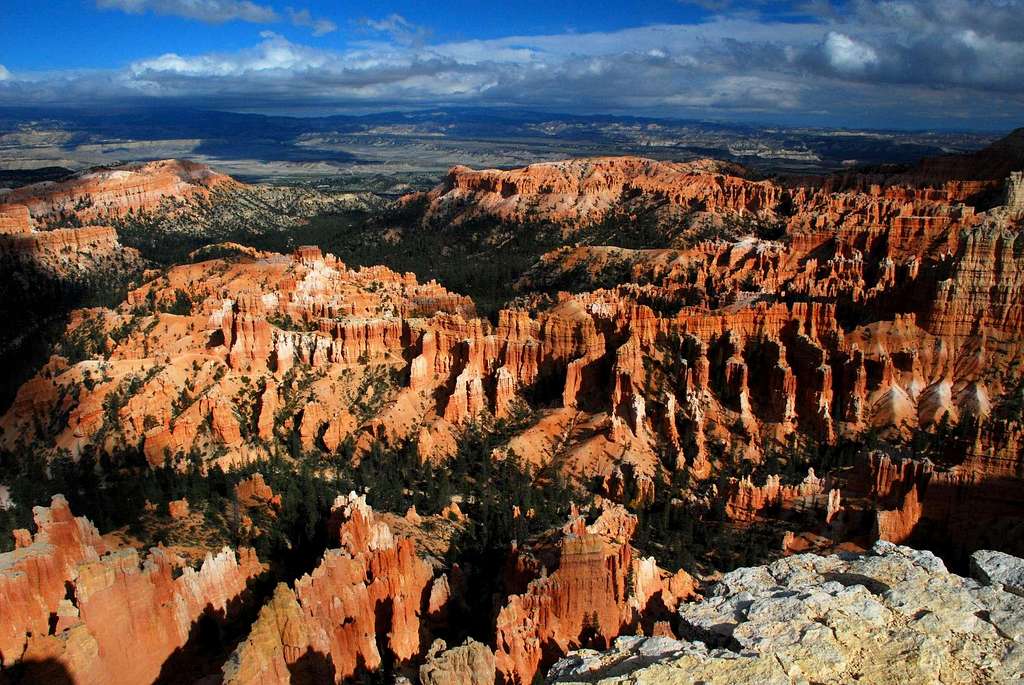
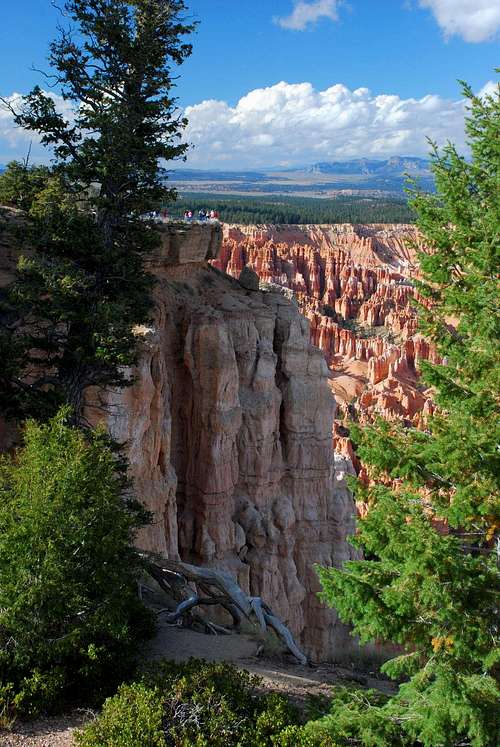
We drove to Bryce Point. While the other tourists rushed to the overlook, I walked along the rim, still searching for "the shot." Framing the overlook with trees, I took a picture, then made another attempt to capture the grandeur of The Amphitheater using the Bryce Point Overlook and rock along the rim for perspective.
Bryce Point Overlook
The Amphitheater & Bryce Point Overlook
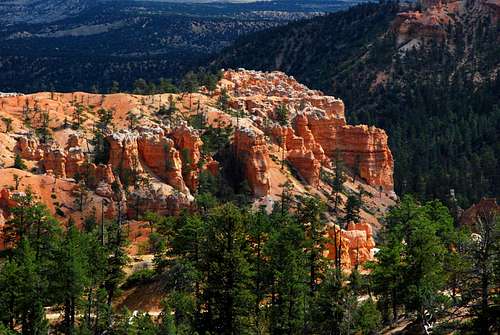
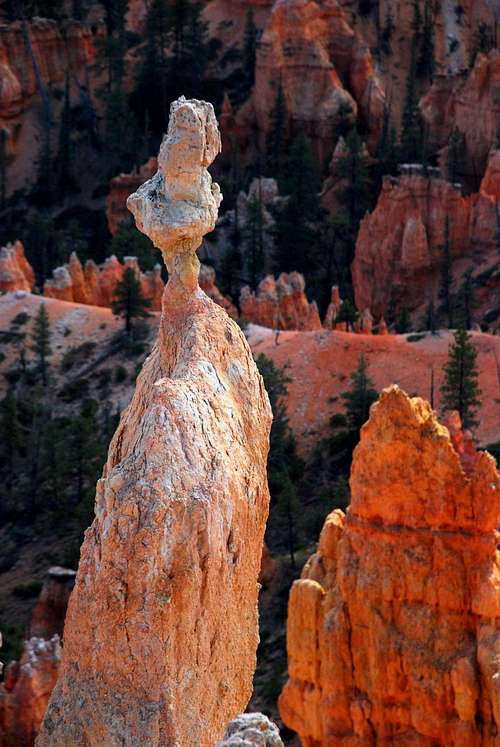
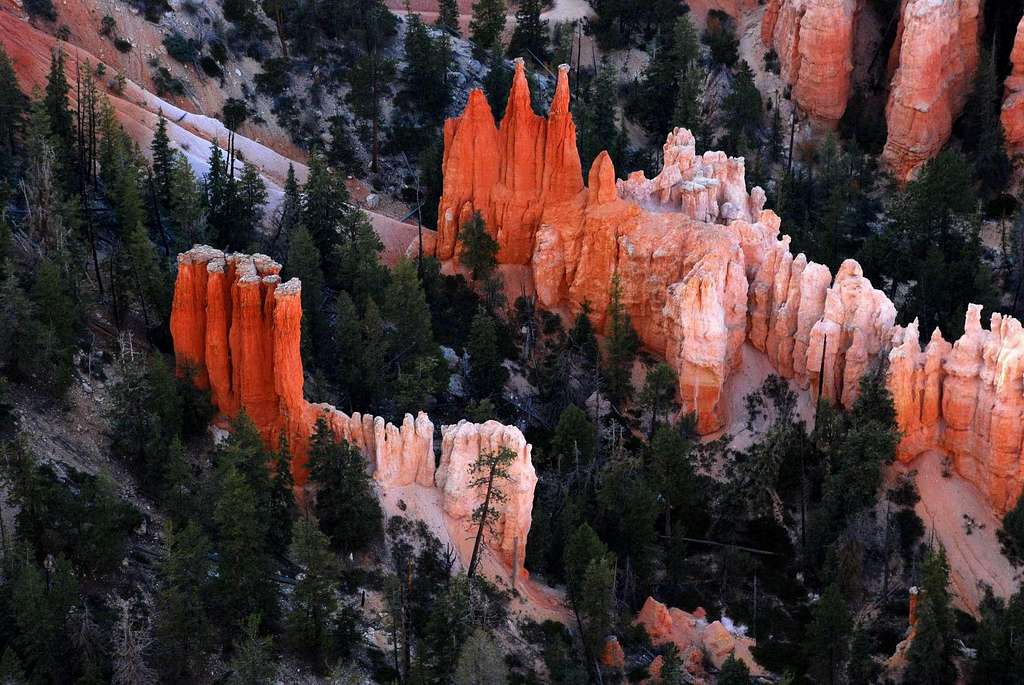
Peering into the depths of The Amphitheater, I could see small groups of white-capped red-orange and pink hoodoos standing in shadow, highlighted by reflected light and framed by stands of Ponderosa Pines.
Hoodoos Below Bryce Point
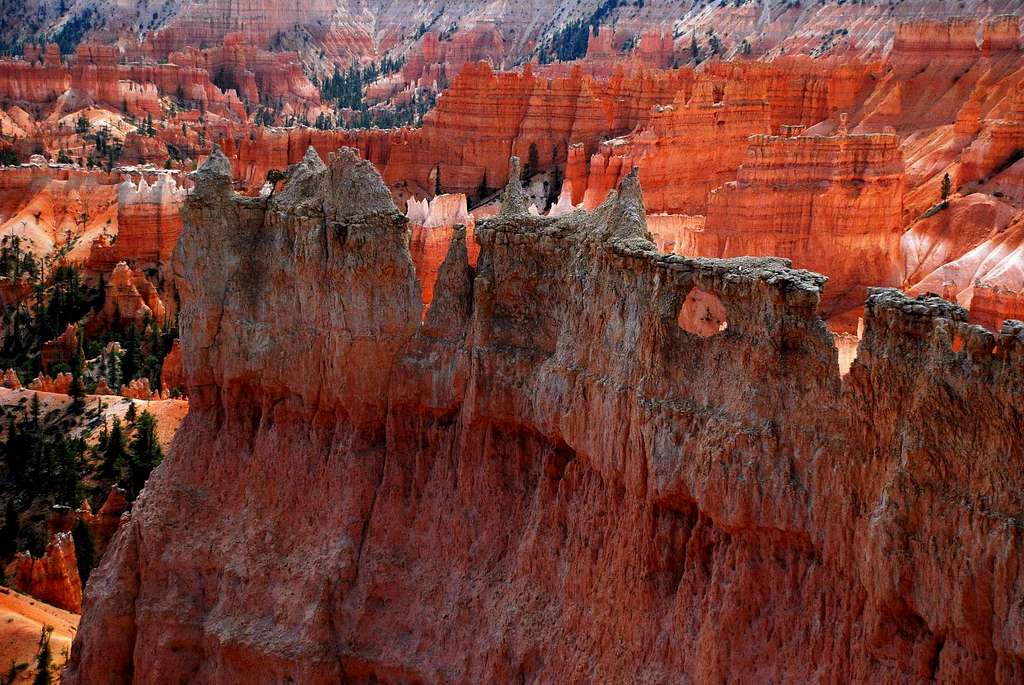
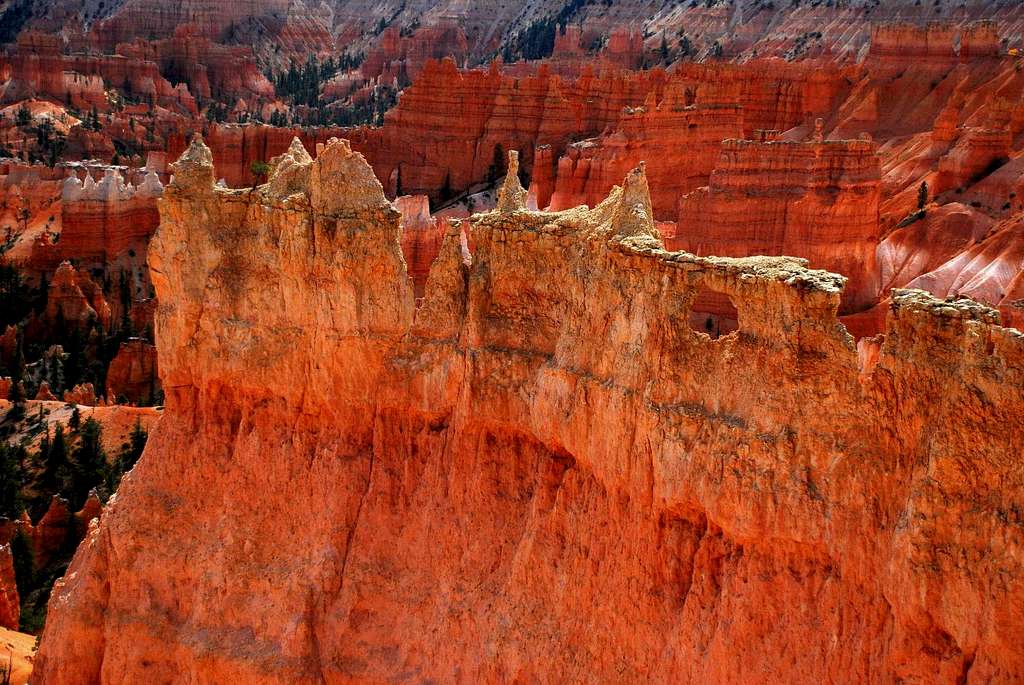
As my gaze swept back up toward the rim, I saw it. A fin, with a small window near its top, standing in shadow while the background was bathed in sunlight. Then, sixteen seconds later, the background was in shadow and the fin illuminated by reflected light. The canyon’s mood had changed dramatically as had mine. Finally, I had my shot!
A Wall in Shadow
Only Sixteen Seconds Later, the Same Wall in Sunlight
We loved Bryce and we hiked it extensively. Your photos revived our memories! Thanks Mike!
Michael Hoyt - Oct 21, 2007 8:07 pm - Hasn't voted
Re: Fabulous Photos
Thanks Aaron,
Unfortunately we didn't have enough time in Bryce for extensive hiking (or anything else for that matter). We must go back for a longer stay.
Rob Thompson - Oct 23, 2007 12:50 am - Voted 10/10
You Raise The Bar
Your ability to take advantage of the changing light and your skill with the camera is impressive. We had the good fortune of visiting Bryce last week but I can see I need to go back! Thank you for sharing.
Michael Hoyt - Oct 23, 2007 8:12 pm - Hasn't voted
Re: You Raise The Bar
Thanks for the compliment, but I have to say, no matter how much ability one has (or not), the "luck of the light" is the key to a good photo. Mike
Parents refers to a larger category under which an object falls. For example, theAconcagua mountain page has the 'Aconcagua Group' and the 'Seven Summits' asparents and is a parent itself to many routes, photos, and Trip Reports.



 Page Type:
 Lat/Lon:
 Date Climbed/Hiked:
 Activities:
 Season:




Comments
Post a Comment