My Obsession with Getting the Perfect Photograph
Photography is all about light. That should be patently obvious to even the most casual observer. In fact, let me submit to you that it
is patently obvious to the casual observer: Of the thirteen pages of photos I've posted on SP, almost every one of the photos below appear on the first page. Almost without exception, the remaining twelve pages of photos do not have particularly notable lighting.
However, finding just the right light can be a very serendipitous experience. That is, the studio photographer (a job I loath to think I'd ever have to do) is blessed in having virtually complete control over the lighting situation. Photojournalists are more interested in the story than in the light -- images with even mediocre lighting can become great because of their documentary value. The snapshooter simply doesn't care ("I'm not very good with a camera."). But, the good landscape photographer understands that great photography is all about the lighting, and that the lighting is under the control of God, Mother Nature, or whatever super being in which one professes to believe. Thephotohiker has written an excellent article on this mystical pursuit. I encourage anyone interested in it to read it:
Waiting for the Light. Meanwhile, this article is simply for discussing those photographs where I spent the time and resources -- whether it was waiting for a different time or hiking to a different location, or simply have the fortuitous good luck to be at the right place at the right time, to get the perfect (okay, maybe "near" perfect) photograph. Enjoy.
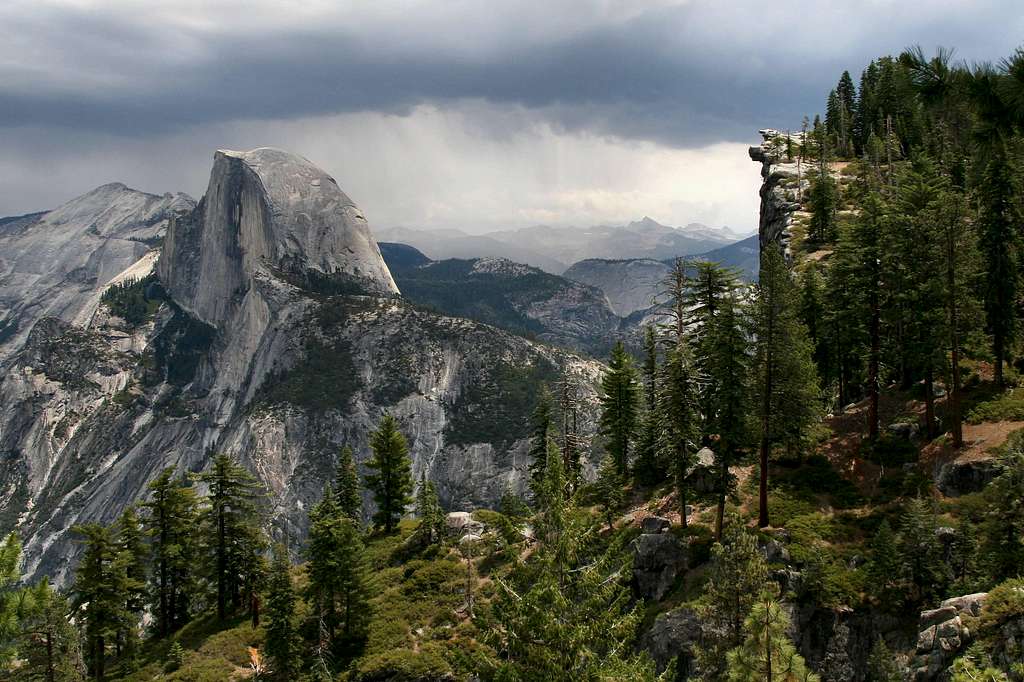
Half Dome and Glacier Point
Curtis and I had decided to hike four mile trail from Yosemite Valley to Glacier Point. We parked the Jeep at the trailhead early in the morning (that being the only chance to get a parking spot at the trailhead!), and headed on up.
It was mostly clear, where we could see, but that area around Half Dome was hidden from our view. It wasn't until we had climbed higher that Half Dome and Tenaya Canyon came into view. It was actually only about fifteen minutes away from the top of Glacier Point where I stumbled on the scene in the photo. However, the clouds were fast moving and I was really hoping to get a nice shot of Half Dome and Glacier Point both brightly lit up. This isn't quite as perfect as I was seeking, but it's the best image I shot that day (actually, I consider this my best image I've ever shot!). Compare it to the adjacent image,
After Hiking Four Mile Trail to Glacier Point. This image, shot about thirty minutes later, does not have the great lighting of the one below. It's not that it's poorly lit; everything is properly exposed. In fact, I used a 1-2/3-stop subdued flash to brighten up our faces a little. But, the clouds had moved in pretty solid by this time, and that wonderful interplay of light and shadow on a dramatic landscape is missing.

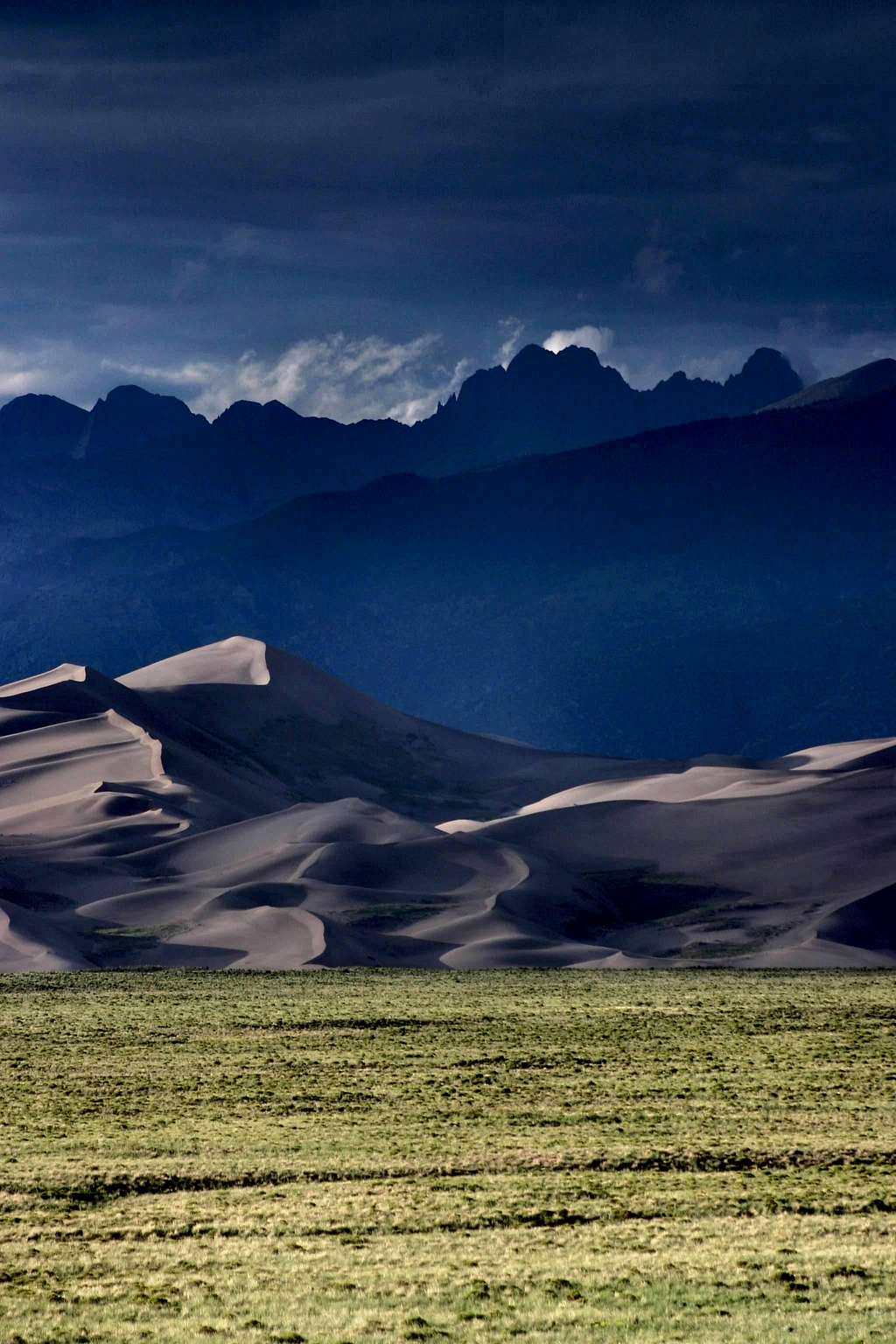
Dunes Sunset with Crestone Peaks
I set up my camera on a tripod not too far from the entrance to Great Sand Dunes National Park, CO. It was mostly overcast, but I was hopeful that there would be a break in the clouds that allowed the sun to light up the dunes as it set. In fact, after waiting about 30 minutes it did open up. All of the photos before that are boring and lifeless (
click here to see one). But, the several that I shot after the clouds opened up a bit all came out quite nice. This is my favorite of those images (and also one of the SP communities favorites). A graduated density filter was applied to give the clouds that dark, brooding look.

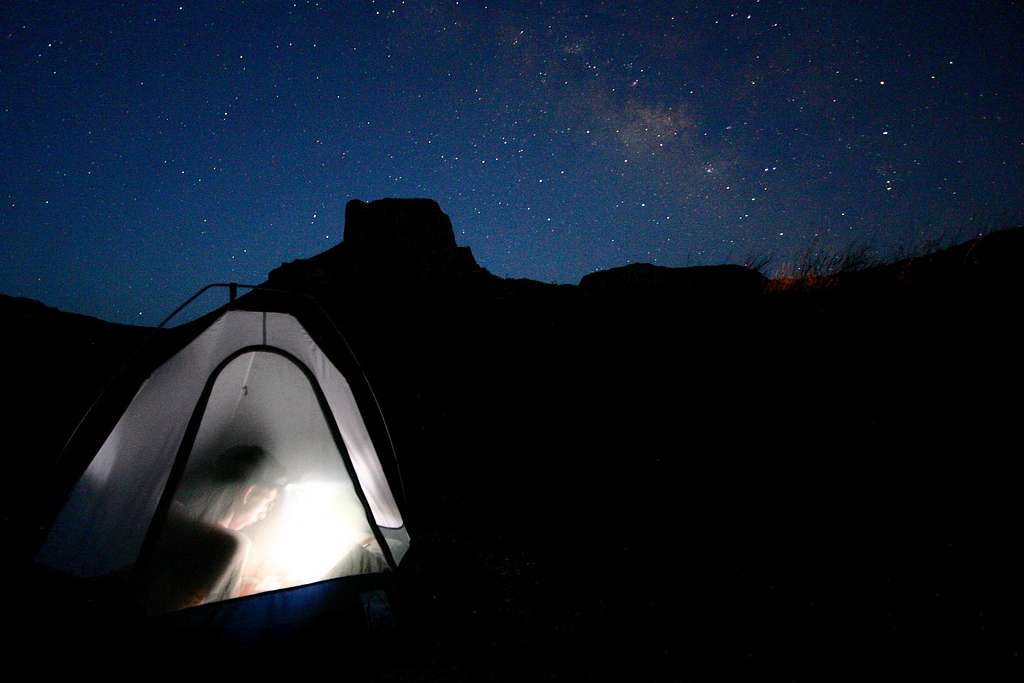
Who Needs a Five Star Hotel?
I shot this photo over a period of two evenings. We were camped in the Chisos Basin of Big Bend National Park, TX. I had shot a series of a couple dozen photos the evening before after noting that Curtis wasn't moving much while reading a magazine. They came out okay, but focus at night is very difficult -- I was concerned that it might be a bit off and not get the pinpoint stars I was seeking. Of course, I was aided in this endeavor by the fact that the moon would not rise until about an hour before sunrise. The next evening I selected my widest lens (10-22 mm) and adjusted the focus to infinity. Even though Curtis moved during the 30-seconds of the exposure, there was so little light that his movements do not show. After shooting the image, there was some noise in the form of about a dozen white specks on the mountains. I used a photo editor to clean those up, ensuring that all of the stars were in the sky!

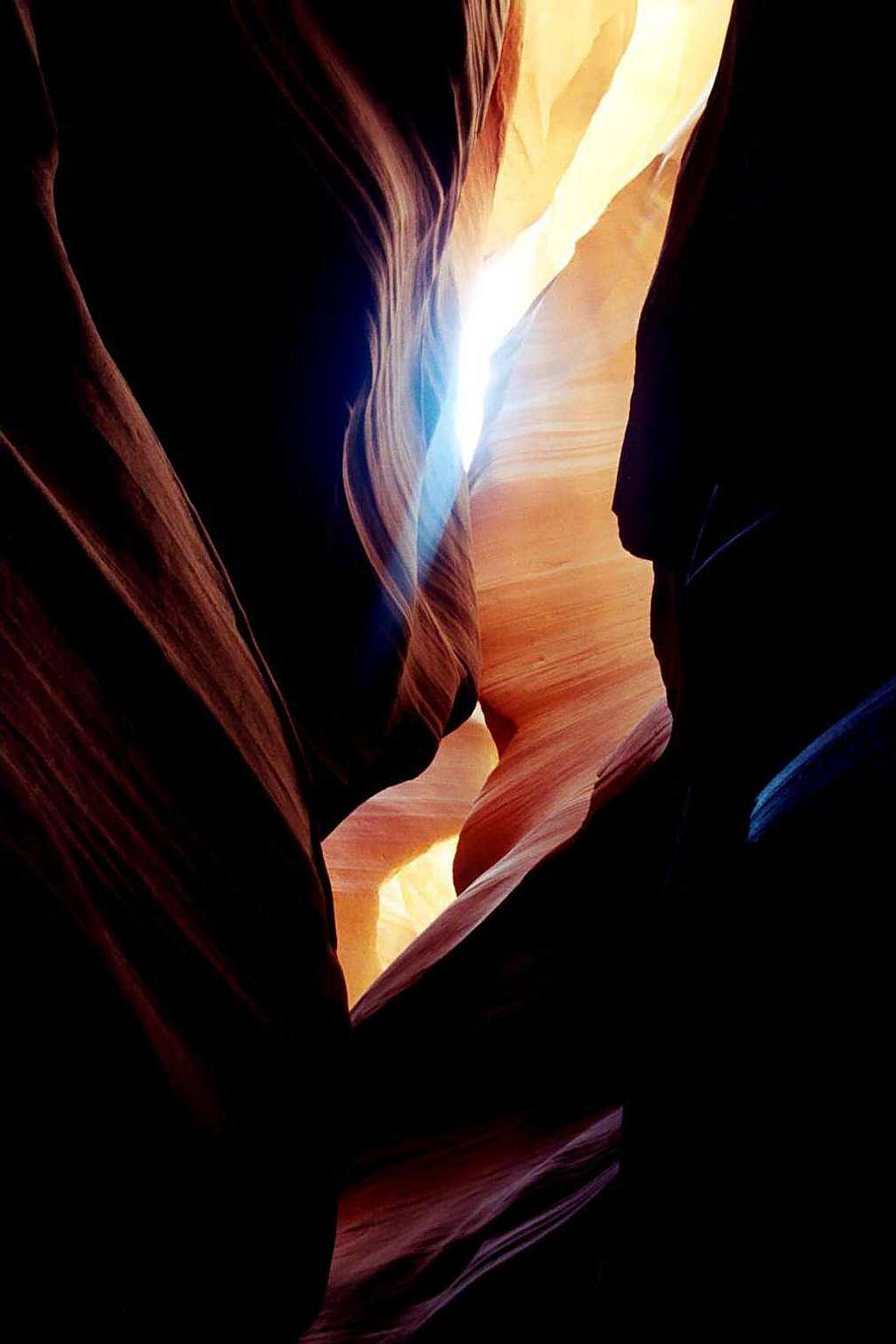
Blue Light Column
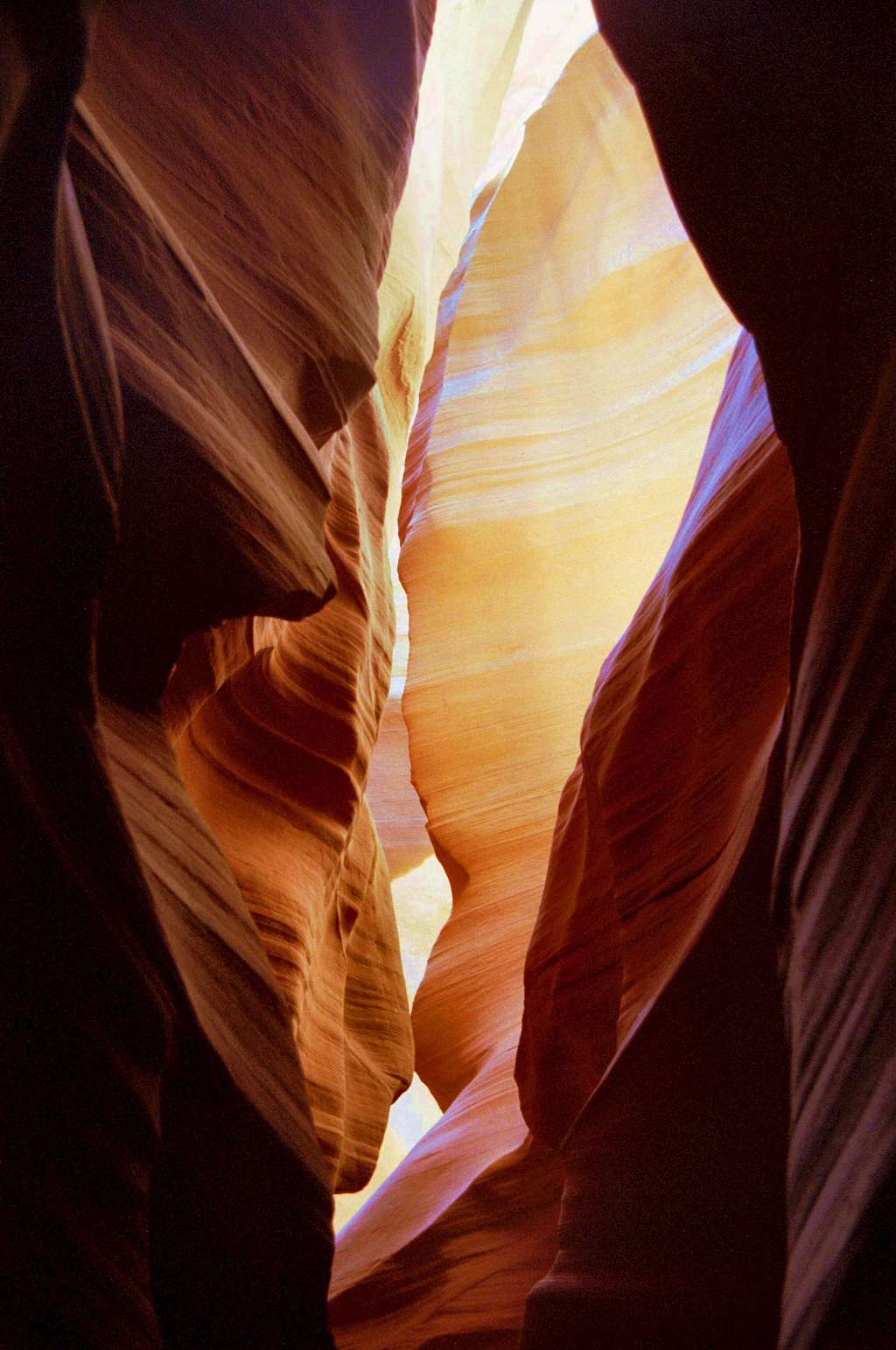
Antelope Canyon, AZ provides fantastic opportunity to experiment with light columns in a very sensuous environment. Curtis and I had timed our arrival to be in Upper Antelope Canyon at noon. However, we were foiled because we did not know that the Navajo Nation, unlike the U.S. state of Arizona, does recognize daylight savings time. We were an hour late at Antelope Canyon after departing Monument Valley, missing most of the best part of the canyon light. On top of that, in our haste from the truck I forgot the tripod. Therefore, all photos were shot hand-held, and on film no less (no digital preview!). By bracing myself against the canyon wall I was able to get a few good shots; this one coming out as best by SP consensus.

Upper Antelope Canyon
Another one shot in this famous slot canyon near Page, AZ, during the same trip described above. Actually, I prefer this one to the other, however the SP consensus (based on voting, whatever that means) is that the other one is better. For me, however, the greater area with detail makes up for the missing light column.

Upper Antelope Canyon II
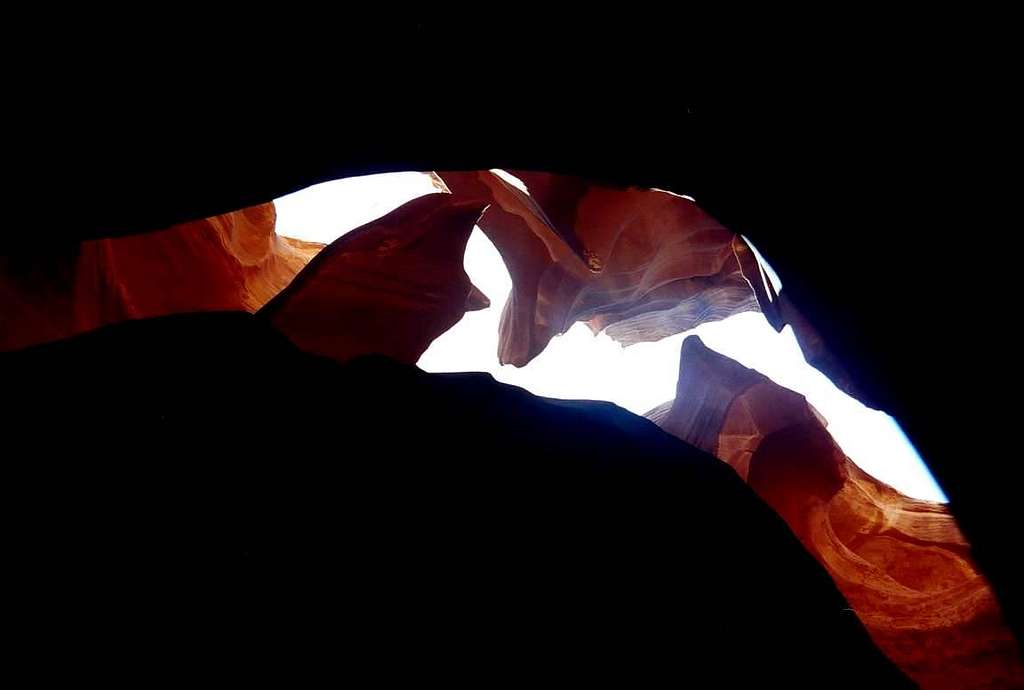
One last take, but this time from a different angle. Sometimes the best thing to photograph is that which everyone else isn't noticing .. or is just ignoring. I really like this one, it reminds me of a giant mouth with some pretty gnarly teeth.

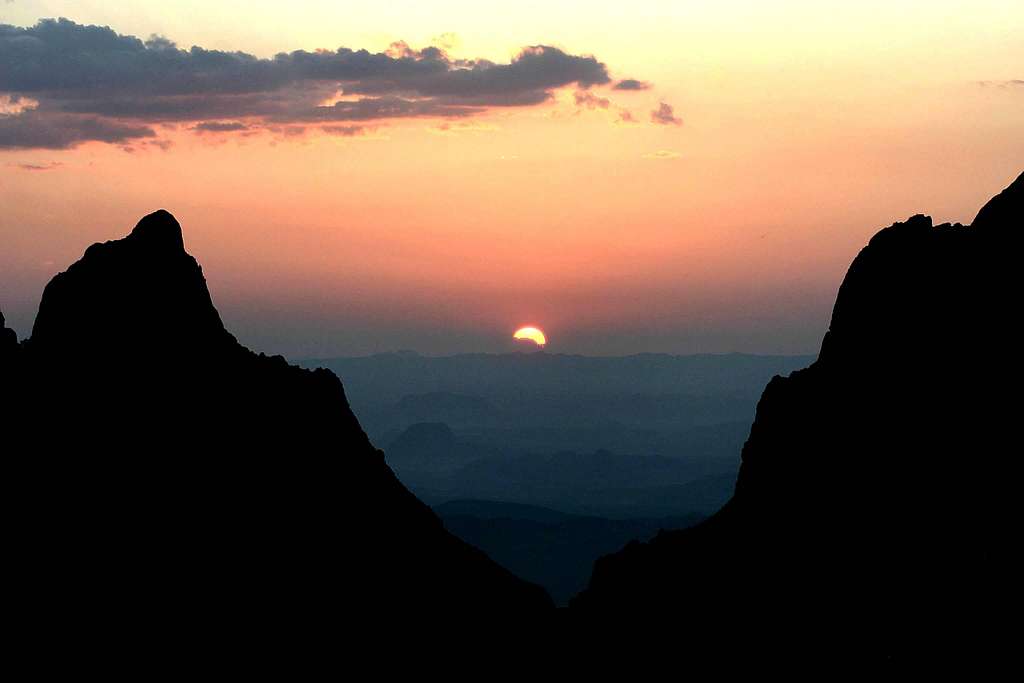
Chisos Basin Window Sunset
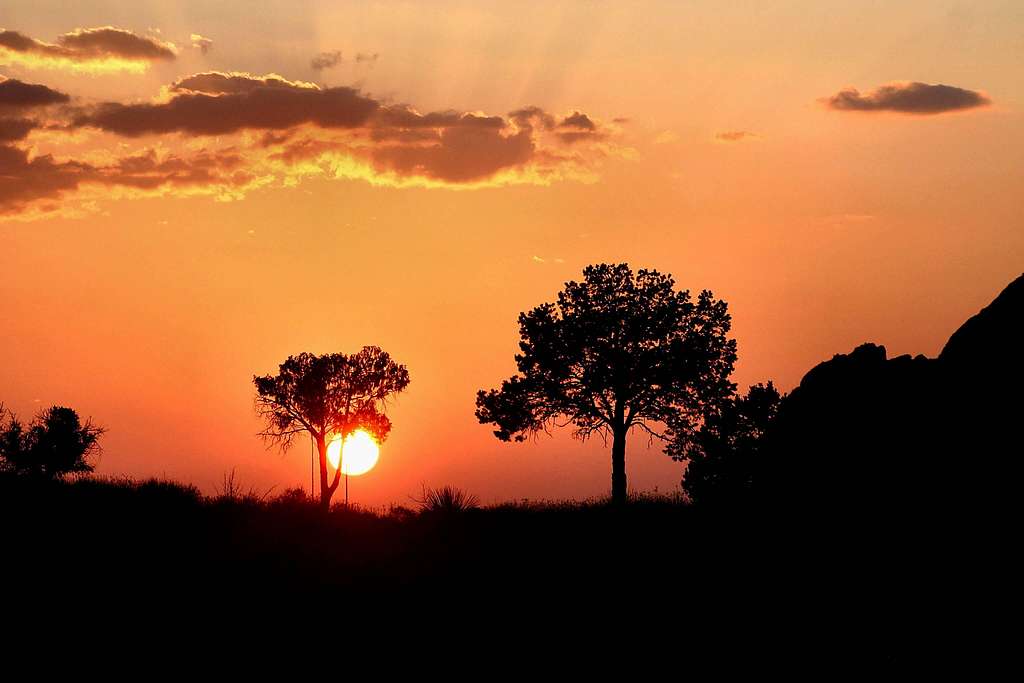
It was my turn to cook dinner, so I was just finishing the clean-up at the Chisos Basin Campground in Big Bend National Park, TX when I looked and saw a very dramatic setting sun in the window. I yelled at Curtis that I wanted to get to the viewpoint to get a photo. As we were headed up there, I notice that a telephoto shot of the setting sun behind some trees on the actual viewpoint might prove quite dramatic. So, I set up and, despite missing most of the last few minutes of the setting sun, I shot several photos. This one is not SP's favorite, but it is mine.

Sunset in Chisos Basin Window
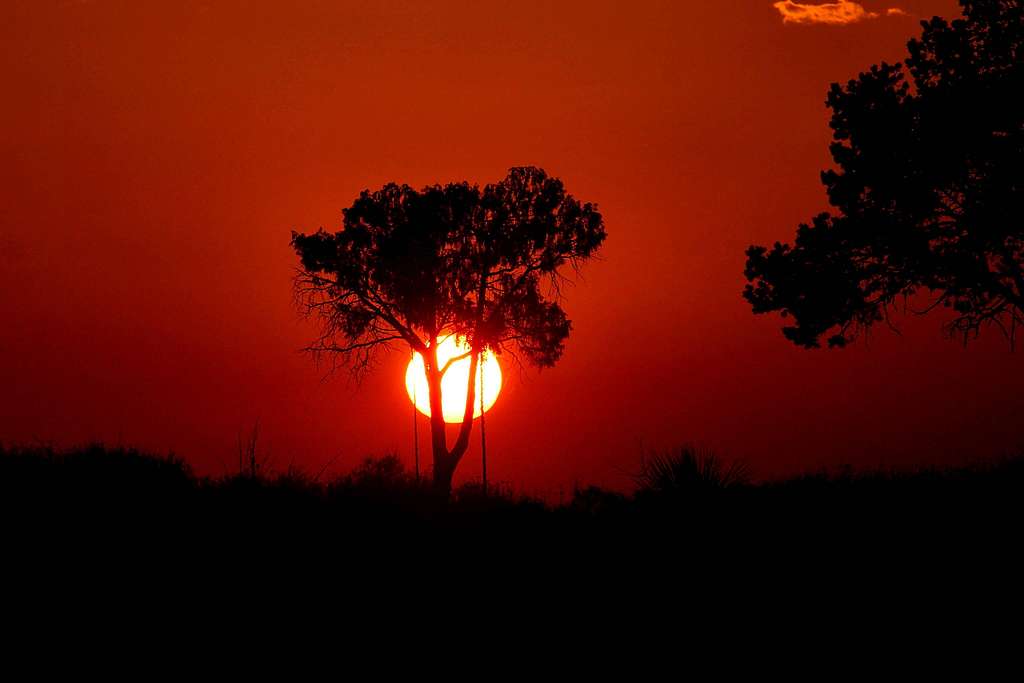
Another in my series of photos of the sunset in the Chisos Basin in Big Bend National Park, TX. This one was shot from the same location as the prior one, actually just prior to it. But this time I used a 75-300-mm telephoto maxed out. This is the SP favorite of this series of photos.

Sunset at the Chisos Basin Window
This is the final shot at Big Bend in the series of the Chisos Basin Window sunset. I had repositioned myself to the location of the trees in the two former photos. In retrospect, I wish I had placed the sun off-center, as did Bob Sihler in his excellent photo taken from a bit further away (
Carter Peak, Sunset).

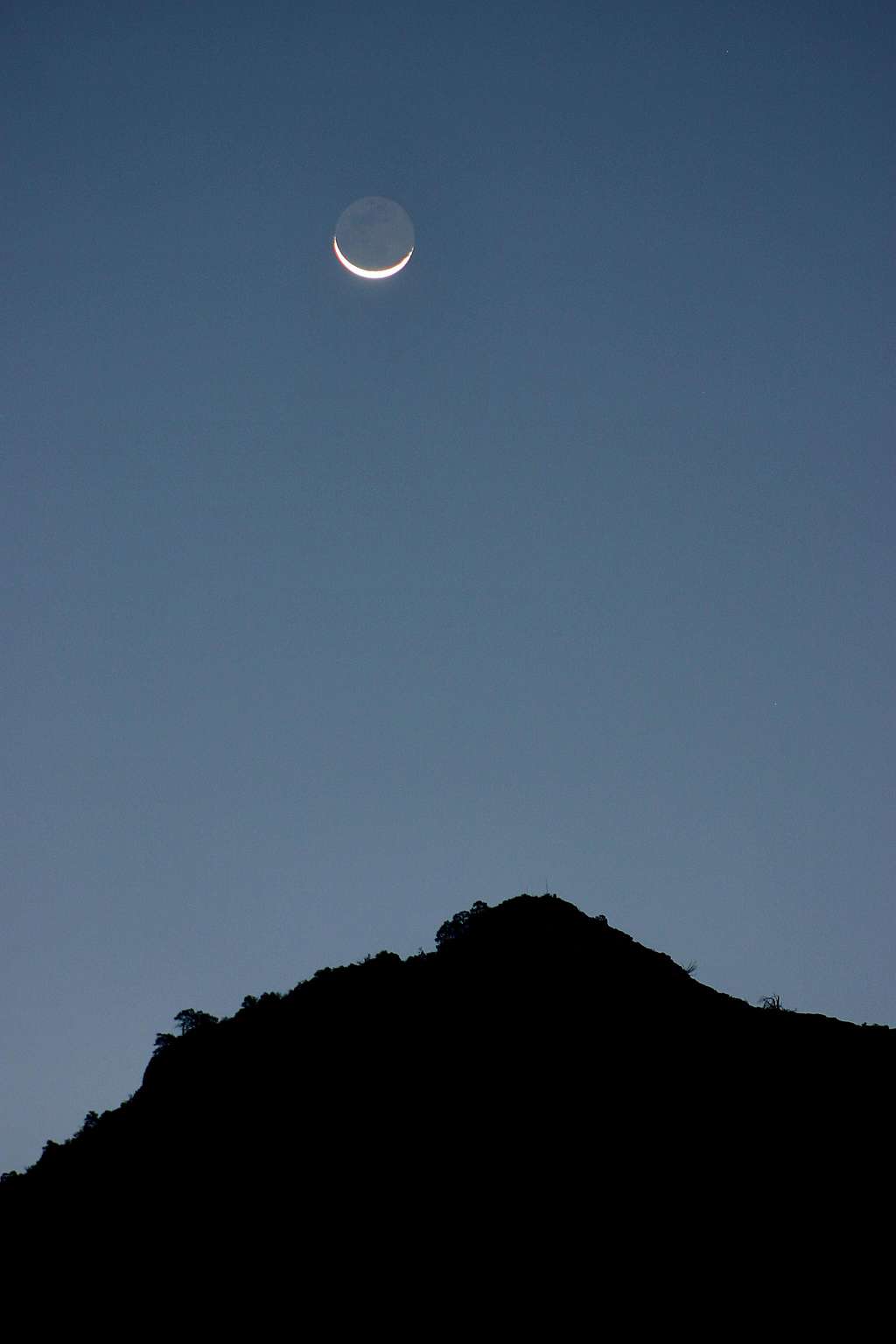
Chisos Basin Moonrise
We were fortunate to be at Big Bend National Park, TX during a time when the moon would not brighten the skies. In fact, it was a very old moon, rising just before the sun. One morning I decided to take a few shots of the crescent moon rising over the mountains. The photo below shows the new moon in the old moon's arms. The sun is about an hour behind the moon, so there is plenty of light in the sky to serve as a beautiful, deep blue backdrop to the moon. And, though it was necessary to overexpose the old moon so that the new moon would show, I didn't do it so much that it obliterates that area of the image. I suppose had I wanted to keep both areas properly exposed, I could have shot two differently exposed images and used digital techniques to merge to best parts of both photos. But, while I'm not against some post-shoot processing of an image, I wouldn't merge parts of two images to create an artistic photograph. Having said that, let me make a prediction: It won't be very long before cameras do this automatically, quickly shooting two or more images at different exposure settings, then merging the properly exposed parts of both images to create a pleasingly lit photo. I'll wrestle with the ethics of that when that day arrives (honestly, I'll likely give in!).

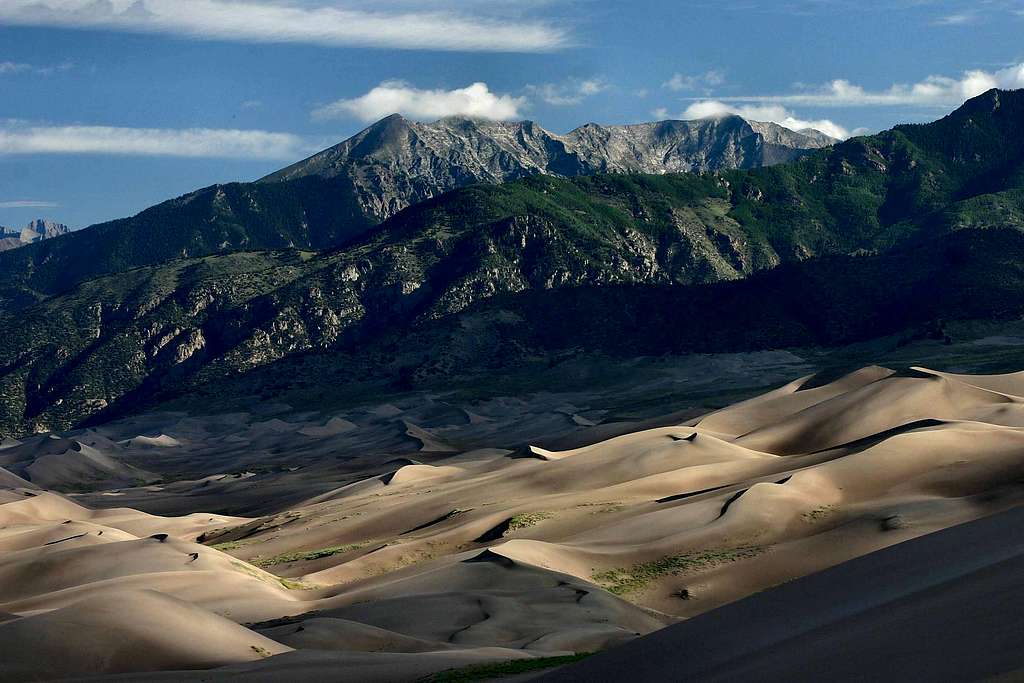
Dune Fields and Sangre de Cristo Mountains
Curtis and I had agreed to awaken early in the morning at Great Sand Dunes National Park, CO, and hike to the top of High Dune so I could get some photos. While still dark I heard some footsteps on the trail, which ran adjacent to our tent, then heard conversation between a man and a youth, probably about Curtis' age. They were already headed out. So, I hustled Curtis out of the sack and we hiked up ourselves, taking a different route. Curtis reached the summit well before me, and came back as I was distracted by things on the other side of the main dunefield, to tell me that the really great photos were on the other side. He was right, and this is our favorite of those shot that morning.

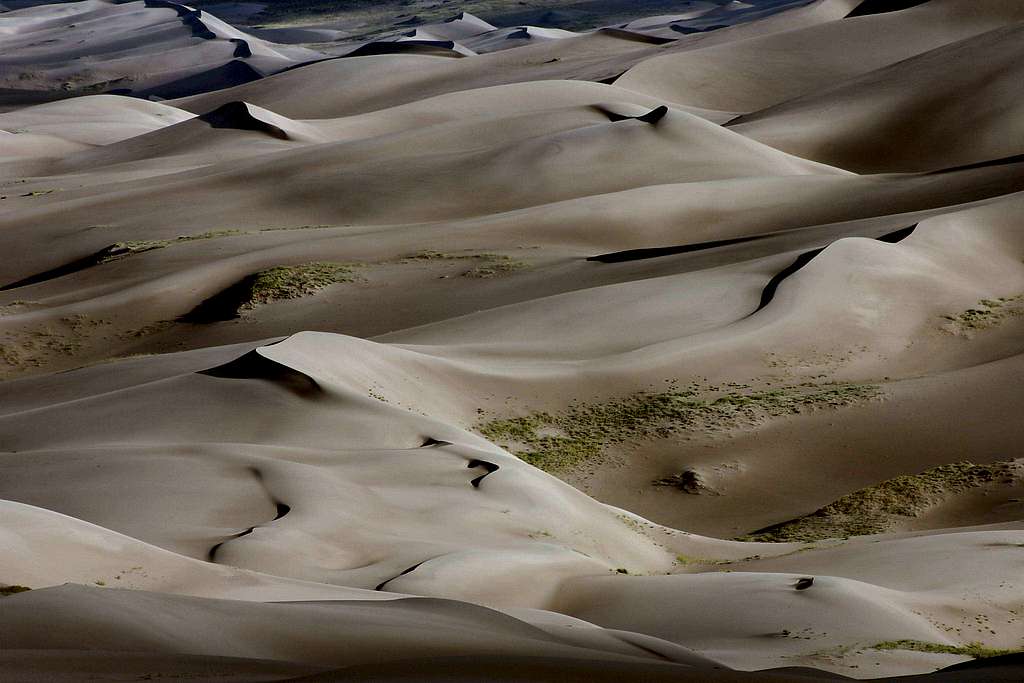
Sand Dune Complex
Also shot from the summit of High Dune, this one shows the beautiful texture of the sand dunes on the far side of the main dune field at Great Sand Dunes National Park, CO. By being at the top at the very moment of sunrise over the Sangre de Cristos, I was able to capture the complex nature of these beautiful sand sculptures. Shooting a similar photo in the middle of the day would have revealed an almost featureless terrain.

Deer in Big Meadow
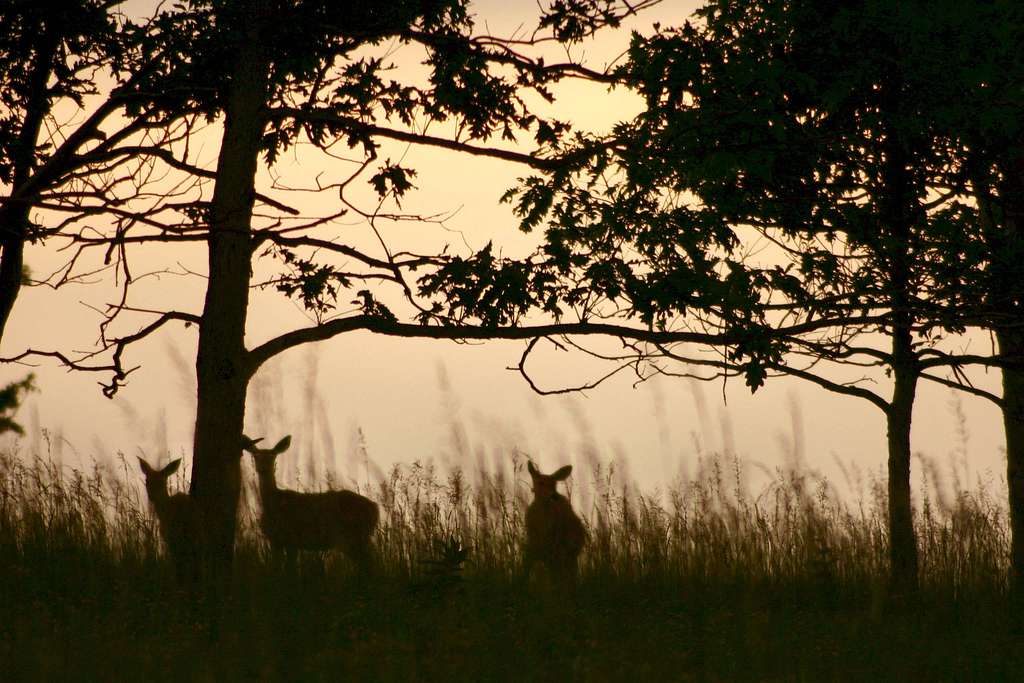
Sunset at Shenandoah National Park, VA means time to go see the deer in Big Meadow. Here they come about by the dozens, and allow people pretty close before scampering away. We had been shooting photos of the deer in the meadow and had decided to leave. As we headed back to the truck I saw three deer under some distant trees. They were grazing. I thought that the light from the setting sun, which was behind them, would lend a nice silhouette effect. The problem was that pictures of animals grazing are not particularly exciting. That and, once again, I didn't have a tripod! Forging ahead, I shot this picture at about 300-mm hand-held. I actually shot it multiple times, missing the deer all looking up quite a few times before finally striking just the composition I had envisioned.

Stovepipe Wells Sunset
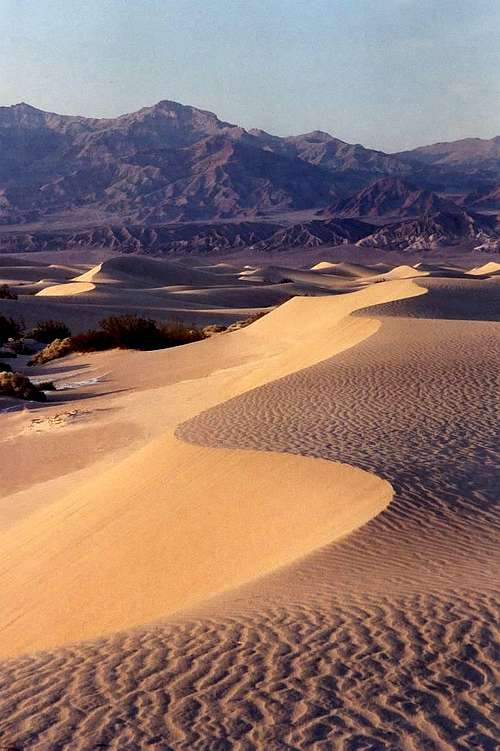
Curtis and I had driven through Tuff Canyon (the National Park Service video described it as "a spiritual experience", which it certainly was), and we were rushing so that we could hike out into the dunes at Stovepipe Wells in Death Valley, CA. Often times the best picture of the sunset is looking away from the sun, and that's the case in this image. The curve of the dune leads the viewer's eye deeply into the photograph, emphasizing the mountains, and the depth of the image. It was shot just moments before the dune field was shrouded in shadow from the mountains to the west, causing all loss of the sensational lighting effects.

Monument Valley
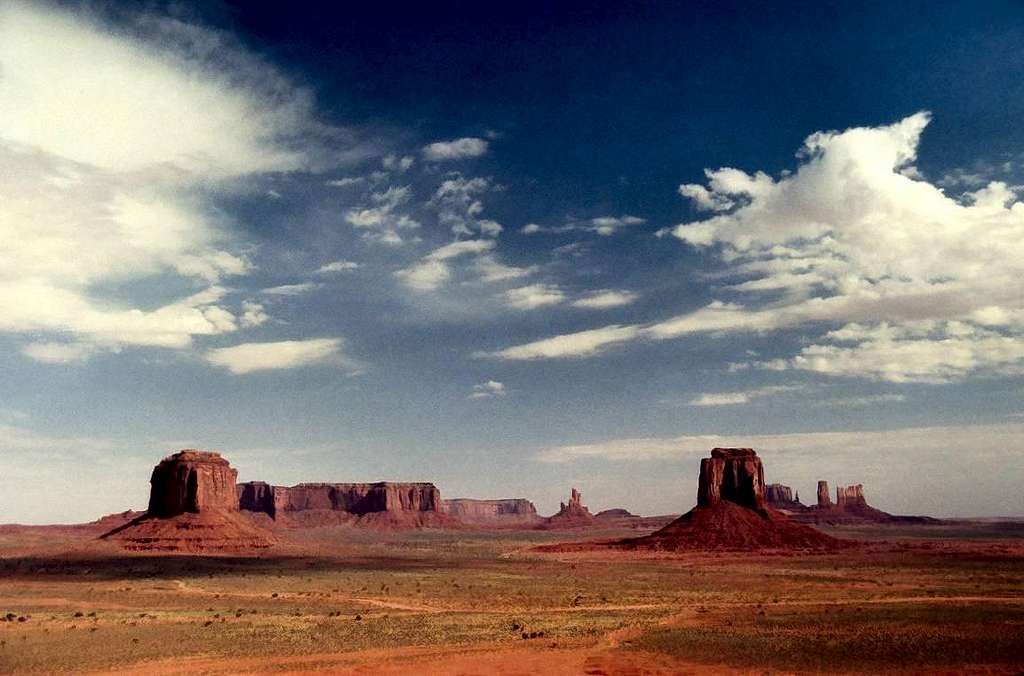
Monument Valley, AZ, is the quintessential sunrise (or sunset) shooting locale. With wide open spaces and tall towers, and several great spots to capture classic, southwestern terrain, it's a "must-shoot" for any landscape photographer. Curtis and I had spent the night at Canyon de Chelly, and arose very early to make our way to Monument Valley. The photo below was shot about 9:30 a.m. in the month of June (bear in mind that this part of the Navajo Nation does recognize Daylight Savings Time!). We also shot photos of each of us standing in this scene (not on SP), and I personally consider those two photos the most perfect light of any photos we've ever shot. Unfortunately, this light was very fleeting and within moments would disappear, and would later reappear again. Four years later, when driving south of Moab, UT on the highway that runs about 25 miles east of Monument Valley, we would once again see this perfect light (see small image at right). It can be recognized because this magical light reflects off of the ground and lights the bottom of low clouds a distinct orange color. Everything will glow -- it is indeed the perfect light for the perfect photograph.




 Page Type:
 Activities:




Comments
Post a Comment