WHO THIS ARTICLE IS FOR...
NOTE: Originally posted November 2010 this article has been updated December 2012 - and again,6th January 2013. Much of the text has been revised, based on some recent personal experience. A new section has been added on non-standard or borderline treatments of high altitude illnesses and the section on Frostbite completely revised. Numerous new links have been incorporated and finally an Acknowledgements section has been added
This article is suitable for small groups, travelling light into the greater mountain ranges or other remote mountain areas. It is particularly aimed at trekkers or climbers, intending to go to altitudes of less than 7000 metres – and on straight forward routes, where there is some risk of illness but not great risk of physical injury.
Much in this article still holds true for the higher mountains, so it may still be worth a read if you are off to tackle one of the eight thousanders – or an unclimbed face on a remote Andean peak. But on such as these, risk of illness and physical injury is very much greater and you may be advised to have a seasoned expedition doctor in the party – who has current experience of trauma management as well as altitude awareness.
The article is on
expedition medicine, but it is intended to be interesting as well as useful to non-medics especially. Many light weight parties go to altitude or to remote areas without having a doctor or nurse in the party. It is to be hoped that this article would provide a basic guide to some of the medical hazards which are possible – and to treatments which at the least may prevent the trip being spoiled for some or all of the party, but at most could save a life.
Whilst particularly aimed at non-medics, this article could also be of use to medical professionals acting as ‘expedition medic’ for the first time – and interested in a simple overview from which to make a start on their planning. Medics and others already knowledgeable and experienced in expeditions to altitude will be familiar with what is written here – but may well have comments on some of the opinions I have ventured, where medical consensus is unclear.
Particularly in the sections on altitude and altitude illness, I have kept to factual information and treatment principles as endorsed by a wide body of current medical opinion. In response to some of the feedback to date details on both controversial and developing treatments are now included. Some references are included for those who would like to go into more depth. Altitude illness has been very well researched now by generations of expedition doctors and scientists since the pioneers of the early 1950’s. There is a good deal to read if you have a mind to! The new links will add further scope here.
For other ailments there is even more scope for varied opinion. For example, on the subject of treatment of infections, no one antibiotic provides perfect cover or is perfectly safe. We are talking light weight expeditions – and most likely all the medical needs and contingencies would have to be carried in a first aid kit smaller than a doctor’s medical bag.
With limited space in mind I have tried to select medications which have more than one possible purpose. For example: the antibiotic Clarithromycin can be used to treat chest, sinus, dental and skin infections; the steroid Dexamethasone is an essential to treat High Altitude Cerebral Edema (HACE) – but I have also suggested its use to treat allergic conditions, although normally a different steroid would be used. I have also tried to keep to medications which are as safe as possible for as many as possible – as far as is possible! Finally, I have tried to keep to medications which for the most have dose regimens of less than three times per day.
Qualification to write this article:
![Aconcagua 2011 TR]() Summit of Aconcagua 6962m, 4pm 17th February 2011
Summit of Aconcagua 6962m, 4pm 17th February 2011I am a medical practitioner with 30 years experience of both mountains and medicine. My medical background is varied, but my principle qualification is in General Practice. At the current time I am working as a General Practitioner with special interests in Substance Misuse and Viral Hepatitis.
I have been on four expeditions to the Himalayas, one ‘trekking’ and the other three climbing expeditions. On those I have spent more than three weeks of my life living at over 6000m and on one occasion reached nearly 7000m. I was expedition doctor on all of the trips – and gained experience treating members of the party as well as indigenous population of the countries I visited. All of this experience was back in the 1980’s.
But then in 2011 I returned to high altitude, this time to the Andes, where I made a solo ascent of Aconcagua 6962m. I wrote this article partly to revise my own altitude knowledge in preparation for the Aconcagua trip – and I have now updated it, in part based on what worked well/what didn’t work well on that trip.
Disclaimer:
Expeditions are hazardous. Going to even modest altitude on an ‘easy’ route carries risk of serious illness and even death. Any treatments suggested here keep to current medical consensus where possible but no treatment or advice eliminates all risk. Where medical consensus is unclear or divided, I offer my own personal opinion as a doctor with some recently updated practical experience. Individuals without medical experience should go and discuss use of any medications recommended here with their own doctor, preferably one who has knowledge on high altitude. I would especially advise this for those with pre-existing medical conditions, special circumstances such as pregnancy – or if responsible for young children.
Finally, few medical treatments can be 100% guaranteed to work. Hopefully treatments suggested here are likely to work, but failures can and do occur. The only branch of medicine I have worked in where drugs did what it said on the tin every time was anaesthesiology – there is no arguing with such as sodium pentothal for example. But whilst these drugs always worked, once in a while they also threw up an unexpected and even serious reaction.
Each and every one of the drugs I have listed in this article can have adverse effects. Where an adverse effect is common or especially notable then it is mentioned. But much detail goes beyond the scope of this article.
So if you plan to carry any drugs I have suggested then I would reiterate: do go and discuss with your doctor – as well as looking up more detailed information.BEFORE TRAVEL
Prevention is way better than cure in most instances – or failing that, then at least some advance planning. There are a number of important issues to address before setting foot on the aeroplane:
•
Be fully insured for whatever you are planning to do. Make sure repatriation is included as well as cover for whatever rescue is possible, medical expenses etc. If you have a pre-existing medical condition you should disclose it, as well as discussing with your family physician.
•
Sort out any necessary immunisations well in advance. Check into your local travel clinic – or look on-line to find what you need (new links added at end). You may need antimalarials as well as vaccinations.
•
Be as fit as possible. Worth checking in with a fitness instructor at the local gym and sorting out a program which includes endurance cardiovascular training but also weights – especially if you are older and thereby more prone to injury. If you plan to carry 30kg on your back then some training should include this.
•
Make sure any footwear is broken in – although you don’t really break in plastic double boots, they break you in. Treat yourself to a toe nail ‘manicure’ last thing before you leave, cutting all nails as short as possible – but make sure you are versed in how to cut nails without setting yourself up for an in-growing toe nail (cut big toe nails near straight across, avoiding trimming corners back).
•
Be well versed in expedition medicine (so read this article!) – And make sure you and your party is provided for; for personal needs as well as minor or major medical emergencies.
•
See your dentist - allowing plenty of time to get any necessary work done well before you leave. If you have any uncertainty then read Joe Tasker’s account of his Dunagiri expedition with Dick Renshaw, in ‘Savage Arena’. A tooth abscess nearly put paid to the climb before so much as setting foot on the mountain – and caused him a week of misery and painful penicillin injections from a kindly Indian Army medic.
•
Try out your expedition food before you depart. My recent experiences have reminded me just how hard it is to predict what will tempt a jaded high altitude palate, but it is worth finding out whether your state of the art high altitude FD rations have any unfortunate effects (e.g. gas!).
•
If you have athletes foot (tinea pedis) and/or crotch rot (tinea cruris) then get it treated well in advance of going on a trip. Frequent users of gymnasium showers will be at risk of both. The fungi involved with these minor skin infections just love the sort of environment to be found in a sweaty pair of double plastics – or salopettes. The worst case of tinea cruris I have ever seen was in a companion on an expedition who ignored a minor itch – and ended up with sore pealing skin half way down his thighs. The day was saved with the chance finding of a tube of antifungal cream at an abandoned camp at 5500m. Note: if you have athletes foot, get your toe-nails checked: if infected these take several months of oral antifungal tablets to treat – but if untreated will ‘seed’ further outbreaks of tinea pedis.
![Expedition Medicine Article]() TrainFX – Danny, fitness instructor at my local gym
TrainFX – Danny, fitness instructor at my local gymAIR TRAVEL
![Expedition Medicine Article]() The team en route to Broad Peak in 1987
The team en route to Broad Peak in 1987
For most, getting to the greater ranges involves air travel. It would be possible to base an entire article on this alone, but I will just focus on a few issues which impact on health – but especially on the ability to arrive at the destination in as clear headed a state as possible. Jet-lag is hardly conducive to efficient functioning – and arrival is often associated with the need to plunge straight into complicated organisational tasks to be dealt with in the minimum time, before getting on the road to the mountains. And it is important to get things right. It is no good getting to base camp and then finding you have left the matches behind or miscalculated on the funds needed to pay off a now justifiably irate bunch of porters.
• Flights leaving in the evening are more conducive to being able to get some sleep before arrival at destination.
• Avoid alcohol during the flight if you want to function at the other end. It is true that a drink in the air is worth two on the ground. And this principle translates into the size of the hangover you may have to contend with whilst trying to make sure you have enough currency to pay the mule man or calculate the number of bottles of white gas you need to purchase to stock camp one.
• Aside from changing time zones and lack of sleep, dehydration plays a major part in degrading performance after a long flight – one of the reasons why alcohol is not a good idea. As on the mountain, there is a need to drink more than is necessary at sea level – so frequent water or juice on the flight is advisable. Naturally, caffeinated drinks such as tea or coffee are a bad idea if you want to sleep.
• Eat, but don’t over eat.
• Some people resort to sleeping tablets on a long flight. I personally wouldn’t – the quality of sleep afforded is poor and most impair mental functioning for some considerable time – even after they appear to have ‘worn off’.
• One final point: on long haul flights there is a risk of
Deep Vein Thrombosis (DVT: blood clots in the leg veins) due to being immobile for a long time. This risk would be considerably higher for a high altitude climber returning from a trip. Due to high altitude polycythaemia (thickening of the blood as an adaption to altitude) there is a much higher chance of a blood clot forming, with potentially serious results. Personally I’d take half an aspirin tablet a day, starting a few days before flying, and which slightly reduces clotting power of the blood. During awake times on the flight; go for short walks if possible or at least ‘wriggle toes’ at intervals. Someone with additional DVT risk factors (e.g. past history of same or of serious leg injury etc) – could consider wearing anti-embolic stockings.
•
In summary, get as much sleep as you can, drink lots of water or juice – and stay off booze, sleepers and caffeine. Have the odd light snack, wriggle your toes at intervals – and take the occasional stroll up the cabin.APPROACH
The approach for most expeditions may well involve a long overland journey, initially by road and later on foot. There can be a few health traps for the unwary, especially in developing countries.
• Try to adapt to local time as quickly as you can i.e. be awake, active and eat during the day and go to bed at night, even if it is difficult to sleep then.
• In a hot climate there is the need to drink more water.
• If water is suspect then either treat it (see below under ‘diarrhoea’) or buy bottled where you can... but check the seal – sometimes you may be sold a ‘branded’ water bottle which has simply been refilled from the nearest tap or dodgy water source. Don’t even clean your teeth in suspect water.
• But do clean and look after your teeth. Aside from the unpleasantness for any tent companion if you don’t, the last thing you need is a dental problem fifty miles from the road head.
• If you want to avoid diarrhoea then avoid salads, fruit unless peeled by yourself, ice cubes and food that hasn’t been thoroughly cooked. In some places it may be safest to go ‘veggie’- but still important that the food is cooked. Consider using your own eating utensils – or using your own (clean) fingers.
• Clean hands thoroughly after going to the toilet or before eating – or cleaning teeth. Could be worth carrying a few pocket sized antiseptic hand gel packs – but alcohol gel doesn’t inactivate some viruses and cannot replace thorough hand washing with soap and water (where the water source is suspect use both). Keep finger nails short.
• When on foot treat any river crossings with respect. Ensure at least someone in the party is experienced at these – and don’t hesitate to delay continuing a journey to wait until early morning, when river levels are often at the lowest.
![Expedition Medicine Article]() Overland travel in the Himalayas – Himachel Pradesh, India, in 1983
Overland travel in the Himalayas – Himachel Pradesh, India, in 1983![Expedition Medicine Article]() Camp at Skardu en route to Broad Peak 1987
Camp at Skardu en route to Broad Peak 1987![Karakorum river crossing]() River crossing en route to Broad Peak in 1987
River crossing en route to Broad Peak in 1987ON THE MOUNTAIN
This section gives an overview of a few basic principles for the safe ascent of a big mountain - before more the more detailed discussions in later sections.
The rules are comparatively simple and yet so easy to break – especially if you have been focussed on ‘the summit’ for the past two years of planning and anticipation. But if the intention is to come back alive and sporting the correct number of fingers and toes then there are a few general principles…
•
Push yourself in training but try not to overdo it whilst acclimatising. This may be easier said than done when acclimatisation is likely to coincide with the need to carry loads to set up and stock high camps. Nonetheless overexertion should be avoided in the early stages of a climb.
•
You must allow time to acclimatise. If you don’t then at best you will end up demoralised and miss the summit, at worst you may end up dead. Above 3000m the current literature suggests that however high you go on an acclimatisation foray; try not to raise your sleeping height by much more than 300-500m per day – on average. So if Camp One is 600m higher than Base then minimum would be to do an up & back to that height before going up and spending a night. If Camp One were 900m higher then two ‘up & backs’ before spending the night… etc. Additionally also add in a rest day every third day, where you stay at whatever height you have reached.
•
Don’t go to bed on a headache. Don’t even think of taking one higher up the mountain! If you do your up & back(s) and later return to spend the night with a headache then I quite like the advice given by R.J.Secor in his climbing guides:
“if I have a headache then I drink a litre of water… if after an hour I still have a headache, I drink another litre of water whilst descending…” This is good, safe advice, although personally, I may also try a minor painkiller (see Acute Mountain Sickness, below).
•
Drink plenty of water but don’t overdo it. Dehydration makes you feel crap, saps energy and is dangerous – but so does over-hydration. Be guided by your urine output: if you are ‘going’ regularly every few hours and your urine is normal pale straw colour then you are drinking enough; if you are passing dark coloured urine once per day, you are not. Conversely, if you are passing large volumes of what looks like plain water every 20 minutes you may be drinking too much!
•
Food is your energy source and is very important. You may be expending 6000+ calories per day exerting at high altitude. Paradoxically you may not feel hungry and you may even feel nauseated. But if you don’t keep topping up with food as your energy source then you will run out of energy – and crash or succumb to the cold – or both. If energy is fading, or you are cold – eat something, preferably complex carbohydrate, which gives a sustained release of energy.
If you have cold hands or feet consider the need to eat as well as attending to insulation.
•
Don’t ignore cold hands or feet. It may be tempting to, since they hurt for a while and then the hurting stops – as they go numb.
If they go numb and stay numb then you are heading for frostbite.![Expedition Medicine Article]() Broad Peak 8047m, Karakorum Himalaya
Broad Peak 8047m, Karakorum Himalaya![Expedition Medicine Article]() Menthosa 6440m, Indian Himalaya
Menthosa 6440m, Indian HimalayaHIGH ALTITUDE
![Aconcagua 2011 TR]() Aconcagua 6962m, highest summit in the Andes
Aconcagua 6962m, highest summit in the AndesThis section overlaps with an excellent article by txmountaineer 7th January 2008. He has produced an excellent piece talking about altitude from a highly scientific perspective – and he has included some great illustrations that my SP expertise hasn’t caught up with yet. Here is the link to that article:
Hi Altitude
There is another good SP article by florida frank on pressure & altitude, posted 1st September 2010:
Pressure & Altitude
Although the atmosphere extends up to well over 100 kilometres, most of it is concentrated in the bottom 10km (10,000m) – and atmospheric pressure drops off rapidly within this layer. By 5000m it is just 50% of sea level value. By around the height of Aconcagua at 7000m, pressure is down to 40%. By 9000m, or just higher than Everest, the pressure has fallen to less than 30%. These percentages equate to the available oxygen – so that 30% of atmospheric pressure means only 30% of sea level oxygen available for breathing. Without some form of adaptation the human body cannot survive on such low oxygen levels. A rapid ascent from sea level to 9000m would result in unconsciousness within minutes – and death soon after.
Acclimatisation:
It is quite extraordinary that over a few days to a few weeks the human body can adapt to surviving at extreme altitudes. The process is known as acclimatisation. Many individuals have now summited Everest (8848m) without supplementary oxygen following a period of acclimatisation of 4-6 weeks. Nonetheless, there are limitations: it is not possible to adapt to permanent habitation above around 5000m. Miners in the Andes working at over 5500m learned from bitter experience to descend to below 5000m to sleep – and did better doing this, despite the daily trek back up to altitude each day. It is possible for an acclimatised person to spend periods of a few weeks between 5-6000m – but inevitably health will eventually deteriorate to the point that survival becomes threatened. The higher you go above these altitudes; the more rapid this deterioration. Above 8000m the limit may be a few hours to a few days for most people – before risking deterioration to the point of endangering ability to be able to descend. In 1999 Babu Chiri Sherpa spent an extraordinary 21 hours camped on top of Everest and survived to tell the tale – but there have been accounts of ‘extra’ nights spent at lesser heights, to ‘recover’ from a tough summit day, which have resulted in debility to a level that descent became impossible.
A number of adaptations occur to enable the human body to tolerate the low oxygen levels of high altitude. At the start of the process and within a very short period both heart and breathing rate increase – thus taking more oxygen in and moving it around more quickly. Within hours, urine output increases as the body sheds extra water – in effect enabling the blood to become more concentrated – and thus carrying a higher concentration of oxygen. This is just a temporary adaptation. In the long term the body achieves the same effect, not by losing vital water, but by increasing the number of red blood cells. And changes occur in the haemoglobin inside the red blood cells, improving oxygen delivery still further. As acclimatisation progresses the heart rate at a given height may gradually fall back down towards normal sea level values. The breathing rate however will remain high. And the process is far from perfect. Even in fully acclimatised individuals oxygen saturation becomes progressively less with increasing altitude.
A WORD OF WARNING: the increase of red blood cells increases oxygen delivery to the tissues, but the price paid is that the blood consequently becomes thicker and more likely to clot. With prolonged periods at very high altitudes, such as on 8000m peaks, there is a significant risk of deep vein thrombosis and even stroke – and a daily small dose of aspirin may be advisable to off-set the risk – along with avoidance of dehydration. Even on lesser mountains of around 6000m, significant thickening of the blood can occur within as short a time frame as two weeks. Anybody with any additional risk of DVT or stroke should consider aspirin under these circumstances – including on the flight home (see above). If you are uncertain about your personal risk factors then discuss with your doctor who is best placed to advise you. The sort of dose of aspirin appropriate to reduce clotting is of the order of 75-150mg per day ( ¼ – ½ a standard aspirin tablet).
Oxygen saturation:
It is possible to measure personal oxygen saturation levels using a small easily portable device known as a
pulse oximeter. Such devices can be purchased for the equivalent of 80 Euros or less, run off a couple of AAA batteries and take up much less space than a mobile phone. To obtain a reading you simply clasp the little unit over a (warm) finger end and press the ‘go’ button – and within seconds the tiny screen will show both oxygen saturation and pulse rate. It is by no means essential to carry a pulse oximeter, to go to altitude. A ‘good’ reading does not guarantee immunity from altitude illness – although it may be fairly reassuring. Conversely, a ‘bad’ reading doesn’t necessarily mean you are in trouble.
Either way, it is important to interpret the reading in association with any actual symptoms – and – preferably in association with a series of previous readings so ‘the normal’ is known for a given individual. For example:
The morning after summiting Aconcagua and after a 2nd night at 6000m, I felt a bit rough. I had no headache, wasn’t nauseated – I just felt rough. So I checked my O2 sat and it was 79% - and normal for that elevation is 77%. Previous readings had shown me that I tended to be at around or just above ‘normal’ for whatever elevation – so this reading had some meaning – and I could safely put my slight malaise down to just living at altitude and a demanding summit day.
At a camp at 5500m, a climber had symptoms of AMS (Acute Mountain Sickness: see below) – headache and nausea. His saturations were in the mid 70’s – and ‘normal’ for that elevation is mid 80’s. I didn’t have previous readings for that particular climber but given that he was unwell it was reasonable to take the reading seriously. I advised taking half a Diamox tablet as well as attention to hydration and further advised that 1) he should go no higher until significantly improved 2) that he would have to descend if no better in the morning... in the event he improved, his saturations came up – and after a rest day at the same altitude he was able to go higher.
The medical services at the two Aconcagua Base Camps take pulse oximeter readings seriously and all those endeavouring to climb higher are required by park medical authorities to show favourable readings before proceeding. A normal sea level oximeter reading will be in the region of 96-98%. The Aconcagua base camps are both at around 4200m – and at this altitude readings of 85-90% would be ‘normal’. At this level anything less than 80% would dictate descent to a lower level – whereas 2900m higher, at the level of Aconcagua summit, a reading of 72% would be normal!
It is worth noting that at sea level readings of below 90% would suggest fairly advanced lung and/or heart disease! At the summit of Everest and without an oxygen mask, pulse oximeter readings would likely be around 58% - which is practically incompatible with life…
Oxygen saturation at altitude
| altitude – metres |
oxygen saturation% |
| 0 |
97 |
| 2000 |
92 |
| 3000 |
90 |
| 4000 |
88 |
| 5000 |
83 |
| 6000 |
77 |
| 7000 |
72 |
| 8000 |
64 |
| 9000 |
58 |
![Expedition Medicine Article]() Pulse Oximeter
Pulse Oximeter
As you would expect both physical and mental performance will degrade with the fall in O2 saturation at increasing altitude. Even when fully acclimatised, you cannot expect to bound up the slopes with sea level vigour, if the best saturation possible for your height is on a level with an octogenarian with advanced lung disease. My recent personal experience re-confirmed for me that it is an exhausting business just being at over 6000m, let alone doing anything strenuous. In terms of rates of ascent: from sea level a reasonably fit person can expect to sustain ascent rates of around 300-400m/hour on ‘average’ terrain. On ‘average’ terrain on Aconcagua, at over 6000m, ascent rates of roughly half this (150m/hour) are quoted as being acceptable for a realistic shot at the summit. Naturally in tougher terrain – deep snow or loose scree – then it would be hard to sustain even this rate.
In September 2012 my Dutch companion rgg clocked us at an ascent rate of 400m per hour at altitudes between 1000-2000m in the Alps. In February 2011, on Aconcagua summit day, I was managing about 125m per hour climbing the infamous Canaleta at over 6700m. At the time I had no idea of my ascent rate, which felt impossibly slow. But it struck me recently to check the times of photos I took – and this confirmed it took me about 2 hours 30 minutes to climb 312m from La Cueva at 6650m to the summit at 6962m. How some people have been able to even move on the handful of peaks of over 8500m is beyond my comprehension. I fully comprehend why it was believed impossible – without oxygen – in a bygone era.![Expedition Medicine Article]() High altitude exhaustion: approaching 7000m on Broad Peak 1987
High altitude exhaustion: approaching 7000m on Broad Peak 1987![Aconcagua 2011 TR]() High altitude exhaustion: approaching 7000m on Aconcagua 2011 - above the Canaleta
High altitude exhaustion: approaching 7000m on Aconcagua 2011 - above the CanaletaALTITUDE ILLNESS
AMS,HAPE & HAPE
Altitude illness includes Acute Mountain Sickness (AMS), High Altitude Pulmonary Edema (HAPE) and High Altitude Cerebral Edema (HACE).
Prevention is by far the best cure. With this in mind, the International Mountaineering & Climbing Federation (Union Internationale des Associations d’Alpinism - UIAA) recommends that above 3000m increase sleeping altitude by no more than 300-500m per day and have a rest day every third day of ascent. But even this rate is no guarantee of avoidance of altitude illness. Extra rest days or even descent may still be required by some individuals.
If you want more detailed information here then click on the link to the medical section of the UIAA website, which provides a wealth of information from an international body of experts in the field of expedition medicine and high altitude.
UIAA Medicine
ACUTE MOUNTAIN SICKNESS(AMS):
This is very common: 84% of tourists flying in to 3860m develop mild AMS within a few hours; also 65% of climbers on Denali and 50% of trekkers visiting Everest Base Camp experience the condition (Pollard & Murdoch 2003). Symptoms include:
• Headache
• Nausea and vomiting.
• Fatigue.
• Dizziness
• Poor appetite and sleep.
A significant percentage of arrivals at either of the two Aconcagua base camps will experience AMS. Similarly, many of the thousands of visitors to Kilimanjaro will be affected. For most this may entail a minor headache and nausea – which would respond to some simple measures (see below). But for a few, the headache may fail to respond, or nausea progress to actual vomiting – and descent may be necessary.
![Aconcagua 2011 TR]() Aconcagua: Plaza Argentina Base Camp 4200m
Aconcagua: Plaza Argentina Base Camp 4200m Rest at same height and do not under any circumstances go higher. Correct dehydration (drink until passing regular volumes of normal pale yellow looking urine) – and take
Paracetamol and/or
Ibuprofen for the headache. If nauseated take an antiemetic (see under nausea below). In the event that symptoms don’t improve within a few hours then UIAA recommends
Acetazolamide* 250mg (one tablet), which can be taken twice per day until there is improvement. In the event that symptoms don’t improve in 24 hours, then descent is indicated, to last altitude where the patient felt well.
*
Acetazolamide should not be taken if allergic to sulphonamide antibiotics.
Management of severe AMS: Swift action is indicated since above 4000m it is possible symptoms will progress to High Altitude Cerebral Edema (HACE).
THE MAIN TREATMENT IS DESCENT of 500 to 1000m, or to last altitude where the patient felt well. Descent should be started soon since it may take as little as 24 hours for HACE to develop, by which time the patient may be too ill to be able to walk out – and may require a stretcher evacuation, or evacuation by helicopter. Naturally the patient should not descend alone – I’d recommend descent with two others, so that one can leave to seek assistance in event of difficulties. Whilst preparing to descend then the same measures as for Mild AMS are appropriate (Paracetamol, anti-emetics and also Acetazolamide) but in addition
Dexamethasone may be given (see drugs list below) and, if available,
Oxygen should be administered. If unable to descend immediately (e.g. taken ill during the night) then all of these measures should be tried, but in addition use of an inflatable hyperbaric
Gamow Bag would be highly recommended if available (large enough to place patient inside and can be inflated to high pressure, simulating descent to a lower altitude). Both Aconcagua and Everest base camps are normally equipped with Gamow bags – and I would assume they are available on the main routes on Kilimanjaro).
Prevention of AMS: The UIAA doesn’t recommend routine use of medication to prevent AMS, since primary prevention, in the form of staged ascent (as detailed above), is much more important.
Two exceptions to this rule are:
1) an individual who has previously shown susceptibility to AMS,
2) unavoidable rapid ascent e.g. rescue worker.
In both these situations Acetazolamide 125mg (half a tablet) twice per day would be recommended.
![Monch 4099m]() My wife on Monch summit 4099m, before AMS struck
My wife on Monch summit 4099m, before AMS struck
In 2011 I entered the Aconcagua National Park at around 2500m and 14 days later, having followed UIAA guidelines to the letter I reached the summit at 6962m. I never suffered so much as a headache. I experienced a bit of periodic breathing at night which responded to half a Diamox at and above 5000m. The 14th day was the earliest day for a summit attempt in the schedule I had set for myself. I was aware of people - especially guided parties - operating on shorter timelines and some reaching the top. However, of a party of 6 who entered the park on the same day as me, but committed to a summit attempt 3 days before me, not one reached the summit - and their strongest member ground to a halt at around 6100m.
HIGH ALTITUDE CEREBRAL EDEMA(HACE):
This is much less common than AMS, affecting 1% of arrivals at Everest Base Camp (West et al 2007). Nonetheless when you consider the many thousands per year who visit, it should be clear that if 1 in 100 may contract HACE, then there will be a significant number of cases per season for the trekking groups and ‘Everest doctors’ to have to deal with. The same will hold true for Aconcagua and Kilimanjaro, whose visitors’ also number in the thousands per season. And every year a few cases will die, despite the best efforts of trekking and medical agencies. So HACE is a serious and life threatening condition.
What is HACE? It is a dangerous swelling of the brain associated with low oxygen levels. The condition becomes increasingly common above 4000m and if it is going to develop may well follow 24-36 hours of AMS symptoms (see above). Main symptoms include:
• Headache, often severe, which does not respond to hydration and/or simple pain relief.
• Nausea & Vomiting.
• Ataxia – unsteady on feet.
• Personality change, ‘strange behaviour’ – or even hallucinations.
• Impaired consciousness – leading to coma and death, without urgent action.
Treatment of HACE: As for severe AMS,
THE MAIN TREATMENT IS DESCENT. Once HACE has developed it is highly likely the patient will not be able to walk and would require stretcher or helicopter evacuation. Whilst making arrangements
Oxygen should be administered. If patient is conscious enough to swallow tablets then they should be given
Acetazolamide 250mg and
Dexamethasone 8mg, perhaps with an antiemetic. If consciousness is impaired* then Dexamethasone should be given by injection at a dose of 8-10mg depending on ampoule size. Intravenous injection is best, but Dex can also be given into a muscle, depending on the experience and training of the person giving the injection (and the circumstances – it may be near impossible to deliver an IV injection by torchlight, with frozen fingers in a tent battered by high winds – and in such circumstances injection say into muscle at the side of the thigh, may be more reliable). In the event of impaired consciousness I personally would also consider giving an injection of antiemetic, since vomiting constitutes a serious risk to the airway - and inhalation of vomit likely to result in death. If a
Gamow bag was available then it should be used whilst awaiting evacuation – but note: once sealed into the bag then access to the patient is difficult. Patient should first be given any injections of Dex and antiemetic, placed in a sleeping bag – and put in the recovery position so that the airway is protected in the event of vomiting once sealed into the chamber.
*
The UIAA recommends that anyone found unconscious at altitude should be automatically given an injection of Dexamethasone.
HIGH ALTITUDE PULMONARY EDEMA(HAPE):
Also less common than AMS, but more than
twice as common as HACE – affecting 2.5% of visitors to Everest Base Camp (West et al 2007). Again, with thousands of visitors per year the popular high altitude destinations will have significant numbers of HAPE cases every season. Like HACE, HAPE is very serious and a number of cases will die. Cases have been reported at altitudes as low as 3000m, but nonetheless would be more common above 4000m.
What is HAPE? It is the filling of the air spaces in the lung with fluid – leading to literally ‘drowning’ in own fluids. One of the physiological changes which occur at altitude is that the pressure in the blood vessels of the lungs rises. In susceptible individuals this can lead to the fluid component of blood being forced out through the walls of the vessels, which for unclear reasons become ‘leaky’. Like HACE the condition may take 24 hours or more to develop – but doesn’t necessarily follow AMS. It may come on quite suddenly, but may also be more likely to occur in an individual suffering from a chest infection or even just a ‘cold’. Indeed, early HAPE symptoms may be difficult to distinguish from a mild chest infection. More established HAPE symptoms may be hard for the non-medically trained to distinguish from pneumonia. The main symptoms are:
• Shortness of breath – more severe than expected for the altitude and perhaps even just at rest.
• Cough – again, common symptom at altitude – but associated with frothy and even blood tinged sputum in HAPE. With pneumonia, sputum may be yellow or green (& will be a fever).
• Blueness of lips and fingers. Again, common at altitude due to cold – but the principle distinguishing feature is if the tongue is blue as well – this is ‘central cyanosis’ due to hypoxia and constitutes a serious sign. There could be such ‘blueness’ at very extreme altitudes, say in excess of 7000m, but we are concerned here with more moderate heights – and so it can be taken as a significant warning.
• A medically trained person would be able to detect ‘crackles’ on listening to the chest.
• A pulse oximeter reading would likely be much lower than expected for the altitude (ensure fingers are warm before taking a reading). A pulse oximeter reading may be helpful in establishing the diagnosis in the event of uncertainty. I have read accounts of even quite experienced high altitude climbers, worried that they had edema, when with hindsight they just had a bad case of high altitude cough. A pulse oximeter reading can help clarify here.
Treatment of HAPE: As for HACE – but instead of Dex, give
Nifedipine – which reduces pressure in the lung vessels.
DESCENT is still number one option, with
oxygen if available - and
Gamow Bag if descent is delayed. Similarly to fully established HACE, a sufferer of HAPE may be too ill to walk – but judicious use of oxygen and Nifedipine may buy enough time to enable a patient to lose altitude on own two feet.
Warning: UIAA recommends Nifedipine in slow release form (Nifedipine 20mg SR), citing the risk of a dangerous fall in blood pressure with the ‘normal release’ formulation. Note also: UIAA also recommends that HAPE is NOT treated with diuretics – as are other forms of pulmonary edema, with different causation.
CO-EXISTING AMS/HACE/HAPE:
Just to confuse, elements of all three conditions may occur together. It may be difficult even for medically trained personnel to distinguish which is from what. Under such circumstances it may be appropriate to treat for all 3:
DESCENT is never wrong, neither are
oxygen and/or
Gamow Bag.
The UIAA recommends giving both Dexamethasone and Nifedipine if both HAPE and HACE are suspected.
It may do no harm to also give acetazolamide, headache pills and antiemetic – although I would suggest keeping any oral medication to the minimum if consciousness was impaired.
UNPROVEN HIGH ALTITUDE TREATMENTS
NEW SECTION The UIAA recommends the following of a sensible program of acclimatisation to altitude and doesn't promote the use of any drug or substance as being an appropriate alternative. As above - neither do they promote routine prophylaxis against high altitude illness (the only exceptions being certain individuals known to be especially susceptible and such as rescue workers forced to make a fast ascent - when acetazolamide may be used prophylactically).
The following are a list of agents which either may have potential to treat/prevent altitude illness but as yet without a full evidence base - or be claimed to do so, but again without a proper evidence base to support promotion of use:
Sidenafil/Tadalafil (aka Viagra/Cialis): this is not about droopy middle aged men getting lucky at camp 3! But as a ‘side effect’ of treating erectile impotence this class of drug reduces pressure in the blood vessels of the lungs and thereby can be used to treat HAPE – as an alternative to Nifedipine. Some specialist high altitude doc’s are prescribing these drugs in the field already and the rather limited small scale research to date is
promising. UIAA is not endorsing routine use of these drugs yet.
Until they do, Nifedipine will continue to be the agent I would carry.
Salmeterol: this is a long acting drug used via inhaler by some asthmatics. There is some evidence from small scale trials that this can reduce the incidence of HAPE in some susceptible individuals. I would consider this if unavoidably making a rapid ascent or if advising someone going to altitude who had previously suffered from HAPE.
Again, the UIAA does not yet have an official position on this drug.
Ginko biloba: extract from a rare tree, found in parts of China. Thought to treat all manner of ills from low libido, to circulatory disorders and even dementia (by improving circulation in the brain). But the evidence is conflicting. There is also conflicting evidence of benefit in preventing AMS.
Probably it doesn’t.
Ibuprofen: Diego Sahaqun brought to my attention a trial which seems to demonstrate clear benefits of taking Ibuprofen to prevent AMS. See link to
SP forum discussion. The trial was small and outcomes were measured using the Lake Louise assessment scale, which is very much symptom based, with a certain amount of subjective medical observation.
So I would suggest that taking Ibuprofen probably relieves symptoms more than it would directly affect the acclimatisation process. To demonstrate that you would probably need to include more objective measures – such as oxygen saturation and other physiological parameters.
Coca leaves: a historical treatment and alleged 'preventative' of AMS used over generations by Andean civilisations. Coca leaves contain a number of alkaloids including cocaine – although a lot of leaves have to be processed to produce significant amounts. The amount of cocaine produced by chewing leaves is small and not enough to induce the euphoria associated with use of the drug in pure form. However, there is enough pharmacological effect to act as a mild stimulant and to
suppress hunger, thirst and pain. This in turn may give the illusion of ‘treating’ AMS. But there will be a price to pay: profound fatigue may follow any stimulant effect and I would suggest suppression of especially hunger and thirst to be a dangerous thing at altitude.
On Aconcagua in 2011 I came across an individual who I was aware was routinely taking coca leaves. He went well at times but there were other times when he inexplicably went into a state of near collapse, including a dangerous episode of hypothermia, quite low down on the mountain. He reached the summit of Aconcagua in reasonable time on his summit day, but once again was in a state of near collapse, apparently due to dehydration, during the descent - and had to be virtually carried the last few hundred metres to the high camp on the way down, by his two long suffering companions.
FROSTBITE:
As usual best option is prevention. To quote R.J.Secor in his Aconcagua guide book
“no summit is worth the loss of even a single digit”. In other words, if you think you may be developing frostbite, take immediate action, which may mean descent to a warmer elevation or back to the tent to warm up.
In 2004 22 year old Adam Marcinowicz made a solo ascent of Aconcagua 6962m and reached summit completely alone and during a storm on 16th January. He suffered frostbite to most of his toes – but especially to the left big toe, the tip of which became ulcerated and black. A local surgeon advised amputation. However, Adam had downloaded digital images of his injuries onto his website. He made contact with the British Mountaineering Club who facilitated review of the photos by a vascular surgeon in the UK - who had an interest in Frostbite. The surgeon advised against surgery and recommended return to Britain. Adam followed advice, cutting his trip short and returning home – where his injuries continued to be managed ‘conservatively’ – with wound care/dressing changes. The surgeon continued to monitor progress from further images posted by Adam on his website.
3 months post injury Adam was able to run a marathon (dressed as a chicken) but 9 years on, he still has numbness and abnormal nail growth affecting his L big toe – although outwardly there is little sign now of the original injury.
![Frostbite]() Adam M:2 days post frostbite Adam M:2 days post frostbite |
![Frostbite 2]() Adam M:9 days post frostbite Adam M:9 days post frostbite |
![Frosbite 3]() Adam M:60 days post frostbite Adam M:60 days post frostbite |
![Frostbite 4]() Adam M:9 YEARS post injury Adam M:9 YEARS post injury |
First sign is tingling sharp pain – such that the next sign, that of numbness, may be welcomed and even ignored. At an early stage the condition is reversible by simple warming – which may include eating some high energy food to generate some more core heat. Recovery at this stage is painful – the ‘hot aches’ are well known to most from childhood experience with snow-balls. If the affected tissues - be it fingers, toes, nose, ears etc – are not warmed then at the next stage they become hard, fish belly white and frozen. Following warming at this stage, recovery may occur, but tissues may then become very swollen, almost as if scalded – and extremely painful and susceptible to further injury at the slightest trauma. At the final stage, where deep tissue death occurs, the tissues darken – and progress to becoming black – and there is risk of the serious infection known as Gas Gangrene
![Aconcagua 2011 TR]() With 100kph+ winds and temps in minus 20's this storm on Aconcagua resulted in 5 cases of deep frostbite and 3 deaths 11-13 February 2011
With 100kph+ winds and temps in minus 20's this storm on Aconcagua resulted in 5 cases of deep frostbite and 3 deaths 11-13 February 2011 Immediate warming if at an early stage. However, if the tissues actually become frozen then modern advice is
DO NOT RE-WARM UNTIL DESCENT to a lower elevation and the guarantee of avoiding both further cold and physical trauma. This may include avoiding walking if the frostbite is to the feet. In other words someone who has just thawed out frost bitten feet would potentially need to be carried or helicoptered out. Aside from protection from physical trauma, any frostbitten tissue also needs protection from infection – so scrupulous hygiene measures are essential and use of antibiotics may need to be considered. Sterile dressings would be advisable. On the hygiene front, someone with deep frostbite of the fingers ought not to use said fingers to wipe their butt. This may enter a new dimension into expedition interpersonal relationships…
Frostbite can be very painful – not in dead tissue, but at the join between living and dead.
Strong pain relief may be required (see drug list below). In addition
aspirin 75-150mg (1/4 to 1/2 standard tablet) should be given daily to facilitate circulation and
ibuprofen 400mg (so long as no contraindication) 3 times per day to reduce toxin formation in the damaged tissues.
In the event of infection (see below under INFECTION)
antibiotics should be given. Signs of infection may include unpleasant smell and seepage of pus – and there is the risk of progression to a very serious infection known as
gas gangrene, characterised by a particularly unpleasant sweetish smell. Thus it is appropriate to give aggressive antibiotic treatment and as listed below
clarithromycin and
metronidazole given together is an appropriate combination.
Surgical treatment of frostbite: As per the case history above, it is appropriate to delay any decisions on surgical treatment until injury can be reviewed by appropriately experienced and trained experts – normally after return home. Then current practice is to delay any decision on surgery such as amputation for as long as possible: remarkable regeneration can occur and amputation be avoided (as in the case above) – or if not, then at least there will be clearer demarcation between healthy and dead tissue - and judicious amputation more likely to lead to healing without complications.
I absolutely do not recommend the practice of the famous British polar explorer Sir Ranulph Fiennes – who, impatient with his surgeon, amputated his own blackened digit ends with a hacksaw, because he kept knocking them on things (which hurt). He not only got into trouble with his surgeon, but also with his wife, who allegedly objected to finding mummified toe ends on the side of the bath!
UV DAMAGE:
This includes damage to eyes as well as skin. Paradoxically up in the icy cold environment of high altitude there is as much risk of sustaining burns as there is of frostbite. Ultra violet light from the sun is less filtered out by the thin; relatively dust free air at altitude. Correspondingly it can burn much more quickly than at sea level. It is possible to sustain burns even in cloudy conditions, where the sun isn’t visible. Yet again: prevention is better than cure.
Skin protection: All exposed skin should be protected, if not by clothing, then with high factor sunblock (spf 25 or above). Risk of sunburn is substantial even at modest approach type altitudes. On snow, glare comes from all directions so it is worth applying block under tip of nose and just inside nostrils, under the ear lobes – and for beardless individuals, under the chin.
Eye protection: Eyes must be protected with suitably rated sunglasses, with side pieces to stop glare from the side.
Snow blindness: This is a UV burn of the exposed parts of the eye, much the same as the condition known as ‘Arc eye’ – sustained by welders who fail to use eye protection. The eye becomes intensely painful and red – and extraordinarily sensitive to even dim light. In severe cases it results in temporary ‘blindness’ since it is simply too painful to open the eye(s). The pain of snow blindness is almost invariably described in terms of having ‘red hot sand or iron filings’ poured into the eyes. Some relief can be obtained through use of local anaesthetic eye drops (e.g.
Amethocaine eye-drops) and in severe cases it may also be necessary to also tape the eyes shut for 24 hours, having also applied antibiotic ointment to lubricate and prevent secondary infection.
Usually snow blindness (or ‘arc eye’) resolves fully. However, repeated even minor UV burns to the eyes results in formation of a
pterygium – essentially an overgrowth of scar tissue, which forms on the conjunctiva (white of the eye) and can grow across the cornea. At best this is unsightly; at worst it will obstruct vision and will require a painful operation to remove it. UV damage to the lens of the eye could also lead to cataracts which will always affect vision.
In 1987 on the way to Broad Peak I observed that all our porters had marked pterygium formation. When we reached the Baltoro Glacier they were all issued with sunglasses, but despite a lecture several ignored advice and stored their sunglasses for a rainy day – or hung them decoratively round their necks. At the end of every days march there were always a sorry few at the evening ‘sick call’ with sore red eyes – doubtless adding further layers to their pterygia.![Paiju Camp Baltoro]() Issuing Porters with sunglasses en route to Broad Peak, 1987
Issuing Porters with sunglasses en route to Broad Peak, 1987OTHER HIGH ALTITUDE CURSES
HIGH ALTITUDE COUGH:
I get this without fail every time I go above about 3500m. It is a painful irritative dry cough associated with inflamed mucous membranes in the respiratory tract. In severe cases it can be violent enough to result in rib fractures. At the very least disturbing the sleep of the sufferer and anybody else within earshot (if not already kept awake by their own cough). Even the UIAA can’t seem to come up with anything much better than steam inhalations and throat lozenges. On Broad Peak in 1987, I tried wearing a surgical mask above 6400m – which looked dramatic – but didn’t really help – not least since by the time I was at that altitude the damage was already done*.
Codeine containing preparations may be of some limited value as a cough suppressant, but I’d exercise caution at altitude since they could also potentially depress respiration. This in turn could worsen nocturnal ‘periodic’ breathing (see below) as well as being potentially dangerous. Doses of Codeine of around 8-16mg, which is the dose in ‘low strength’ Paracetamol & Codeine tablets would probably do no harm however – and I would carry some of these in a high altitude first aid kit, as dual purpose for irritative cough and pain.
*I’m convinced now that the key to limiting this really aggravating high altitude curse is (again) in
prevention: you need to look after the lining of your throat and airways from the outset.
• At lower elevations the key issues are avoiding breathing in dust and smoke. Many of the Himalayan and Andean approaches are both dry and dusty – and breathing in dust damages delicate mucous membranes, but also may introduce infection (see ‘common cold’ below). Some of particularly Himalayan approaches are associated with staying in poorly ventilated dwellings, with open fires or leaky wood-burners** (although by far the worst experience I have personally had was in a New Zealand mountain hut).
• At higher elevations the key issues are keeping the airways from drying out and (so far as possible) warming the very cold dry air that is being breathed in. It is impossible to avoid damage and the higher you go the worse it will be – but such as; sucking on ‘lubricating’ cough lozenges, creating a steamy environment in tent, filtering inspired air through a face mask – all of these can provide a modicum of help.
On Aconcagua in 2011 I had a BUFF, which I used round my face at low elevations whenever there was dust blowing around (dust + very dry air = a good way to end up with a respiratory infection, let alone sore mucous membranes). At higher elevations I used the buff whenever it was cold (virtually all the time above 5000m). On the summit day I sustained my flagging energy with ‘energy gel’ which I’d never used before and found unexpectedly palatable above 6400m - but also of the right consistency to lubricate sore mucous membranes, thereby giving a modicum of relief. Overall, with buff and energy gel, I fared better all the way up to Aconcagua summit in 2011 than I did up to the same altitude on Broad Peak in 1987. ![Expedition Medicine Article]() On Broad Peak I wore a surgical mask over 6500m, but it didn''t do any good.
On Broad Peak I wore a surgical mask over 6500m, but it didn''t do any good.![Expedition Medicine page]() Buff as a dust filter
Buff as a dust filterCOMMON COLD
I have heard of many a trip to high altitude wrecked by the humble ‘cold’. Like most illnesses, a cold is made worse by being at altitude – and there is some medical evidence that progression to bronchitis increases chances of further progression to both pneumonia and HAPE. There are two issues:
Try to avoid catching a cold – so avoid staying in very crowded poorly ventilated communal dwellings and try to avoid breathing in a load of dust (as above). If you do catch a cold follow simple hygiene measures to avoid passing to others in the party.
For your own safety try not to take a really bad cold higher up the mountain... descend to as low an elevation as feasible to recover or get through the worst of it, before going high. For one thing it is hard to recover above 5000m and then, as above, there is the increased risk of HAPE.
Years ago my wife went on a guided trek to Everest Base Camp – her first experience of altitude. En route she remembers staying in one hut which was both particularly crowded and poorly ventilated with eye-watering wood-smoke billowing around. She was aware that a few individuals inside had heavy colds – and that some of the more experienced members of the party she was with elected to sleep outside! Not surprisingly she (and others) went down with a cold and it nearly wrecked her trip. She made the high point Kala Pathar 5545m, but next day was too ill to go with the few in her party still fit enough to get to Everest Base Camp. On her last night at altitude she thought she was dying of suffocation and had to spend the whole time sat up to be able to breathe... and one member of her party went down with HAPE and had to spend the night in a Gamov Bag before being helicoptered out...
CRACKED LIPS
Polar explorers as well as high altitude climbers get this. Historic and present day polar literature especially, is riddled with the misery of dry fissured lips splitting open and dribbling blood and even pus into the morning oatmeal...
In the past I have spent a fortune on impressive arrays of lip protection and balms – similarly impressive to the array of lipstick owned by my wife – but I have still always ended up with split lips eventually.
On Aconcagua in 2011 for the first time ever I returned from a trip with intact lips. I didn’t suffer at all. I didn’t use heavy duty zinc oxide paste, which I’d always thought was the true Rolls Royce of lip protections, nor did I carry a great range of products. I got by using just the humble “Original ChapStick” by Lip Health (a mere factor 10 in sunblock). What did it was purchasing dozens of the things – they don’t cost much. And I put them everywhere – in every container, in every pocket of my back pack and clothing, so I was never without - and I got into the habit of applying it constantly. The psychological impact of this behaviour was profound – to this day I still obsessionally put ChapSticks in every pocket, even just to go to work. But I didn’t get split lips on Aco – and I have never suffered since.
CRACKED FINGERS
I find that after a week or two at altitude I become prone to painful fissures and splits in my fingers. It seems worst at skin creases and at finger ends either side of nails. Once a split happens it never seems to heal until return to low altitude. Nothing heals well at altitude – and this should be born in mind with any cuts or abrasions. As an aside, if a wound had to be stitched at altitude, then sutures may need to stay in much longer than at sea level... But returning to the cracked fingers I find superglue very useful: hold the split closed – and then apply a thin line of superglue along the line of the split. I then wrap micropore tape around. This certainly helps – and
silk gloves provide a modicum of prevention – protecting the fingers for the handling of objects in cold temperatures. However, on Aconcagua in 2011, I still ended up with painful splits in most finger ends, which refused to heal until I descended back to below 4000m – and then they seemed to heal in a couple of days.
Note: superglue is NOT a recommended medical treatment. I am simply sharing something that I have personally found expedient. There is ‘medical’ skin glue available for the treatment of small cuts (e.g. Histoacryl) – which is a better recommendation – but also very expensive.
PERIODIC BREATHING
Night times at altitude can be a trial for a number of reasons, but the worst is Cheyn Stokes or ‘periodic’ breathing. At sea level this kind of breathing is regarded as a sign of impending
death, but at altitude it is just part of
life.
The mechanism of it is down to what drives you to breathe. Normally we rely on rising carbon dioxide levels making the blood more acid, to stimulate breathing. This is a very sensitive control - and you don’t have to worry about whether it will continue to work when you go to sleep. It just does.
At altitude this changes. The breathing rate is higher in order to get enough oxygen in – but as oxygen goes in, carbon dioxide goes out. With an elevated breathing rate therefore, levels of carbon dioxide in the blood fall, making it become more alkaline – which means carbon dioxide and blood acidity ceases to be the main driving force to breathe.
Instead, falling oxygen levels take over. This works fine when you are awake and active. But try to go to sleep and you find that this system is far less sensitive and even seems dependent on conscious control. What actually happens is that when you nod off you forget to breathe, oxygen levels fall – but don’t drive breathing to start again until levels are very low – and then the drive kicks in with a vengeance: and you wake up gasping for breath – and for a moment or two breathing is almost at a pant – until it starts to slow, you nod off again, stop breathing – and the cycle starts again. Even if it doesn’t keep you awake, it can sound most alarming to a tent mate.
The UIAA suggests Acetazolamide (Diamox) to help these unpleasant symptoms, at a dose of one 250mg tablet at night. Acetazolamide works by making the blood more acid, compensating for the lower carbon dioxide levels – and this drives breathing a little, off-setting the tendency to this periodic breathing. However, the down side to this drug is that it is also a diuretic, increasing urine production. This is not very desirable when tucked up for the night in a sleeping bag. I would therefore suggest half the recommended dose of half a tablet (125mg) and only take the other half if the lower dose proved ineffective.
Medical consensus these days is against all forms of sleeping tablet at altitude. All of these have the potential to further depress respiration – worsening the periodic breathing and increasing hypoxia. In turn this would increase the risk of HACE and/or HAPE.
In 1987 on Broad Peak we all used sleeping tablets such as Temazepam and Triazolam. The highest elevation I slept at was 6450m and I found the periodic breathing a curse at that elevation. We all made it up to around 7000m but at that height one of the party, normally the fittest, went down with a blinding headache and became uncharacteristically tearful. I suspected he was developing HACE and escorted him down. With hind sight I wonder if he would have deteriorated in this way had we not depressed our breathing over night with sleeping tablets. I am sure that taking Temazepam may have worsened my periodic breathing.
In 2011 on Aconcagua I didn’t use sleeping tablets and my periodic breathing did respond to half a diamox tablet, at all elevations including 2 nights at 6000m.
HEARTBURN
This is nothing to do with the heart. What is meant here is ‘acid reflux’ – a very unpleasant symptom involving gastric contents coming up into the gullet, even up as far as the throat. It causes a nasty burning sensation behind the breast bone and/or the throat – and there may be a taste of vomit. It may also cause a cough or exacerbate a pre-existing cough. It tends to be aggravated by laying flat and may be much worse after a heavy meal. Why this is so troublesome at altitude is not completely clear. One theory I have heard is that with the deeper breathing of high altitude, pressure in the chest is ‘negative’ more – which tends to draw stomach contents up, as well as (hopefully) air down. If you are affected than take more frequent but smaller meals, avoid spicy food, sleep with your head end propped up – but you may still need a lot of antacids. I remember running out during a prolonged spell storm bound in a tent at 6000m – it was not pleasant. If you know you are prone to acid reflux before going to altitude I’d speak to your doctor and ensure you have appropriate medication.
INSOMNIA RECIPE
If suffering from the usual – ie a bit of periodic breathing, dry irritative cough – and heartburn to boot, then as an alternative to a potentially dangerous sleeping tablet I would recommend the following:
•
Half an
acetazolamide tablet...
• For the cough; a couple of low strength
paracetamol & codeine tablets (codeine dose 8mg per tablet)
• A mug of warm
Horlicks (or for those who don’t like Horlicks: Cocoa or Ovaltine). Horlicks, as an adjunct to sleeping, has an evidence base from of all places, UK Prisons – where it is allegedly traded by prisoners in a similar manner to illicit sleeping tablets.
• Sleep with
top half propped up a little – head & chest higher than legs.
• If prone to acid reflux (heartburn) you may need to take an
antacid. I used Lansoprazole orodispersible tablets to good effect on Aconcagua recently.
• The finishing touch would be the availability of a
pee bottle.
![Broad Peak Camp 2 at 6450m]() Camp 2 at 6450m on Broad Peak 1987
Camp 2 at 6450m on Broad Peak 1987![Expedition Medicine Article]() Camp 3 at 6000m on Menthosa 1983
Camp 3 at 6000m on Menthosa 1983MISCELANEOUS EXPEDITION AFFLICTIONS
I have now covered problems specific to high altitude, which I personally consider to be the most important or troublesome. I will now endeavour to cover a few miscellaneous expedition health problems not necessarily specific to high altitude, but sufficiently common, annoying or dangerous to warrant a mention.
DIARRHOEA
Of all the various expedition curses this must surely rank amongst the worst. Causes vary from too many chillies to viruses, bacteria and even protozoa. In normal medical practice it would be frowned on to blindly treat a diarrhoeal illness with an antibiotic, without sending a sample off to a laboratory for microbiological confirmation. However, in an expedition situation, it is very different. There are no handy laboratories for a start. Depending on the location of the expedition there may be much higher risk of the diarrhoea being caused by something nasty – and which would potentially respond to an antibiotic on a ‘best guess’ basis. In developing countries there may be a variety of risks from contaminated water supplies to adverse food hygiene. On popular climbs and treks there is the added hazard of human waste contamination of water sources – even if the country involved is otherwise ‘safe’.
The following is a rough guide which by no means suits all circumstances. For more detailed information I suggest visit the
UIAA website where there are links to more comprehensive advice on traveller’s diarrhoea and water sterilisation.
Prevention is best:
(
(1) Water treatment: The gold standard must be filtration plus boiling. Innumerable filters of varying complexity are available – but many would not cope with glacial silt. The simplest option is to carry coffee filters – easily replaced when ‘clogged’ – and will filter out particles including protozoan ‘cysts’, which are harder to kill by boiling or chemical sterilisation.
Various chemical water purification systems are available. I always used to use
Iodine and use of this is as follows:
4-8 drops Iodine to one litre of water (depending on level of suspicion) + wait 20 minutes. One drop to one cup – or in a hurry: two drops and wait 10 minutes. However I am aware that Iodine has some limitations and UIAA seems divided on the issue (main weight of opinion against).
Thanks to 2011 SP article on Aconcagua by Brad Marshall I became aware of the
Chlorine Dioxide system – marketed as Aqua Mira in the US, but in the UK as Life Systems Chlorine Dioxide drops. This is relatively expensive but claims to kill all microbes including spores and cysts – and is safe. I used this on Aconcagua but for extra safety would still recommend use of a coffee filter for high risk or cloudy water. The UIAA still doesn’t seem to have caught up with this option yet.
(2) Other advice: avoid ice cubes, salads and fruit that haven’t been peeled – by you. Keep hands clean using antiseptic, and use sterilised water to clean teeth – unless water supply reliably vouched for. Still on subject of fruit – beware such as melons (? also citrus fruits) which may be injected with water to increase weight! Beware under cooked meat/poultry. Be wary of seafood – especially shellfish. Only use guaranteed branded bottled water – beware of re-filled bottles.
Mild diarrhoea: Generally best to let it run its course but drink plenty of water or fluid replacement such as sports drinks – or see below*. In hot conditions may need to drink an extra 3-4 litres of fluid replacement per 24 hours, on top of normal intake – urine output should be the guide: aim for pale & straw coloured and ‘normal’ volume 3-4 hourly.
If you have to take a diarrhoea stopper (e.g. for travelling) then take
loperamide 2 capsules, then 1 as required for each loose motion up to maximum of total 4 caps in 24 hours.
* DIY fluid replacement: Teaspoon of salt (best = half & half salt and bicarb of soda) + 4 teaspoons sugar +/- minimum lemon/vitamin c powder or other fruit juice for flavouring – made up to ONE LITRE (2 pints) with sterile water. Don’t forget – still need to sterilise or use reliable bottled supply – don’t add flavouring until after sterilising complete. Plus, in addition, a Banana or two is good for replacing lost potassium (or dried banana).
Severe diarrhoea: If diarrhoea is of very sudden or explosive onset, is very severe, particularly if associated with fever and/or blood in motions – may be
Bacterial Dysentery (e.g. Campylobacter, E-coli enteritis etc). May need to use
prochlorperazine to control nausea/vomiting – but important to start taking
ciprofloxacin 1 x 500mg tablet twice per day. Five day course. Try to delay taking a diarrhoea stopper until onto 2nd dose (or at least until few hours after the first) – and then use loperamide as above. Fluid replacement –
vital, in order to avoid serious debilitation: again urine colour and frequency should be the guide (see above) – but may need 5 litres or more per 24 hours – and try 1-2 mashed up or dried bananas per day to replace lost potassium.
Persistent diarrhoea: In many areas including most Himalayan countries there is a significant risk of
Giardia infection (neither bacteria nor virus, but a larger single celled organism known as a protozoan). Thus infection causes diarrhoea, but not generally to the severity of bacterial dysentery. Characteristic features include so called ‘egg burps’ – and ‘eggy farts’ as well. This form of infection can be very persistent and debilitating and would not respond to treatment with ciprofloxacin. It should respond to a different antibiotic: metronidazole 1 x 400mg three times per day for 5 days.
ANAL PROBLEMS
As an 18 year old medical student I recall my first lecture on the ring piece delivered by a scary Professor of Surgery: he pointed out that without that tiny little ring of muscle known as the anus, he would not be standing there before us. I am not sure which had the most impact; the little gem of clinical fact – or the thought of the distinguished and rather frightening professor pooping himself. Either way – the point is made that this piece of anatomy that we take so much for granted, is very important, even if we are oblivious of it most of the time.
At altitude, it is still important – but you might be much more aware of it!
Anal fissures and haemorrhoids are part of high altitude life. Symptoms such as pain on defecation and even bleeding are very common, with prolonged stays at altitude. Without getting into all the detail covered by my old Professor (who is in his 80’s now, bless him - and still terrorising medical students!) – I would make just a few points:
•
Look after your O-ring on an expedition. Use wet wipes and keep it as clean as possible. Whatever happens, a perianal abscess is a bad thing to have anywhere, let alone at 6000 metres.
•
Take some haemorrhoid cream with you – a variety with local anaesthetic may be a good idea if pain is a problem. An anal fissure can be extremely painful and you may need to apply anaesthetic cream before going to the toilet, as well as afterwards.
•
Becoming constipated just makes the condition worse. You have to keep ‘going’ – but try and ensure enough fibre in the diet to keep things both moving and soft.
•
Don’t panic if you see blood. If it is associated with pain it will most likely be a fissure. If painless it is more likely to be haemorrhoids – or ‘piles’ – although these can be painful if they descend and become ‘strangulated’. In this latter eventuality you may need to push them back in… but with really big ones a surgical procedure may be necessary.
•
Most fissures do eventually heal and haemorrhoids shrink back or become ‘skin tags’. Occasionally some minor surgery becomes necessary. But if you already have either a fissure or haemorrhoids before embarking on a prolonged spell at altitude – I would advise consulting a surgeon well before you depart.
NAUSEA/VOMITING
Vomiting can swiftly become dangerously debilitating especially at altitude. That said if I suspected dodgy water or similar, I would allow it to run its course for a while before intervening – as per management of diarrhoea. Vomiting due to altitude is another matter – I would use medication straight away. But there is a problem: it is very difficult to get any benefit from a tablet if you are throwing up. Even if it is just at the nausea stage tablets are not very well absorbed. In this situation there is a formulation of
prochlorperazine 3mg tablets which can be absorbed from between the top lip and gum (
Buccastem in the UK). Generally one tablet 6-8 hourly is enough, but (only) if very severe take two. Place tablet(s) between top lip and gum and allow to dissolve slowly – but mouth needs to be moist. An alternative would be prochlorperazine 5mg suppository – which for the benefit of the non medical, has to be inserted about an inch up into the rectum (don’t try to swallow one of these – and do take the wrapper off!). As a medic, I would carry prochlorperazine 12.5mg injections – and would give half to one an ampoule by intramuscular injection 6-8 hourly.
Use of prochlorperazine carries risk of bizarre muscle spasm for some people. This risk can be minimised through sparing use of the low dose 3mg buccal tablets. Nonetheless non medics should discuss use with their own doctor or medical advisor – who may prefer to suggest an alternative. A safer option might be
cyclizine 50mg tablets or injection – or
promethazine 25mg tablets or injection.
ALLERGIC REACTION
Mild: Itchy rash, without swelling (or hayfever or sunburn) – take a
cetirazine 10mg (antihistamine) tablet 12 - 24 hourly +/- apply
hydrocortisone 1% cream to itchy skin twice per day until settled. Numerous antihistamines are available. I have suggested one that is non-sedating as well as reasonably effective.
Severe (Anaphylactic shock): Itchy rash, but with swelling, especially if it affects face e.g. round eyes or lips – and especially if breathing affected from wheezing chest to tightness in the throat – take an antihistamine tablet +
dexamethasone 2mg two tablets. In a very severe situation give four dexamethasone tablets whilst seeking urgent medical attention. Don’t give hot liquids; give as cold water as is available and enough to be sure the tablets have gone down properly. On an expedition where urgent medical attention may be unavailable, I may consider carrying an
adrenaline injection – but non medical personal should receive instruction in use before including in any first aid kit. If nobody in the party has a history of allergy – and if little of risk of encountering things that deliver highly allergenic bites (snakes, spiders, scorpions or jelly-fish) – then you may feel carrying adrenaline unwarranted.
Minor stings/insect bites: As per ‘Mild’ allergic reaction above. Try and avoid scratching – an ice cube is better. Away from civilisation application of a metal water bottle filled with glacial melt water works fine. I was going to say if above the snow line you shouldn’t get stung by anything – but then I remembered I was once stung on the calf by a Hornet, several hundred feet above a glacier in Italy – but being up a rock face couldn’t reach any snow or ice to apply to my smarting leg!
PAIN
Mild: paracetamol 500mg tablet x 2 four hourly up to maximum 8 per 24 hours. But if a headache, remember to consider dehydration – and if in doubt, drink a litre of water.
↓
Moderate: As per ‘Mild’ plus
ibuprofen 400mg(with food) or
diclofenac 50mg tablet 6-8 hourly as required. Maximum 3 doses per 24 hours. Diclofenac and Ibuprofen are examples of Non Steroidal Anti-inflammatory drugs of which there are numerous other examples. These are contraindicated in asthmatics and people with a history of stomach or duodenal ulcers.
↓
Severe: As per ‘Mild’ plus
codeine phosphate or
dihydrocodeine 30mg x 1-2 tablets 4 hourly as needed. A slightly stronger alternative to codeine would be
tramadol hydrochloride 50mg tablets 1-2 four hourly up to maximum 400mg per 24 hours – or tramadol 100mg injection four hourly.
Clearly severe pain would be best treated with a strong narcotic such as
morphine. However, regulations for transportation overseas are complex and somewhat prohibitive even for registered medical practitioners. Tramadol is as strong an opiate analgesic as can be carried cross border, without falling foul of controlled drug regulations. That said:
non medics should always carry a letter from their doctor whenever carrying prescription drugs of any kind – and medics should carry appropriate identification and registration/licensing documentation.
INFECTIONS
Treatment of infections alone could (and does) fill entire text books of clinical medicine! A light weight expedition, even one with a doctor in the party, cannot get into the realms of carrying a specific antibiotic for every eventuality. Aside from the antibiotics
ciprofloxacin and
metronidazole, detailed above under treatment of diarrhoea, I would consider carrying
one other antibiotic:
clarithromycin. I would avoid penicillin’s, partly since penicillin allergy is common, but also since dosing is 3 or even 4 times per day. Carrying just 3 antibiotics is trimming things to the bone, but on a light weight expedition economies have to be made. Between them, the 3 antibiotics chosen cover all the common situations where infection is involved – and each has the potential to be used for more than one situation.
The most common infections are:
Bacterial Skin infection: e.g. infected insect bite or wound – skin becomes red and hot, associated with slight burning and soreness. There might be a clear demarcation between inflamed and normal skin. With a wound, there may be pus formation. A course of penicillin plus another penicillin called flucloxacillin would be ideal – but this is unsuitable for someone who is allergic, both have to be taken four times a day and flucloxacillin causes nausea – which is not ideal at altitude. Erythromycin is the usual alternative for those who are penicillin allergic, but also has to be given four times per day and is also nauseating! I would therefore propose a ‘cousin’ of erythromycin called
clarithromycin. This can be given at dose of 500mg and just has to be taken once per day for mild to moderate conditions and twice per day for severe – and is better tolerated than the other options. Length of course should be a week.
Note: in the unfortunate event of serious frostbite, involving black dead tissue, I would give antibiotics if there were the slightest signs of infection. ‘Gas gangrene’ is one of several possibilities – which are life threatening. An unpleasant sweetish smell may be an indicator, but also redness or swelling close to the boundary with the dead tissue, presence of pus – and any fever. I would give both clarithromycin and metronidazole in the hope of buying some time whilst seeking expert medical help – preferably with helicopter evacuation.
Fungal Skin Infection: Athletes foot (tinea pedis) and crotch/jock rot (tinea cruris) – see notes above under ‘Before Travel’. Ideally vigilance before travel should prevent an encounter at altitude. As already described tinea fungi just love the sort of sweaty environment to be found in a pair of double plastic boots or salopettes. Treatment is
miconazole 2% cream or similar – twice per day for 2 weeks.
Respiratory infection: It is inappropriate as well as ineffective to treat a ‘cold’ with an antibiotic. Descent to a lower elevation, steam and paracetamol should be the main action to take. However, at even modest altitude a cold is more likely to progress to a secondary infection of the chest (even pneumonia) or of the nasal sinuses. Correspondingly if patient were quite ill with fever, coughing up foul sputum etc – or had facial pain and a foul discharge from the nose – then an antibiotic could be appropriate.
Clarithromycin would again be a reasonable choice and at a dose of 500mg twice per day suitable for moderate and even fairly severe infection such as pneumonia – which should be treated for a week.
Remember: a chest infection at altitude can pre-dispose to HAPE. It can be difficult for a trained medic to distinguish between HAPE and pneumonia. In the event of uncertainty then treat for both: DESCENT is correct for both – but in addition give nifedipine 20mg SR (as detailed above) AND start on clarithromycin. If oxygen were available and/or Gamow bag then both these may buy some time. Remember too that if someone were really desperately ill then it may be appropriate to remember HACE, which can also be difficult to discern in amongst a mass of symptoms – and add in dexamethasone as well.
Urinary tract infection: Due to the differing anatomy women are more prone to urinary tract infection than men. But given the likelihood of dehydration and limited hygiene on an expedition, the chances of infection are higher for both. Infection can be anything from just burning pain on passing water (cystitis or simple bladder infection) to an ascending infection reaching the kidneys (pyelonephritis) – with fever and loin pain as well as pain passing urine.
Ciprofloxacin would not normally be 1st choice for a simple urinary tract infection, but nonetheless could be used – and in a female a 3 day course suitable, but 5 days in a man. Pyelonephritis should be treated for a week.
Dental infection: An infection is normally associated with pain and swelling of the gum adjacent to a tooth. With a careful dental check before expedition and good oral hygiene, a dental infection should be unlikely. However, if it occurs it is very painful and may be severe enough to result in fever and considerable malaise. It is important to start an antibiotic early – and then on return home seek dental advice since almost certainly there will be an underlying dental problem. Under normal circumstances clarithromycin would be a suitable choice of antibiotic at 500mg once per day for a week (twice per day if very ill). However, if the infection was right at the back of the mouth (e.g of a ‘wisdom’ tooth) or if symptoms failed to improve after 24 hours on clarithromycin I would add in
metronidazole 400mg three times per day for a week.
OTHER DENTAL PROBLEMS
Again, having a thorough dental check well
before departure should give the opportunity for most potential problems to be rectified. However, fillings can drop out or teeth fracture. It is worth carrying a
dental repair kit – with temporary filling material. It is also worth talking to a dentist to gain some practical tips.
If you do have to patch up a tooth then from my personal experience, be reasonably generous with the temporary filling material – any excess getting into spaces between teeth for example doesn’t matter – and can be drilled away by a proper dentist at a later date. The important thing is to bite down before the material sets – using tongue to rub away any excess squeezed out as well as to smooth potential jagged edges. Temporary filling material is not as strong as the stuff your dentist would use – so avoid chewing on the ‘patched’ side if you want your repair to last.
![Expedition Medicine Article]() Operating on infected finger en route to Broad Peak 1987.
Operating on infected finger en route to Broad Peak 1987.![Expedition Medicine Article]() Tooth extraction en route to Broad Peak in 1987.
Tooth extraction en route to Broad Peak in 1987.SUMMARY OF DRUGS
Expedition Medical Kit Drugs List
| Drug |
Uses |
Dose |
| High Altitude |
| Acetazolamide 250mg tabs |
Periodic breathing/AMS |
½ at night or 1 twice day |
| Nifedipine 20mg SR tabs |
HAPE |
1 daily + DESCENT |
| Dexamethasone 8-10mg injection |
HACE |
One amp 6 hourly + DESCENT |
| Aspirin 300mg |
Prevention DVT/Stroke + Frostbite treatment |
¼ - ½ tablet daily |
| Infections |
| Ciprofloxacin 500mg tabs |
Severe diarrhoea or Urinary infection |
One twice per day 5 days |
| Metronidazole 400mg tabs |
Persistent diarrhoea or complex dental infection |
1 three times per day 7 days |
| Clarithromycin 500mg tabs |
Skin, respiratory, uncomplex dental infection |
One 1 or 2 times per day 7 days |
| Miconazole 2% cream |
Athletes foot/crotch rot |
Apply twice per day 14 days |
| Chloramphenicol eye ointment |
Eye infection/prevention |
Apply up to four times day |
| Gastrointestinal |
| Loperamide 2mg caps |
Diarrhoea stopper |
2 then 1 as required |
| Prochlorperazine 3mg buccal tabs |
Nausea & Vomiting |
1-2 six hourly as reqd |
| Antacids (numerous) |
Reflux ‘heartburn’ |
As required |
| Pain |
| Paracetamol 500mg tabs |
Mild pain |
1-2 four times day as reqd |
| Ibuprofen 400mg tabs |
Mild – moderate pain + Frostbite treatment |
1 three times day as reqd |
| Tramadol 50mg tabs |
Moderate to severe pain |
1-2 four hourly as reqd |
| Tramadol 100mg injection |
Severe pain |
1 amp 4 hourly as reqd |
| Allergy |
| Cetirazine 10mg tabs |
Mild allergy eg insect bite/hay fever |
One daily |
| Hydrocortisone 1% cream |
Itchy rash/bite/sunburn |
Apply twice per day |
| Dexamethasone 8-10mg inj |
Severe allergic reaction |
One amp injected |
| Adrenaline 1in1000 inj 1ml |
Severe allergic reaction |
One amp injected as reqd |
| Miscellaneous |
| Amethocaine eye drops |
Anaesthetic for snow blindness or removal foreign body |
2 drops then tape closed until sensation returns |
| Haemorrhoid cream |
Painful anal conditions |
As per main article or as directed |
| Dental repair kit |
Repair fillings/cracked teeth |
As per main article or as per directions |
The information in the table covers the bare minimum to identify drug, condition(s) treated and dose. I have omitted detail on side effects, some of which is included in text above. But each and every drug should be looked up and detailed information obtained, if you are ‘non medical’ and don’t have detailed knowledge. And all should be discussed with your own doctor – who you may in any case be prevailing upon, to prescribe for you.
![Aconcagua 2011 TR]() Sunset at 5500m on Aconcagua.
Sunset at 5500m on Aconcagua.![Aconcagua 2011 TR]() Sunrise at 6100m on Aconcagua.
Sunrise at 6100m on Aconcagua.LINKS/FURTHER READING
BOOKS
Altitude Illness: Prevention & Treatment
by Stephen Bezruchka MD MPH, The Mountaineers Books 2005
The Pocket Doctor: Your Ticket to Good Health while Traveling
by Stephen Bezruchka MD MPH, The Mountaineers Books 1999
Going Higher: Oxygen, Man and Mountains
by Charles Houston MD, David Harris PhD, Ellen Zerman PhD,
The Mountaineers Books 2005
An excellent free on-line book on travel at high altitude available to down-load in all common languages by MEDEX (Medical Expeditions):
MEDEX BOOK
LINKS
General:
UIAA
Wilderness Medical Society Consensus Guidelines for the Prevention and Treatment of Acute Altitude Illness – Expert Panel 2009 (written by a team of international experts, many of whom are also advisors to the UIAA)
British Mountaineering Club – medical section
British Mountaineering Club – frostbite service
Ciwec clinic, Nepal – advice for the trekker
Vaccinations for overseas travel:
US travel & vaccination advice:
CDC
UK equivalent of CDC:
National Travel Health Network and Centre
Diploma in Mountain Medicine:
Through the work of Dr David Hillebrandt and others, there is now an internationally recognised Diploma in Mountain Medicine available for health professionals interested in expedition or mountain rescue work - or just
interested - see links below:
UK Diploma link
UIAA Diploma link
ACKNOWLEDGEMENTS
I am very grateful to the following for their involvement in this article:
Dr David Hillebrandt, President of the UIAA Medical Commission for his advice and comments - incorporated into the updated version of this article - and also for putting me in touch with Adam Marcinowitz.
Adam Marcinowicz, solo climber of Aconcagua 2004 - for his 'frostbite case history' and photographs.
Eric Vola, climber, translator of climbing books and SP writer - for his encouraging words and for putting Mick Fowler in touch with me.
Mick Fowler, President of The UK Alpine Club - for kindly linking this article to the medical links section of The Alpine Club Website.
Finally thanks to all who posted comments, which formed the basis of many of the recent updates - happy, safe climbing - and stay well!![Aconcagua 2011 TR]() Sunset on Aconcagua 6962m
Sunset on Aconcagua 6962m



 Page Type:
 Activities:


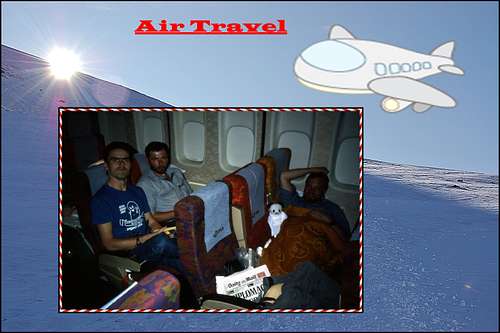

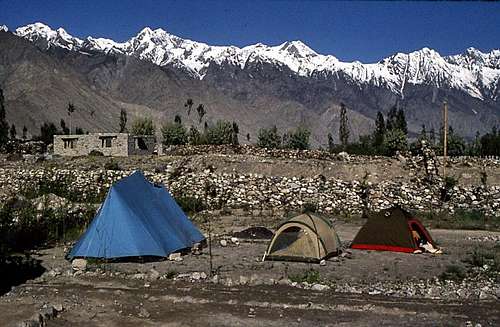


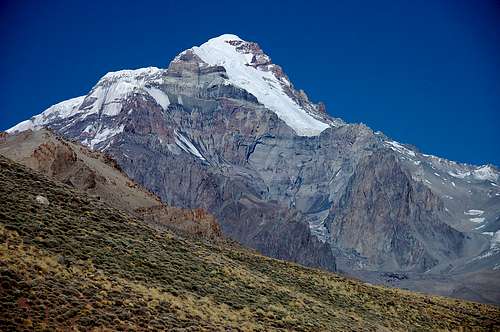
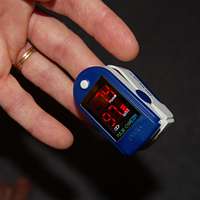
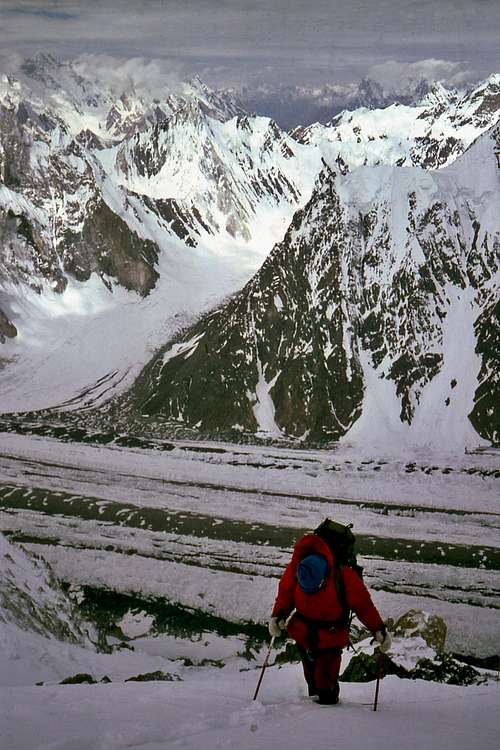

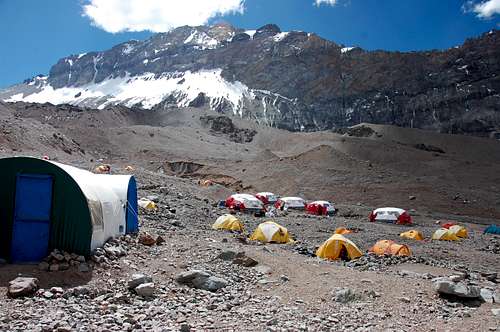
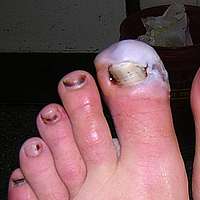

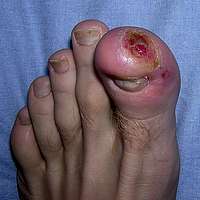
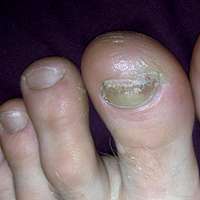
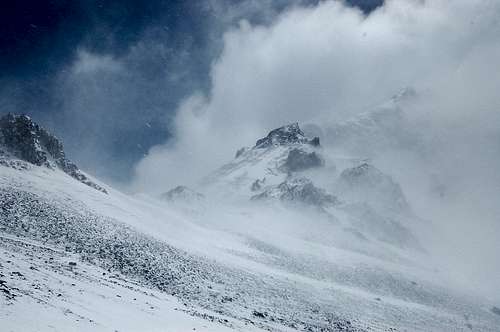
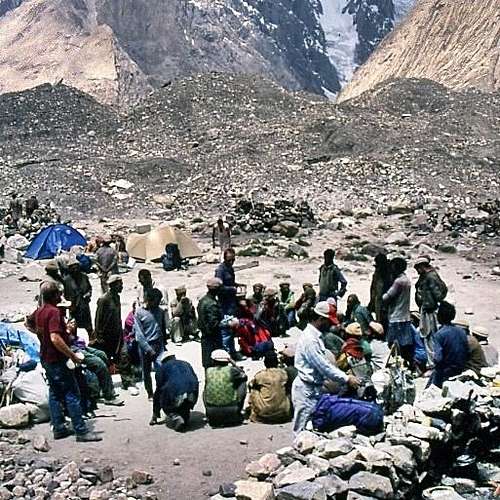

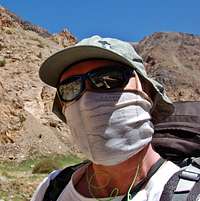

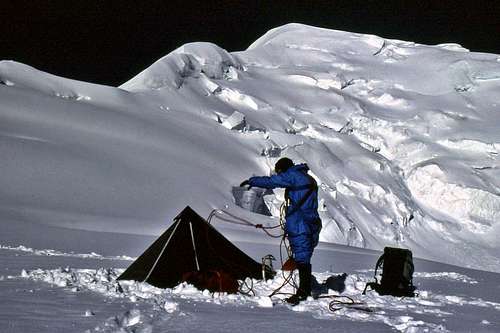
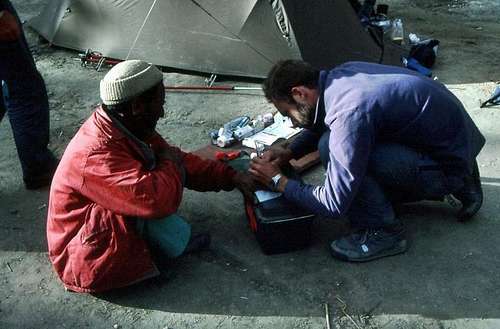
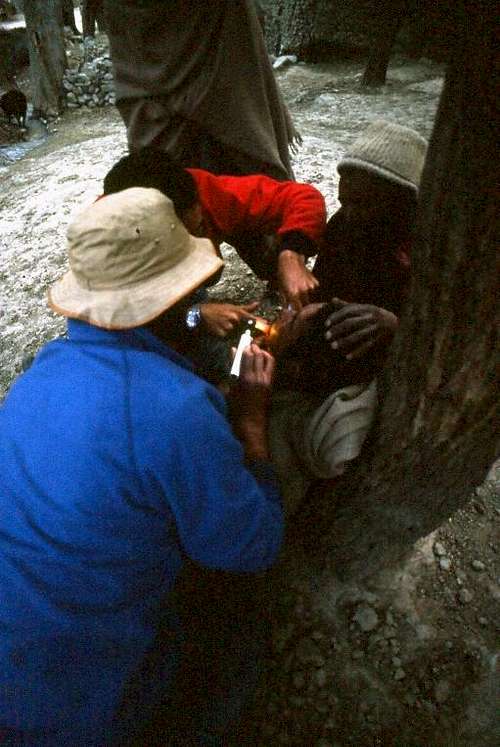
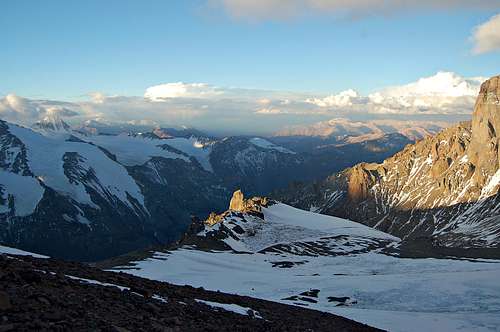
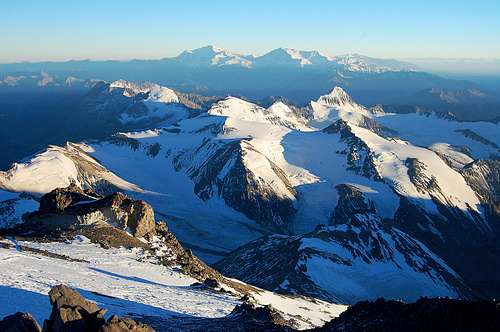


 1 Trip Reports
Comments
Post a Comment