


 Page Type:
 Activities:




lcarreau - Aug 4, 2008 4:45 pm - Hasn't voted
Re: I have been struck...Congratulations for beating the odds. An evergreen tree is what my friend was standing underneath in that fateful year when he was killed.
As far as deciduous trees, oaks and elms are frequently hit. That's not to say that any tall object could be a likely target. Thanks for sharing your interesting experience, and please take care!!
Larry of AZ

Boydie - Aug 5, 2008 12:23 pm - Voted 10/10
Cracking readPardon the pun Larry, but that really was a cracking read. Lots of information there that I was unaware of. Will definitely bear in mind the 30-30 rule. Cheers 4 posting.
Stephen
lcarreau - Aug 5, 2008 12:53 pm - Hasn't voted
Re: Cracking readI thought somebody should gather up information on lightning,
before the lightning gets it! If you get caught out in the open,
the only safe measure is to stay calm and make yourself look smaller.
"Mountainmanmark' has had experiences with lightning in the UK,
so Scotland must also get some.
Seriously, I hope your 'Cracking Day' does NOT include lightning.
It could very well ruin your picnic, if not your life! Indeed!
Take care, my friend Stephen! -LARRY

TeaM - Aug 11, 2008 5:59 am - Hasn't voted
Re: Cracking readObviously lightning&thunder are found outside US too. (lcarreau: "'Mountainmanmark' has had experiences with lightning in the UK,so Scotland must also get some.")
For example just a month ago 10 youth got hit while at a camp in Sweden, and they all required hospital care. And just some weeks before that we got headlines stating that a lightning had hit ground near a Norweigian football station hitting the players on ground for a moment. Also here in Finland lightning strikes are quite a common phenomen too. Acording to this interesting article about lightning in Wikipedia "Singapore has one the highest rates of lightning activity in the world". http://en.wikipedia.org/wiki/Lightning#Records_and_locations
The 30-30 rule i had not heard, I just have been taught that the ratio of the distance and the time between the lightning & the sound of a thunder is 1:3 (so if the time is 30 sec it is 10km away).
Your article was interesting reading thou, sorry for your loss.
lcarreau - Aug 11, 2008 5:39 pm - Hasn't voted
Re: Cracking readGreetings from AZ! My wife is from SE Asia, and she has a cousin
working in Singapore. I will inquire about this incident.
I must admit I've never visited in Scotland, Finland or Sweden.
(When I was riding a bicycle in the Netherlands in 1977, I thought I might get HIT by lightning.) Apparently, I lived to see another day. THANK YOU kindly for the information! LIVE LONG & PROSPER. -Larry

byates - Aug 6, 2008 12:12 am - Hasn't voted
smoke column lightningThe most unusual lightning I ever saw came from a smoke column of a forest fire. In 1988 I was a member of the Sawtooth Hotshots fire crew, in mid June on a fire in far Eastern Montana in the Custer national Forest for 2 nights in a row we saw lightning emitting from the smoke column from a very intense fire. The Lighting ignited spot fires in advance of the main fire. The smoke-heat Columns from this fire we were told rose to 30,000 to 40,000 ft. Fire storms and lightning at the same moment probably the most awesome, yet terrifying acts of nature I will ever see in my life.
lcarreau - Aug 11, 2008 5:51 pm - Hasn't voted
Re: smoke column lightningYes, Mother Nature knows no bounds. Reminder: need to search the
internet for lightning photos during the May 1980 eruption of Mt.
St. Helens. What a terrible yet wonderfully beautiful image! -Larry

Eric Sandbo - Aug 8, 2008 1:41 pm - Hasn't voted
Ground currentsWe had a rescue once on the S side of Mount Baker when a storm hit the area where people camp before climbing the Easton Glacier. Lightning struck one of the few trees up there and burned a trench through the dirt and right under the center of one woman's sleeping bag, 50 feet away. I never heard what her long-term effects were, just that she had to be carried out the next day.
Hail is a strong indicator for lightning. It takes a powerful updraft to throw rain back up high where it can freeze - the same kind of updraft that generates static electricity.
lcarreau - Aug 11, 2008 6:00 pm - Hasn't voted
Re: Ground currentsYeah - micro-bursts and updrafts can really THROW you for a loop.
We have some violent T-storms here in central Arizona. One time, I had returned to a metal boat 'launching' ramp at Roosevelt Lake to check out some things. The ramp was 50 yards from where it should have been; in an upside-down position. Apparently, it had been picked up by a micro-burst or mini-tornado. [This happened in central AZ, the land of the sun!] Thanks for sharing, Eric !!!
Larry

tanya - Aug 13, 2008 4:18 pm - Voted 10/10
Nice!Good Work Larry!
lcarreau - Aug 16, 2008 7:42 pm - Hasn't voted
Re: Nice!Thanks - just trying to take advantage of precious time. I got
a new job/transfer, so a slight change of scenery, even though
I'm still in AZ with all the T-storms and dry lightning. Thanks!!
Larry still in AZ !!

ClimberMan420 - Aug 17, 2008 1:21 pm - Hasn't voted
the million dollar questionThe question that I would love to hear an educated answer to is the thermarest myth. If bunkered down in a powerful electrical storm in your little nylon tent how safe are you? If you are on a thermarest and atleast not deep in a puddle are you then good to rest easy? Would it be safer to camp near that big tree or in the open field, under the powerlines, far from the tower? I had some hectic nights while biking across Canada setting camp in farmers fields in the praires, or forests of Ontario. Well then there is another question probably easier to answer, will the rubber on my bike tires insulate me from a strike? would love any answers people have.
thanks
lcarreau - Aug 18, 2008 6:43 pm - Hasn't voted
Re: the million dollar questionHey there CM, sorry for the late response. If you go on the SP
forum page, you can often generate a better response and perhaps
various 'answers' to your valuable questions.
(1) nylon tents: These offer NO protection in electrical storms.
(2) rubber tires: The rubber that they use for tires nowadays
will offer ZERO protection during T-storms. What will be to
your advantage is PROPER GEAR/CLOTHING so you can continue
your trek while MOVING, as not to present a "target" for sudden bolts from the heaven.
That's really awesome for you to ride across Canada. Ontario has
always been a special place, being that my idol Neil Young came
from that area. Please continue your line of questions; I really
don't know much about the Northern wheat-field country. I'm more
prone to think of the desert and attempt to avoid flash-flooding
across the Colorado Plateau and central Arizona. TAKE CARE!!
p.s. - If you are in the forest, you can HIDE beneath a tree like my wife and I did. Just make sure the tree is not being
currently occupied by a BEAR. HA ... have a great one !!!
lcarreau - Aug 18, 2008 7:06 pm - Hasn't voted
Re: the million dollar questionAbsolutely right! Rubber tires & nylon tents just don't cut it!
Hey, Biglost ... why do I feel like I'm on the forum page?? Take
care of yourself up there, please. I'm getting rained on (again)
here in central AZ. Awesome !! -LARRY
lcarreau - Aug 18, 2008 10:15 pm - Hasn't voted
Re: the million dollar questionRight again, my friend. Especially if it touches ya.
Hey, what happened to the Pastor? Hope the man is well. Thanks! :)
ClimberMan420 - Aug 19, 2008 12:29 am - Hasn't voted
Re: the million dollar questionAlright thanks, it was a hell of a ride and certainly the weather was probably the greatest challenge along the way, obviously headwinds #1 but also violent storms in Ontario and Quebec posed a great mental challenge as I was doing it cheap and committed to camping everynight except those spent in large cities.
But definetly the question that needs an answer from everybody is if being on a thermarest matress will keep you safe in an electrical storm?
lcarreau - Aug 19, 2008 12:49 am - Hasn't voted
Re: the million dollar questionYes, great question !! I have distant relatives living in the
great Province of Quebec. I would not TRUST a therma-rest mattress,
even though I have slept on one here in AZ; along with the rattlers, centipedes, scorpions and various brands of cactus.
I tend to shy away from large cities, but I would love to do what
you're doing. Thanks for the information on Ontario and Quebec.
That's where Celine Dion came from, right? Have a GOOD night, and
good luck on all your awesome outdoor adventures!! - lcarreau : ) It's all coming back to me now ... LOVE can move mountains!
Chris956 - Aug 19, 2008 11:31 am - Hasn't voted
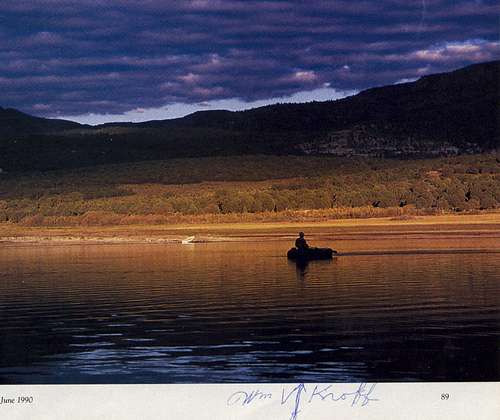
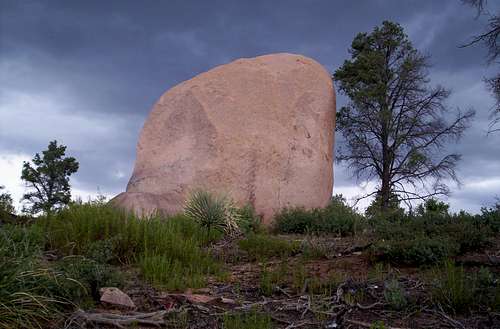
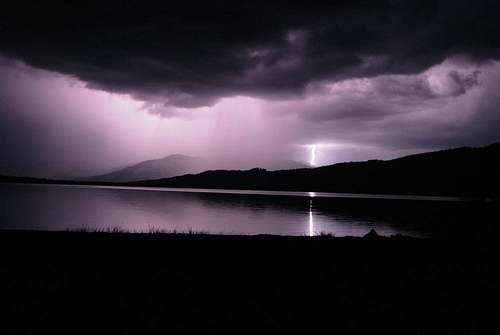
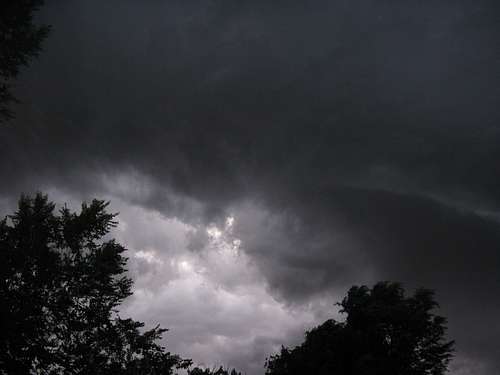
PhotosMate you should be a photographer... those photos are wicked!
lcarreau - Aug 19, 2008 11:51 am - Hasn't voted
Re: PhotosThanks, mate. Perhaps you can answer this: Are there electrical
storms observed in the cities and outback of Australia ???
Those 'Aussies' must be having WAY too much fun down there! I would
like to know what their TAKE is on all of this. Best wishes, mate!!
karuzi - Aug 19, 2008 12:32 pm - Hasn't voted
lightning in the san francisco peaksLarry ,
Thanks for the post. A friend and I were on humphrey's this past weekend and were caught in the thunderstorm saturday. We stopped at the 11,400 sign and tried to wait out the storm. From your experiences in this area, do you have any specific advice about thunderstorms around the san fran peaks? Oddly enough, I had heard that SAR was on the mountain that day prepping for a large group hike or event next month, and I never saw them come down. Would they have stayed above treeline in such conditions? Also, two groups - 3 hikers - continued to the saddle after we bailed and started back down? Did they know something we didn't or were they ignorant of the danger. I have had my hair tingle when at the saddle before and got down below quickly. Finally, I have heard that the blackish , glassy coating on some rocks on the humphreys summit is caused by lightning - any info on that?
Thanks !
Comments
Post a Comment