


 Page Type:
 Activities:

PAROFES - Jun 21, 2011 8:12 pm - Voted 10/10
Man this isVery interesting! I saw the photo from Ojo and voted for it back in nov 2010 and i kept thinking about it for a while.
But nobody had the idea of doing a research about this wierd behaviour.
Very, very cool man. Glad i saw it and read it.
Cheers
Paulo

Redwic - Jun 22, 2011 12:22 am - Hasn't voted
Re: Man this isThank you! I really appreciate the comment.

Garfimi - Jun 22, 2011 12:07 am - Voted 10/10
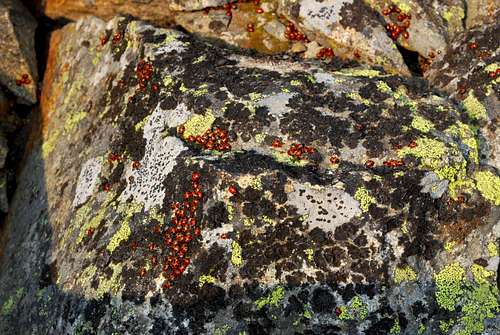
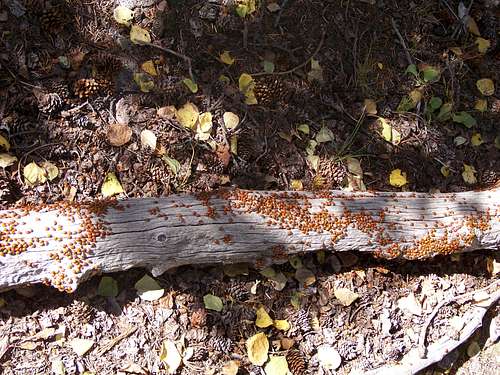
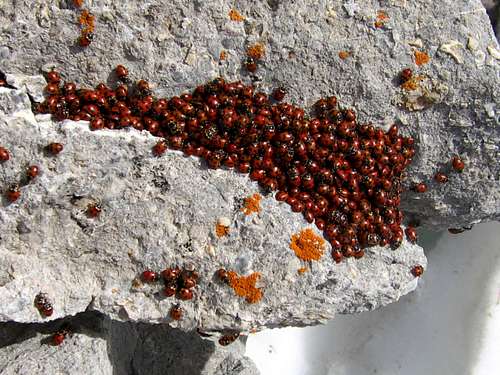
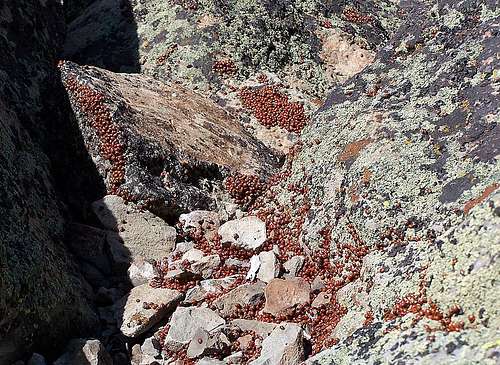
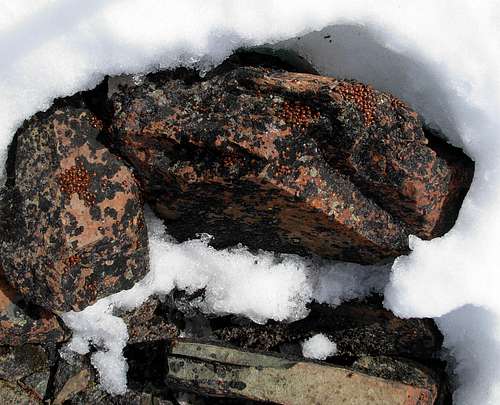
Great Stuff!At first I wasn't sure why you wanted my stupid picture of ladybugs, but now I know and what a well put together article. I remember coming up on the summit of Gobbler's and wondering why there was so many ladybugs and now I know. Very good article and very informative. Thanks for posting!
Garfimi
Redwic - Jun 22, 2011 12:21 am - Hasn't voted
Re: Great Stuff!I am certain it sounded like an odd request (considering the photo), but thank you for obliging and for the nice comment.

Redwic - Jun 22, 2011 11:38 am - Hasn't voted
Re: not just ladybirdsYou are correct. Swarms and mountainous migratory phenomena are not isolated to ladybugs/ladybirds; similar swarms and migrations also occur for some animals and some other insect species, for a variety of possible reasons. Ladybugs/ladybirds are just the focus of this particular SP article. I like your photos. Thank you for sharing them!

Sarah Simon - Jun 22, 2011 5:14 pm - Voted 10/10
Nicely doneGreat article, well researched. Also, this was a super way to leverage the collaborative possibilities within SP (by sharing other user's photos). Nice work!
Sarah
Redwic - Jun 22, 2011 8:31 pm - Hasn't voted
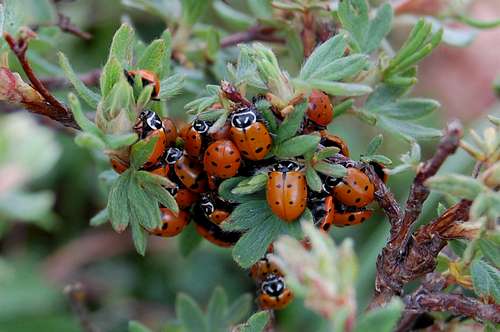
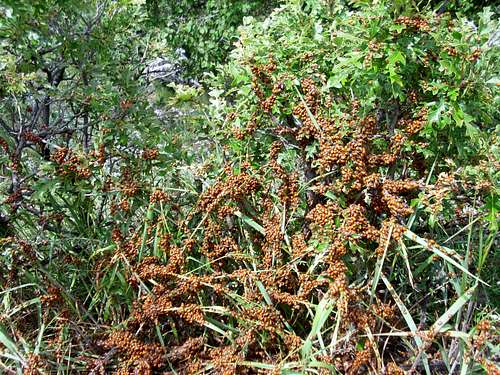
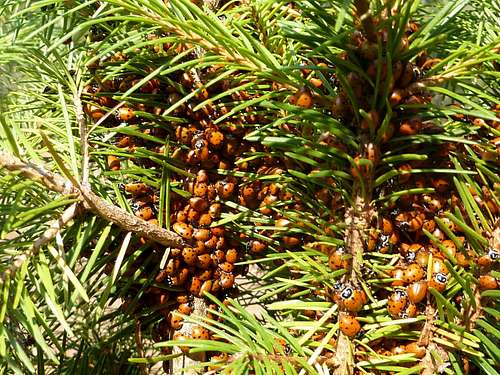
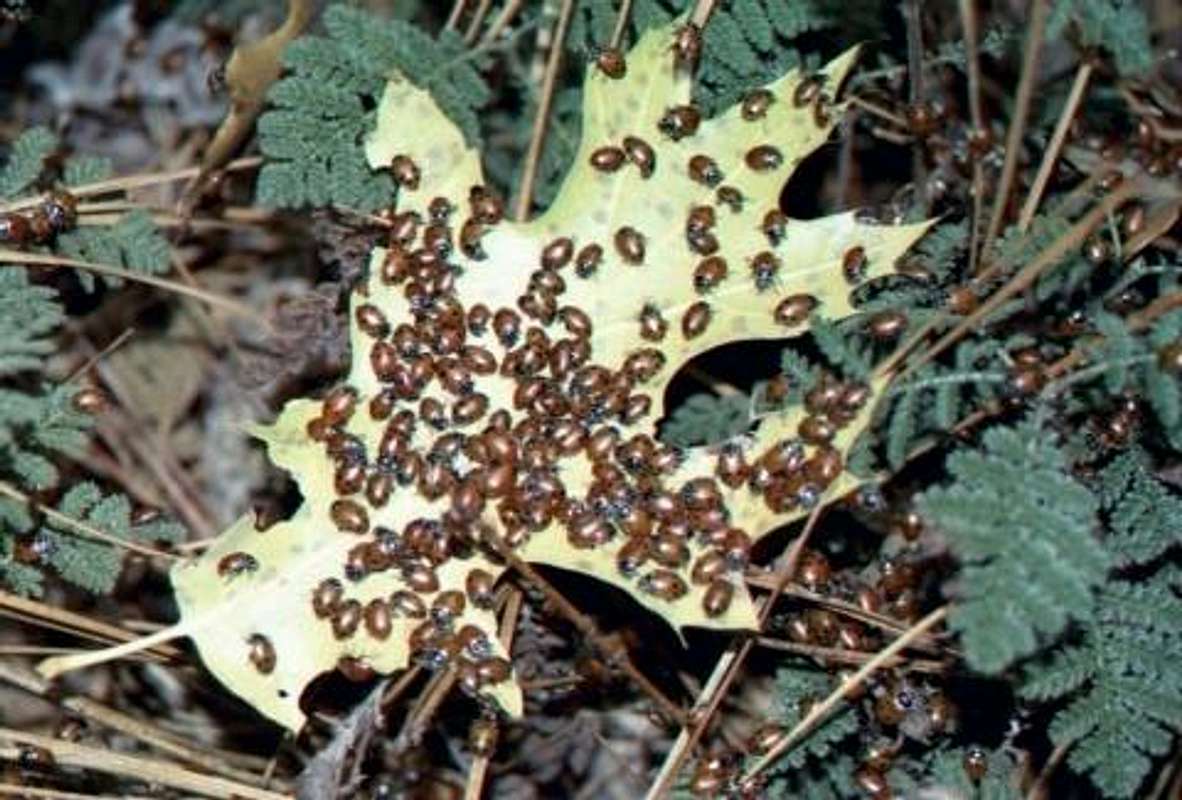
Re: Nicely doneThanks again for allowing me to use yours. Not only is each photo on the main page from a different SP member, for the most part each photo is from a different state or region... which I hoped would help illustrate that this is not an occurrence which is specific to one small area.
splattski - Jun 23, 2011 8:24 am - Voted 10/10
SummitsI prefer to think they choose summits for the view!

sassyplatt - Jun 23, 2011 9:55 am - Voted 10/10
Good article!A very enjoyable read. May I add that the little critters can bite when in 'voracious' eating mode, a surprise to me.

Sierra Ledge Rat - Jun 26, 2011 8:11 am - Voted 10/10
Ah-ha!The first time I saw this phenomenon was on the summit of Clark Mountain (8,602 ft.) in Washington in July 1977. Interesting article, thanks!

Matthew Van Horn - Jun 26, 2011 5:26 pm - Hasn't voted
Ladybugs!Your article caught my eye because I have seen the phenomenon of a thousand or more ladybugs gathered on an 11,000 foot Wasatch peak.

lcarreau - Jun 27, 2011 12:04 am - Voted 10/10
Painted ladies ...I witnessed this phenomena twice here in Arizona.
Guess I should of snapped a picture, but didn't in my wildest
dreams figure it would appear in an SP article. Great job!
Redwic - Jun 27, 2011 12:26 am - Hasn't voted
Re: Painted ladies ...Especially when written by a man, it probably takes people off-guard even more! I was fascinated by the phenomenom, and wanted to share it with other people. You (we) are not alone.

mfox79 - Jun 27, 2011 9:56 am - Hasn't voted
Thanks!I have seen this twice on 10,000 Ft. Summits and both times I was perplexed. it did not make sense to see so many "LADY Beetles" in such harsh conditions. now I can enjoy this phonominon with better understanding. Cheers!


Dmitry Pruss - Jun 27, 2011 11:13 am - Voted 10/10
Thanks for the researchbut in the end it is still not clear why are the ladybugs swarming up there?
The original ladybug is the European 7-spotted variety, linked with Virgin Mary through the concept of Seven Sorrows / Seven Blades piercing her heart (as in the famous Dolorosa de la Siente Punales icon, visualizing the prophecy of St. Simeon to Virgin Mary). And it is pretty much restricted to Germanic languages. But the ladybug must have been associated with gods even before that, if in so many other European languages it's variably known as God's cow / hen / mare...?
Also why the Greek name "Hippodamia", the horse-traineress, specifically for the American ladybug?
Redwic - Jun 27, 2011 7:48 pm - Hasn't voted
Re: Thanks for the researchThank you for the comment.
I figure it must be instinct that they travel as they do, as their mating locations tend to occur away from most potential natural predators. As for the scientific name, I will see if I can find out some more information...
Dmitry Pruss - Sep 5, 2011 2:08 am - Voted 10/10
Ladybird vs. ladybugJust discovered that the British apparently switched from "ladybug" to "ladybird" because of their Victorian-era hypocrisy. The word "bug" <= bugger has become associated with sexual perversion esp. bestiality through the "Bulgarian heresy" of Cathars aka Bogomils.
Redwic - Sep 5, 2011 1:25 pm - Hasn't voted
Re: Ladybird vs. ladybugThank you for finding out that piece of historical information.
Very interesting! Much appreciated!
Comments
Post a Comment