


-
 37874 Hits
-
 93.96% Score
-
 45 Votes
 Page Type:
|
Area/Range |
|---|---|
 Lat/Lon:
|
39.72262°N / 21.62987°E |
 Activities:
|
Hiking, Trad Climbing, Sport Climbing, Scrambling |
 Season:
|
Spring, Fall |
 Elevation:
|
2231 ft / 680 m |

|
What's new on this page?
PAGINA COMPLETATA CON TRADUZIONE IN LINGUA ITALIANA - THE ITALIAN TRANSLATION ADDED TO THE PAGE (2021, March)
Overview
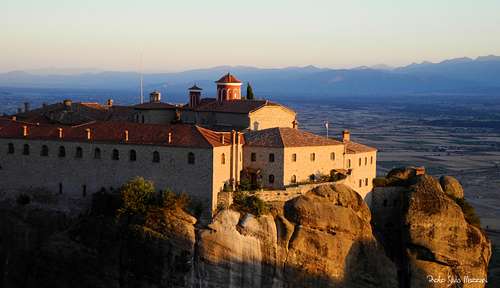
Meteora (Μετέωρα), not the name of a single rock formation. It's an area, a charming and suggestive climbing site located in Thessaly, a region of Greece, including about 170 summits of various shapes and types, as rocky pinnacles, spires, some of which are truly amazing and bizarre, minor peaks and also a few massive mountains. The whole region is divided into several groups with more than 670 climbing routes. The difficulty varies from II to VIII+ (UIAA). Meteora is also famous in reason of the surprising ancient monasteries, with some of these ones actually located on top of the rocks. Despite the peculiar rock - a kind of conglomerate which can be found in few places in the world, such as Montserrat in Catalonia (Spain) - and the particular climbing style, which requires a bit of training and a certain amount of experience, Meteora in my opinion is truly a magic place to stay and climb.
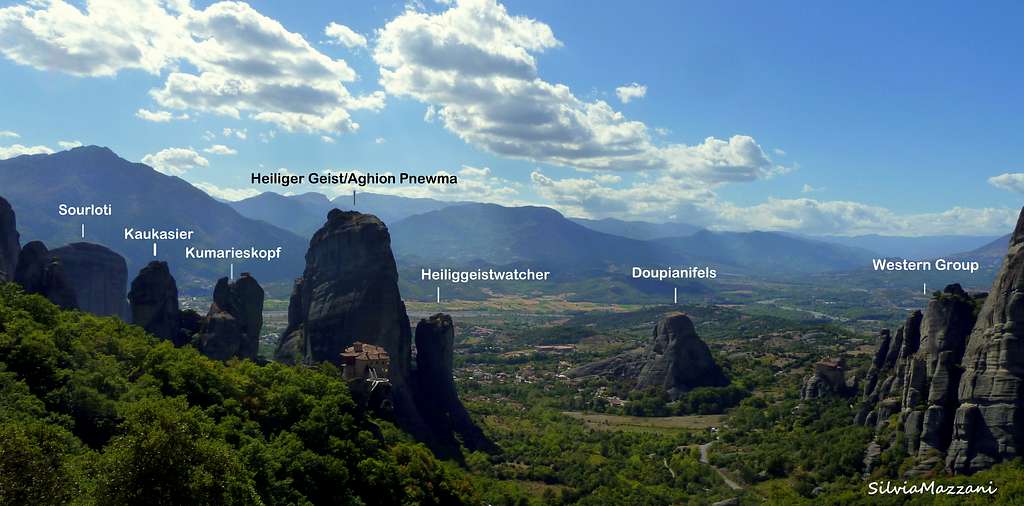
Meteora was in great parts explored by climbers with background from Saxon Switzerland (East Germany), meaning to ringbolts, few pegs along the pitches and runouts. It is common along traditional classic routes to find only 4-5 pegs in pitches of 30-40 meters in length with difficulty up to V, V+. However, there is also some latest sport climbing routes, harder but often equipped in sport climbing manner. To choose the route to climb in Meteora it is necessary not only to consider the degree of difficulty of the route, but also the number of protections present on the pitches and also the possibility, always rather scarce due to the nature of the rock, of placing additional protections. You will find good route descriptions and lots of extra information in the two climbing guides of Dietrich Hasse and Heinz Lothar Stutte but it's nearly impossible to find it. You can check a copy in Paradise Tavern in Kastraki and also feel free to speak to local climbers, like Vangelis Bastios (owner of the tavern and local climbing guru). He is also the author of a new guide to the sport climbing routes in Meteora.
Meteora (Μετέωρα) non è il nome di una semplice singola formazione rocciosa, ma di un'area montuosa, un affascinante e suggestivo sito di arrampicata situato in Grecia, nella regione della Tessaglia. L'area include circa 170 cime di varie forme e tipologie, come montagne massicce, pinnacoli, cime minori e torri, alcune delle quali veramente sorprendenti e bizzarre. L'intera regione è divisa in diversi gruppi con oltre 670 vie di arrampicata. La difficoltà varia dal II grado all'VIII+ (UIAA). Meteora è inoltre famosa per i suoi antichi monasteri, alcuni dei quali situati in spettacolare posizione sulla cima delle torri rocciose. Nonostante il particolare tipo di roccia - una specie di conglomerato che si trova in pochi altri luoghi al mondo, come ad esempio Montserrat in Catalogna (Spagna) - e il particolare stile di arrampicata, che richiede un po' di allenamento e un pò di abitudine, Meteora a mio parere è veramente un luogo magico dove stare e arrampicare. Meteora è stata in gran parte esplorata da alpinisti con background della Svizzera Sassone (Germania dell'Est), il che significa spits ad anello, pochi chiodi lungo i tiri e runouts. È comune lungo le vie classiche tradizionali trovare solo 4-5 chiodi in tiri di 30-40 metri di lunghezza con difficoltà fino a V, V+. Le salite più dure e/o nuove sono spesso attrezzate in maniera (quasi) sportiva. Tuttavia, ci sono anche alcune ultime vie di arrampicata sportiva, più dure ma spesso attrezzate in modo da arrampicata sportiva. Non mancano però alcune vie di arrampicata sportiva più recenti, più dure ma spesso attrezzate in modo sportivo. Per scegliere la via da scalare a Meteora è necessario non solo considerare il grado di difficoltà, ma anche il numero di protezioni presenti sui tiri e pure la possibiltà, sempre piuttosto scarsa per la natura della roccia, di posizionare protezioni aggiuntive.
History
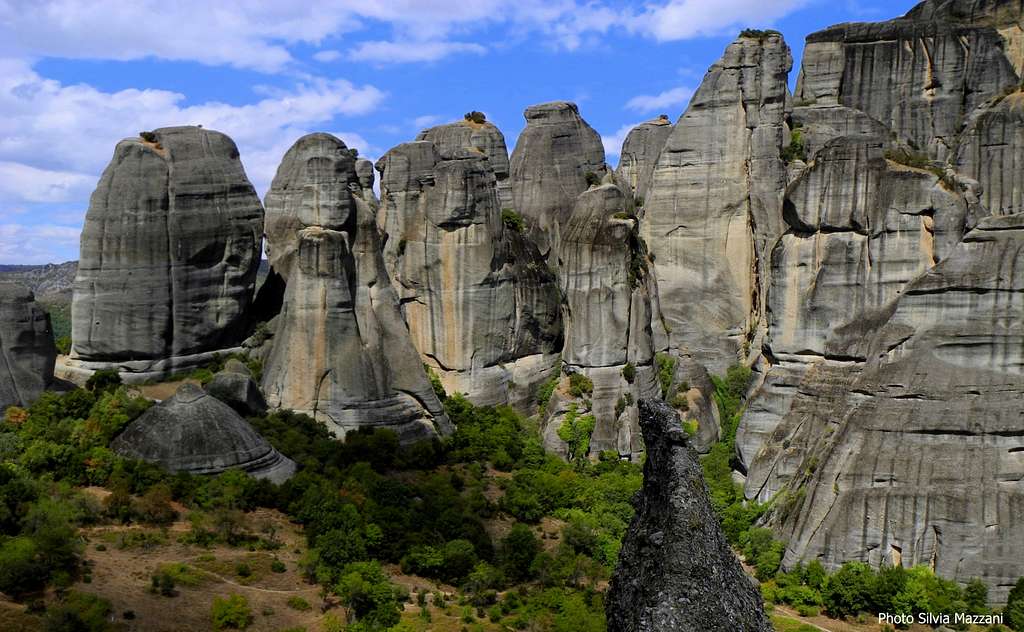
Probably the first people to reach the easiest summits were the shepherds with their sheep. There are also certain news according to which hermits started to climb these extraordinary towers since the 11th or 12th century, in search of solitude and spirituality in nature. The construction of the monasteries dates back to the 14th century. By the end of the 15th century, 24 monasteries crowned the summits of Meteora. The first hermits climbed up by using scaffolds, later rope ladders and net was used, until the first wooden ladders took over in the early 20th century. Currently, only six monasteries are inhabited.
The history of climbing at Meteora is instead relatively recent and begins with 1958, when the physicist and alpine climber Dietrich Hasse was fascinated by the image of some stunning rock towers used as a backdrop for a tobacco advertisement and discovered that the area was in Greece, that it was called Meteora and that these towers had not been climbed. Actually the climbing trip was postponed almost twenty years later, to the year 1975, when Hasse, together with the photographer Heinz Lothar Stutte and some others Eastern German pioneers, went to Greece and began to explore the mountain range climbing all the most important summits, with the exception of the five towers on which lie the monasteries. Their background from Sächsische Schweiz explains the reason of their climbing style by using only very few protections and with a very rigorous ethic. The first routes to be climbed were the cracks and chimneys similar to those climbed in the area of Saxony in East Germany. A summit climbing-notebook was left in a metal box on the summit of every peak. The same East German pioneers realized two climbing guides of the area.
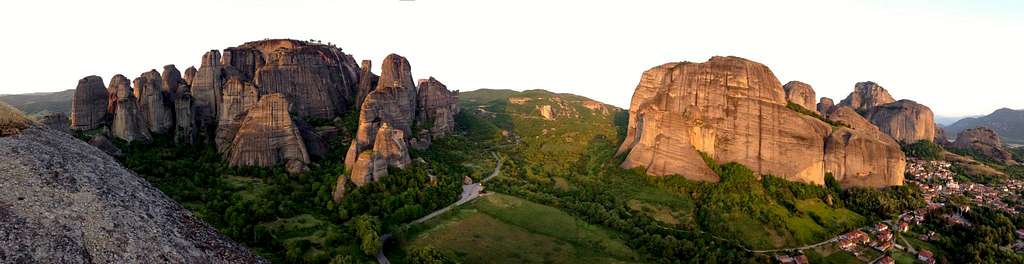
Probabilmente i primi a raggiungere le cime più facili furono i pastori con le loro pecore. Secondo alcuni gli eremiti iniziarono a scalare queste straordinarie torri ad iniziare dall'XI o XII secolo, alla ricerca di solitudine e di spiritualità nella natura. La costruzione dei monasteri risale invece al XIV secolo. Entro la fine del XV secolo ben 24 monasteri incoronarono le cime di Meteora. I primi eremiti salirono con l'uso di artifizi, successivamente vennero utilizzate le scale di corda, fino a quando le prime scale in legno non presero il sopravvento all'inizio del XX secolo. Attualmente sono abitati solamente sei monasteri.
La storia dell'arrampicata a Meteora è invece relativamente recente e inizia nel 1958, quando il famoso fisico e alpinista Dietrich Hasse rimase affascinato dall'immagine di alcune incredibili torri di roccia usate come sfondo per una pubblicità di sigarette. Scoprì che l'area si trovava in Grecia, che si chiamava Meteora e che queste torri non erano mai state salite. In realtà l'esplorazione venne rinviata a quasi vent'anni dopo, nel 1975, quando Hasse, insieme al fotografo Heinz Lothar Stutte e ad alcuni altri pionieri della Germania Orientale, si recò in Grecia, iniziando ad esplorare la catena montuosa e a salire tutti le cime più importanti, ad eccezione delle cinque torri su cui erano situati i monasteri. Il loro background di arrampicata nella Sächsische Schweiz (Sassonia) spiega la ragione del loro stile di arrampicata con l'uso di solo pochissime protezioni e con un'etica molto rigorosa. Le prime vie da scalare erano le fessure e i camini simili a quelli ben noti per averli già saliti nella regione della Sassonia (Germania dell'Est). Gli stessi pionieri provvedettero poi a dotare la vetta di ogni singola torre di un registro di arrampicata contenuto in una scatola di metallo, realizzando inoltre due guide della zona.
Getting There
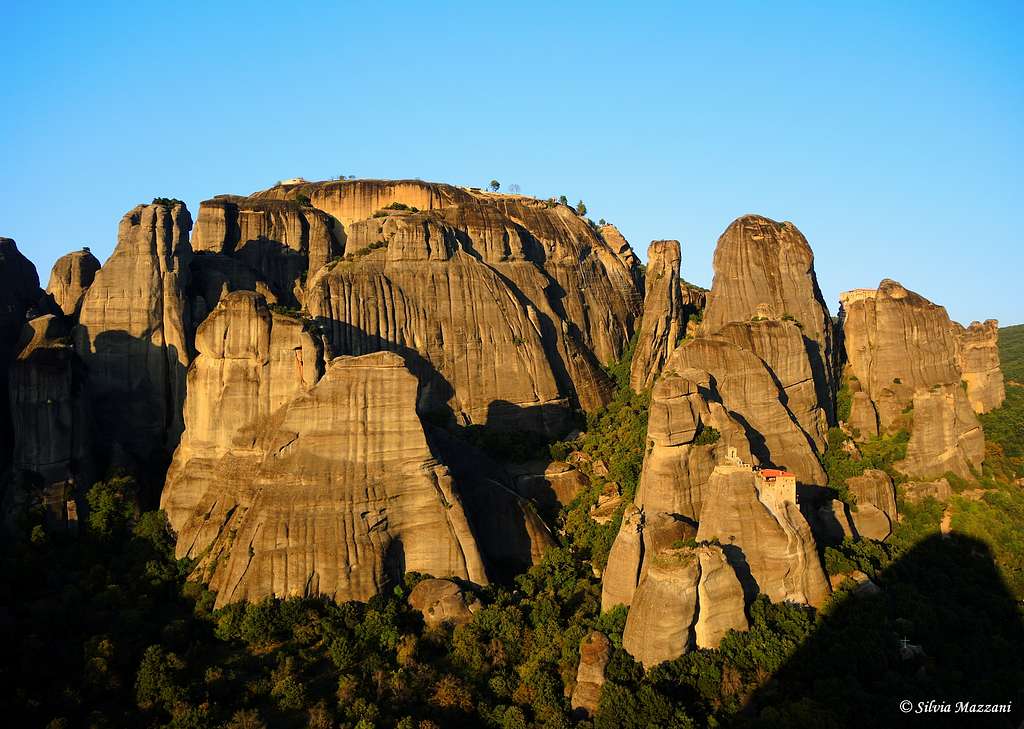
Meteora is situated in the Thessaly region of Greece, Northern half of Greece, approximately 25 km NNW from Trikala, and immediately North of Kalambaka and Kastraki, the two main towns in the area, both located very close to the rocks. The closest main town is Larissa. The distance to Kalambaka is about 360 km from Athens and 237 km. from Thessaloníki.
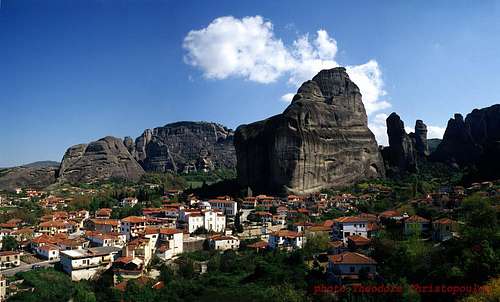
Some rocks are in a short walking distance from Kastraki and Kalambaka, other ones are further away, however it is always possible to climb without a car. You can reach Kastraki and Kalambaka:
By plane - Meteora can be approached from Athens Eleftherios Venizelos airport or from Thessaloniki airport. From Athens airports you can:
- take a domestic flight to Larissa (about 85 km from Kalambaka)
- rent a car, useful once you are in Kastraki, but not essential
- use public transports (bus or train). Getting to Meteora without a car is easy thanks to the train from Athens that stops in Kalambaka.
From Thessaloniki Airport you can:
- take the bus to the train station, then take the train to Kalambaka.
- take a bus going directly to Kalambaka (it is more expensive, but faster).
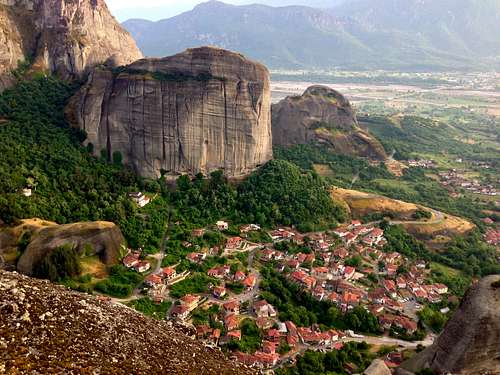
Meteora è situata nella regione della Tessaglia, Grecia settentrionale, circa 25 km a NNW da Trikala e immediatamente a nord di Kalambaka e Kastraki, le due città principali della zona, entrambe situate molto vicino alle torri. La città principale più vicina è Larissa. Kalambaka dista circa 360 km da Atene e 237 km. da Salonicco. Alcune torri si trovano a breve distanza a piedi da Kastraki e Kalambaka, altre sono più lontane, tuttavia è sempre possibile arrampicare senza disporre di un auto. Kastraki e Kalambaka sono raggiungibili:
In aereo - dall'aeroporto Eleftherios Venizelos di Atene o dall'aeroporto di Salonicco. Dall'aeroporto di Atene è possibile:
- prendere un volo interno per Larissa (circa 85 km da Kalambaka)
- noleggiare un'auto, utile quando si è a Kastraki, ma non essenziale
- utilizzare i trasporti pubblici (autobus o treno). Arrivare a Meteora senza una macchina è facile grazie al treno da Atene che ferma a Kalambaka.
Dall'Aeroporto Theassaloniki è possibile:
prendere l'autobus per la stazione ferroviaria, qui prendere il treno per Kalambaka. C'è anche un autobus diretto a Kalambaka (più costoso, ma più veloce).
The best classic climbs
Some of the finest routes, as given by the Hasse & Stutte guides, are the following:
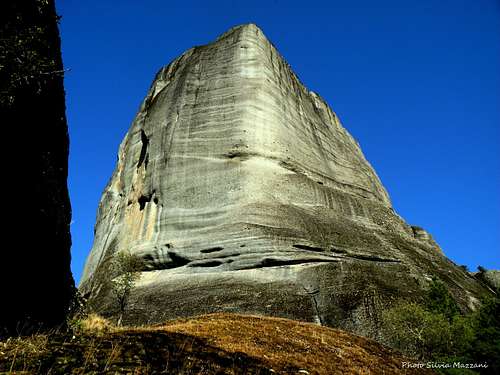
Holy Ghost - "The pillar of Dreams" V+ 250 m
Sourloti - "Hypotenuse" VI 225 m, "The line of fallen drop" VI 170m
Kelch/Psaropetra - Eiertanz "The eggs dance" VI- A1 130m
Alyssos - Community Route" VI A2 320m
Glocke - "Glockenspiel" VI 125m,
Bàntowafels - Swiss cheese" VII 125 m.
Doupianifels "Dickes Ende" VII- 145m
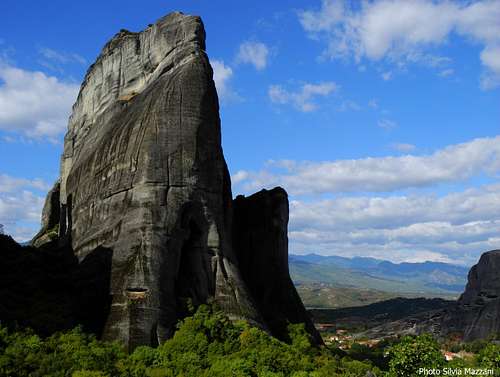
Holy Ghost - The corner of Madness" VII 180 m
Caucasian Tower - "Roussanou End" V+ 160 m
Meteora Tower - "Dohlewand Direct" VI- 145 m
Kumarieskopf - Hartetest VI+ 160 m
Geology and rock climbing
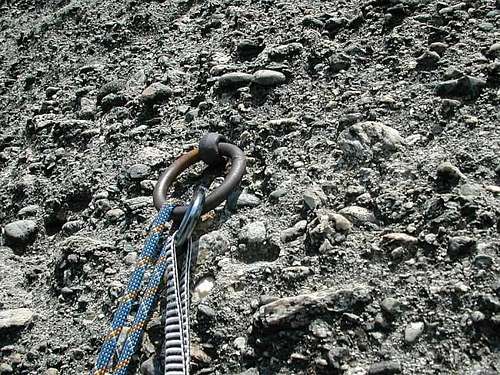
Climbing in Meteora is undoubtedly a different experience than any other! The nature of the rock is very peculiar, the pegs often spaced, especially on the classic routes of the pioneers, every routes ends on a true summit that involves rappels. Moreover the magnificent surroundings and the ambience make the climbing in Meteora a singular experience. However, there are also more recent routes with a more sporty character: high difficulty and more generous equipment. All the towers and spires in Meteora, even the smallest, have a summit book and as a rule usually have two names (and sometimes plus the English version): the local name in Greek and the German name. The genesis of the German name is explained by the broad activity of East German pioneers. The rock is a gray-brown conglomerate. It is believed that the needles began to form in the Tertiary - about 60 million years ago - starting from the materials deposited at the border of the Thessaly plain when the prehistoric sea waters, which previously covered the plain, withdrew. Slowly the conglomerates needle were then sculpted over the millennia, by water, wind and earthquakes.
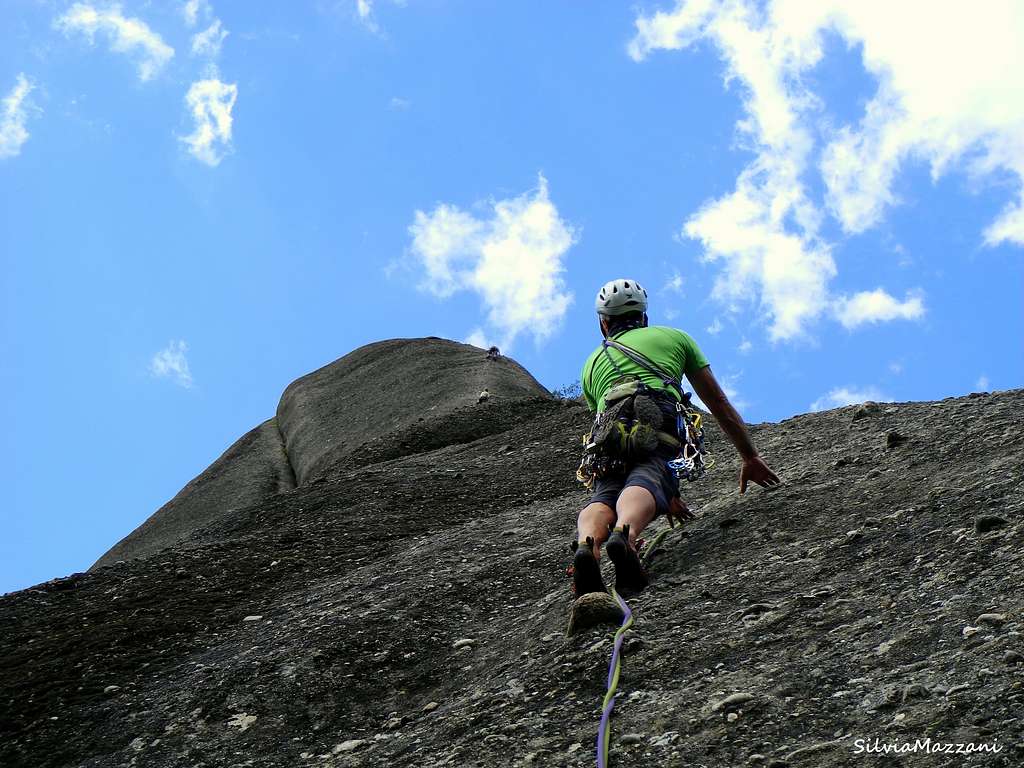
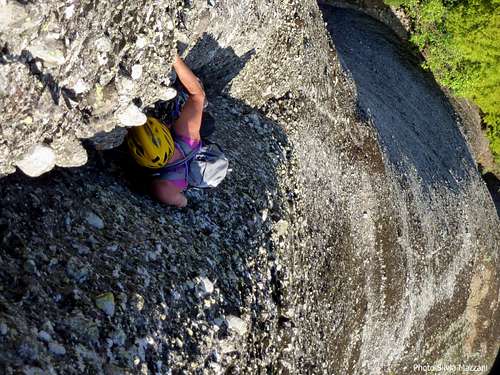
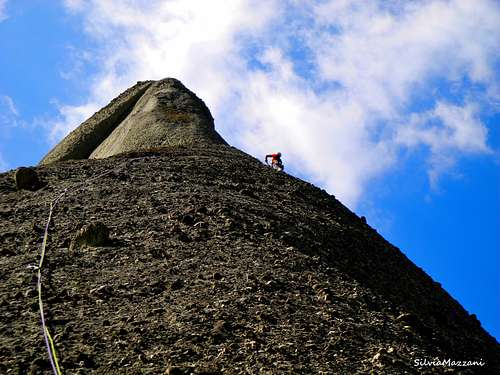
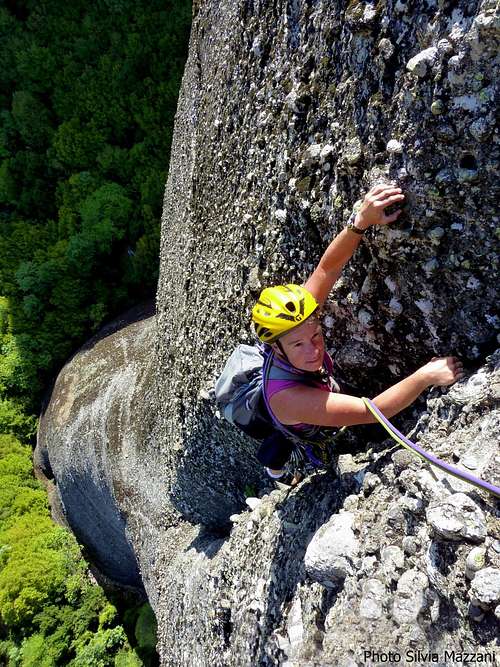
The texture of Meteora rock results from a mix of pebbles, cobbles and larger stones, packed into a rock surface which appears like concrete but actually is a mixture of conglomerate and sandstone. Sometimes cobbles have come loose from the rock to leave shallow holes in their place. What emerges is a peculiar climbing style, mainly slabby and balancy on cobbles, consisting in exploiting small or large pebbles protruding, or otherwise the holes remained where the same pebbles were formerly located. As soon as you get used to it, the climb will provide fun and generally little tiring.
Arrampicare a Meteora è senza dubbio un'esperienza diversa rispetto a qualsiasi altra! La natura della roccia è molto particolare, i chiodi sono spesso distanziati, specialmente sulle vie classiche dei pionieri, ogni via finisce su una vera cima che implica la discesa in doppia. Inoltre, l'ambiente circostante e l'atmosfera rendono l'arrampicata a Meteora del tutto singolare. Esistono comunque anche vie più recenti con un carattere decisamente più sportivo: difficoltà più elevate e chiodatura più generosa. Tutte le torri e le guglie di Meteora, anche le più piccole, hanno un libro di vetta e di solito hanno due nomi (e qualche volta tre con la versione inglese): il nome locale in greco e il nome tedesco. La genesi del nome tedesco è dovuta all'enorme attività svolta dai pionieri della Germania Est. La roccia è un conglomerato grigio-marrone. Si ritiene che le torri abbiano iniziato a formarsi nel Terziario - circa 60 milioni di anni fa - a partire dai materiali depositati al confine della pianura della Tessaglia quando le acque del mare preistorico, che prima coprivano la pianura, si ritirarono. Lentamente la roccia conglomeratica è stata poi modificata nel corso dei millenni da acqua, vento e anche terremoti.
La trama della roccia di Meteora risulta costituita da un mix di ciottoli e pietre più grandi, compattati dentro una superficie rocciosa che sembra cemento ma in realtà è una miscela di conglomerato e arenaria. A volte i ciottoli si staccano dalla roccia per lasciare al loro posto buchetti superficiali. Ciò che emerge è un particolare stile di arrampicata, principalmente in placca ed equilibrio, consistente nello sfruttare piccoli o grandi ciottoli sporgenti, o in alternativa i fori rimasti dopo il distacco degli stessi ciottoli. Non appena ci si prende la mano, l'arrampicata diventa molto divertente e generalmente poco faticosa.
Red Tape
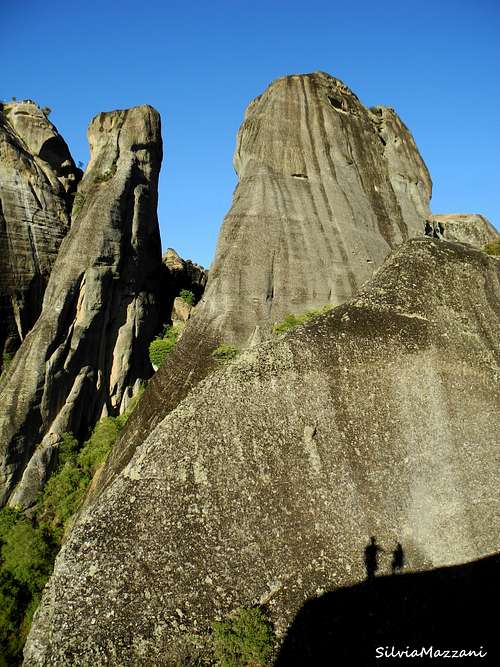
There are no fees and no permits required, but there is an important rule saying that the rocks having inhabited monasteries are not to be climbed. A lot of people visiting Meteora do so for religious and site-seeing reasons. Actually this is the majority of visitors, compared with the climbing-related visitors. Also the influence of church in politics in Greece is very strong, so the monasteries tried to ban climbing in Meteora in general. Fortunately the climbing community managed to stop such a restriction.
Anyway we have to understand that this place is shared by some completely different groups of people, so we have to respect each other habits. Please try not to be provocative, especially near the monasteries. Please preserve all other historical remains. Another important suggestion is not to add fixed protections to the pre-existing ones on the classic routes. If you plan to visit the monasteries, keep in mind to be appropriately dressed: men cannot wear shorts, while women must wear long skirts and not trousers, arms must be covered.
Since the year 1988 Meteora was declared a Meteora Unesco World Heritage Site .
Non ci sono tasse di ingresso e non sono richiesti permessi, ma c'è una regola importante da rispettare: le rocce che ospitano i monasteri non devono essere scalate. Molte persone che visitano Meteora lo fanno per motivi religiosi e per ammirare la bellezza dei luoghi. In realtà questa è la maggioranza dei visitatori, rispetto ai visitatori legati all'arrampicata. L'influenza della chiesa in Grecia è molto forte, quindi i monasteri hanno cercato di vietare l'arrampicata a Meteora. Fortunatamente la comunità degli arrampicatori è riuscita a fermare una simile restrizione.
In ogni caso è importante capire che questo luogo viene condiviso da gruppi di persone completamente diversi, quindi è necessario rispettare le abitudini di ciascuno. Cerchiamo di non essere provocatori, specialmente in prossimità dei monasteri, e di rispettare i resti storici. Un altro suggerimento importante è di non aggiungere protezioni fisse a quelle preesistenti sulle vie classiche. Se si ha in programma di visitare i monasteri, occorre ricordare di essere vestiti in modo appropriato: gli uomini non possono indossare pantaloncini, le donne invece devono indossare gonne lunghe e non pantaloni, mentre le braccia devono essere coperte. Dall'anno 1988 Meteora è stata dichiarata patrimonio mondiale dell'UNESCO.
When To Climb
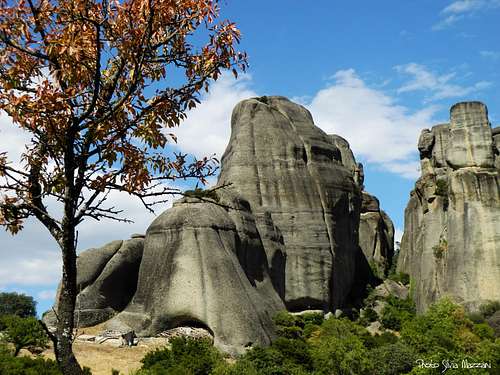
In theory it's possible to climb all year round (snowfalls are rare), but summer and winter are less advisable because temperatures may be unpleasant, unless you are very lucky. The best months are late March, April, May, September and October. Spring is the best season to climb in Meteora when the rainy days are very rare. Easter time is a very popular time in Meteora and it is probably a bit crowded. Autumn is another good choice until the end of October, when the days should still be moderately warm and dry. Later on, the weather gets more changeable, wet and colder. It is very hot in Summer, but you can still climb in the early morning and late afternoons, or on the walls with a shady location.
In teoria è possibile arrampicare tutto l'anno (le nevicate sono un evento raro), ma l'estate e l'inverno sono le stagioni meno consigliabili perché le temperature possono essere sgradevoli, a meno che non si sia fortunati. I mesi migliori sono fine marzo, aprile, maggio, settembre e ottobre. La primavera è forse la stagione migliore in quanto i giorni di pioggia sono molto rari. Le vacanze di Pasqua sono un periodo molto popolare a Meteora che può risultare un pò affollato. L'autunno è un'altra ottima scelta fino alla fine di ottobre, quando le giornate dovrebbero essere ancora moderatamente calde e asciutte. Più tardi, il tempo diventa più mutevole, umido e più freddo. In estate fa molto caldo, ma si può comunque scalare al mattino presto e nel tardo pomeriggio, o sulle pareti più ombreggiate.
Camping and other accomodation
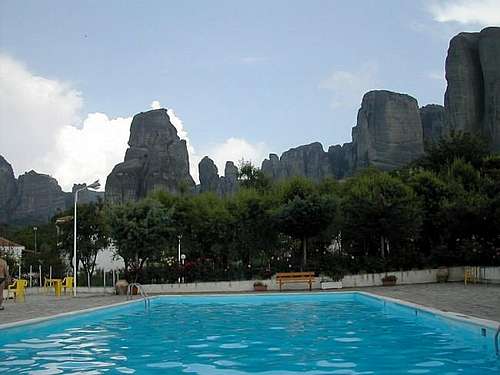
There are several camping places in Kalambaka and Kastraki. Camping Vrachos in Kastraki has a swimmingpool, communal barbecue site, cooking facilities and a small shop and restaurant:
Vrachos Camping in Kastraki.
Tel: ++30 432 22293 or 23744
Fax: ++30 432 23134
There are also lots of rooms available in hotels or pensions.
Ci sono diversi campeggi a Kalambaka e Kastraki. Il campeggio Vrachos a Kastraki ha una piscina, un barbecue in comune, attrezzature per cucinare e un piccolo negozio e ristorante:
Campeggio Vrachos a Kastraki.
Tel: ++30 432 22293 o 23744
Fax: ++30 432 23134
Ci sono anche molte camere disponibili in hotel o pensioni.
Essential Gear
In addition to the personal gear like harness, climbing shoes, belay/rappel device, lockers and helmet, it is recommended to have:
- two 50-meter ropes (half or twin)
- about 10 quickdraws
- 5-6 slings and 1-2 prussik cords
- 1 set of nuts
- 1 set of friends (big friends are usefull for cracks and chimneys)
- some hexes (big hexes, like WC Rockentrics 7-9 and Camp 9-11, are very usefull in Meteora cracks)
The appropriate equipment for each route is given very well in the Hasse/Stutte guidebooks. In general face climbs demand only quickdraws and crack/chimney climbs demand a good rack of nuts/hexes/friends. Have in mind that cracks are in general without fixed protection.
Oltre all'equipaggiamento personale come imbragatura, scarpette da arrampicata, dispositivo di assicurazione, discensore e casco, si consiglia di portare: - due corde da 50 metri (mezza o doppia) - circa 10 rinvii - 5-6 cordini e 1-2 cordini per prussik - 1 set di dadi - 1 set di friends (le misure grandi sono utili per fessure e camini) - alcuni eccentrici (grandi, come WC Rockentrics 7-9 e Camp 9-11, sono molto utili nelle fessure di Meteora) L'attrezzatura appropriata per ogni via è descritta molto bene nelle guide di Hasse / Stutte. In generale le salite in parete aperta richiedono solo rinvii e le salite in fessure e camini richiedono un buona dotazione di dadi/excentrics/friends. Occorre tenere presente che le fessure non hanno in genere protezioni fisse.
Meteo
Literature / Information

“Meteora – Climbing and hiking” by Dietrich Hasse and Heinz Lothar Stutte - I edition 1986, in English and German. It contains around 230 routes. Detailed info on routes, gear, hours a route is in the shade and more. Also, it provides general information about mountaineering, hiking in Meteora, maps, directions.
The second guidebook is:

“Meteora Climbing Part II” by the same Heinz Lothar Stutte and Dietrich Hasse – II edition 2000 – German, Greek and English - Note: the II edition is not a complete guidebook, but an update to the I edition
You will find good route descriptions and extra info in this two climbing guides, but these books are almost impossible to find. You can check a copy in Paradise Taverna Paradisos in Kastraki or Camping Vrachos.
There is also a useful map by the same authors that can be purchased in local shops in Kastraki and a book called "Meteora - A Landscape To Be Experienced" from the same German authors.
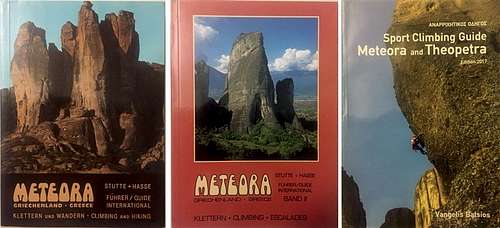

A new guidebook was recently published (2022) by the local climber Vangelis Bastios
Meteora – Sport Climbing Guide by Vangelis Bastios, Edition 2022 - The guidebook includes routes from Meteora, Theopetra, Sarakina and Agia Paraskevi.
Says Vangelis: “Because sport climbing has become increasingly popular in recent years, it helped me decide to create a guidebook for just the sport routes in Meteora and Theopetra (a cliff only 10 km outside Meteora, with good quality limestone).
More about Meteora
If you need a resting day you can walk around all these rocks and find a beautiful landscape. Or you can visit one of the monastries and enjoy the view on your next routes you'd want to climb.
Usually the last or the penultimate weekend of every September it take place the Hellenic annual climbing meeting which is organised by the Hellenic Federation of Mountaineering & Climbing. Meeting point is the camping "Vrachos" at Kastraki village which is also the climbers' meeting point generally.
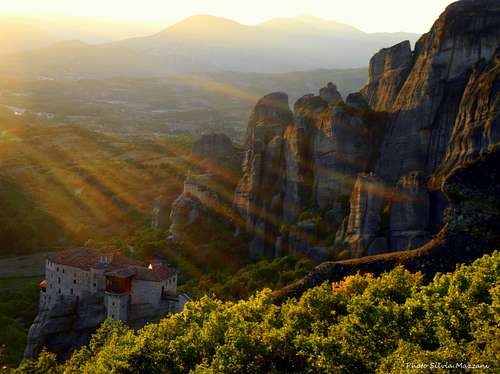
Una giornata di riposo può essere impiegata per ammirare il paesaggio camminando tra queste bellissime rocce. Oppure visitando uno dei monasteri e godere la vista sulle prossime vie da percorrere. Di solito l'ultimo o il penultimo fine settimana del mese di settembre si svolge l'incontro annuale ellenico di arrampicata organizzato dalla Federazione ellenica di alpinismo e arrampicata. Il punto d'incontro è il campeggio "Vrachos" nel villaggio di Kastraki, che è anche il punto d'incontro degli alpinisti in generale.
External Links
Climbing web-sites:
- Climbgreece
- Climb-Europe Greece/Meteora
- Meteora-rock-climbing
The site of Jörg Brutscher, one of the German climbers, who first climbed many hard cracks in Meteora. Unfortunatelly his site is only in german.
Also by Jörg Brutscher, check : www.sandsteinklettern.de. In german only, but with a lot of information. Click on Wegedatenbank, then Griechenland. There are a lot of routes and very good drawings/maps of the various rock groups. Some very interesting climbing photos from Meteora, Elb and other places.
The site www.routes.gr is the best database of mountain climbing routes in Greece. Unfortunatelly has only a few, mainly new, routes from Meteora in this link: www.routes.gr/?Lang=en&Page=Climbing/Trad/Areas/Meteora
Other info here:
The site of Kalambaka town: www.kalampaka.com
The site of the Hellenic Mountain Guide Association.
 12 Mountains & Rocks