

-
 28667 Hits
-
 85.87% Score
-
 21 Votes
 Page Type:
|
Canyon |
|---|---|
 Activities:
|
Skiing |
 Season:
|
Spring, Winter |

|
Backcountry Skiing The Central Wasatch
Out of the hundreds of canyons and ridges that make up Utah, it is the Park City Ridge, American Fork Canyon, Millcreek Canyon, Big Cottonwood Canyon and Little Cottonwood Canyon that are the highlights of the state for backcountry skiers. The access is easy, the runs are legendary and no 2 forks or canyons are alike. If you are thinking that this page looks familar that is because it is a new take on an old page, in a way its different but the same. The basic format is the same (the forks can still be found in the route section) but the main page is completely different.
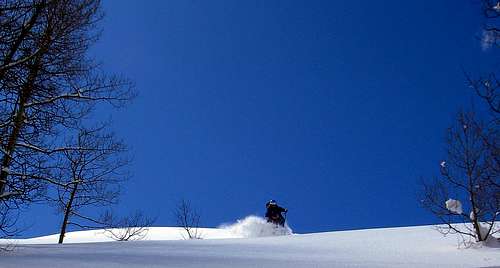
Troy skiing Big Water Gulch in Millcreek Canyon
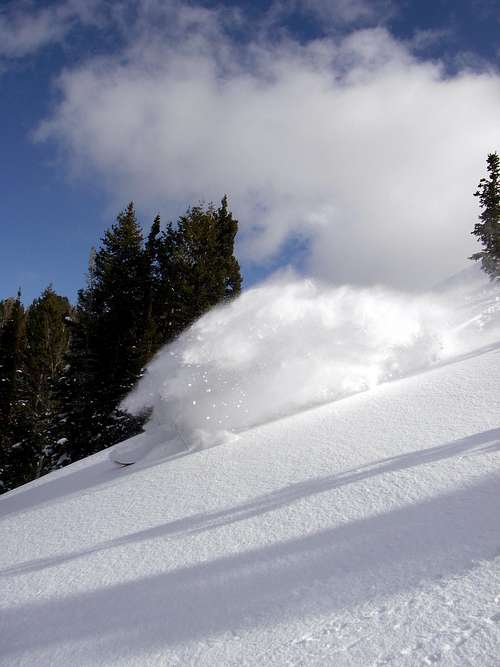
Troy skiing the powder that makes Utah famous in Big Cottonwood Canyon
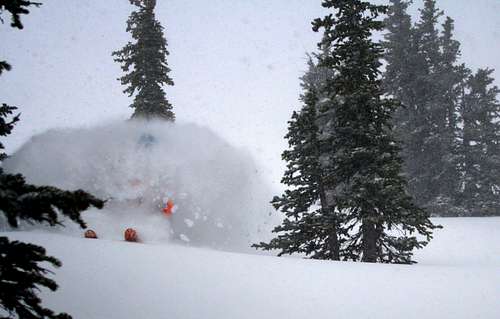
Troy skiing THE GREATEST SNOW ON EARTH in November 2010
Getting There
The Central Wasatch is surrounded by Salt Lake City, Provo, Park City and the towns of Alpine/Heber. No matter where you start from you are bound to find some epic scenery followed by even better skiing.
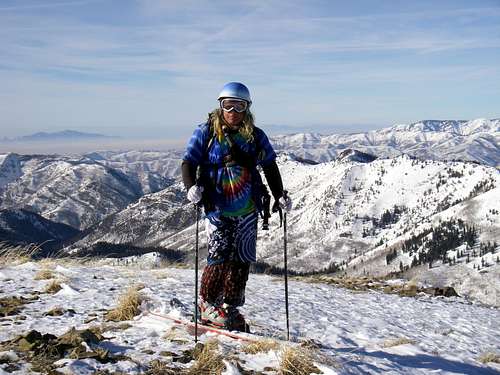
Troy on the summit of Little Water Peak with Millcreek Canyon behind him
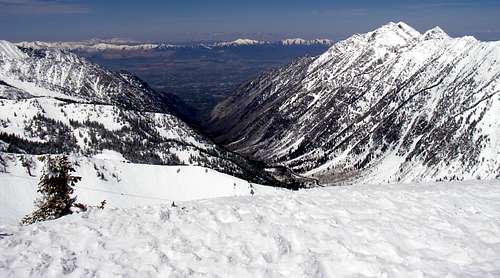
Little Cottonwood Canyon from the summit of Mount Baldy
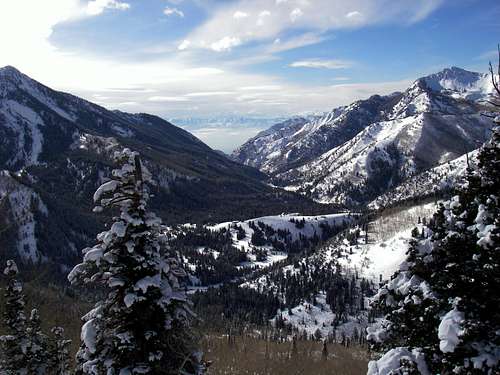
Big Cottonwood Canyon
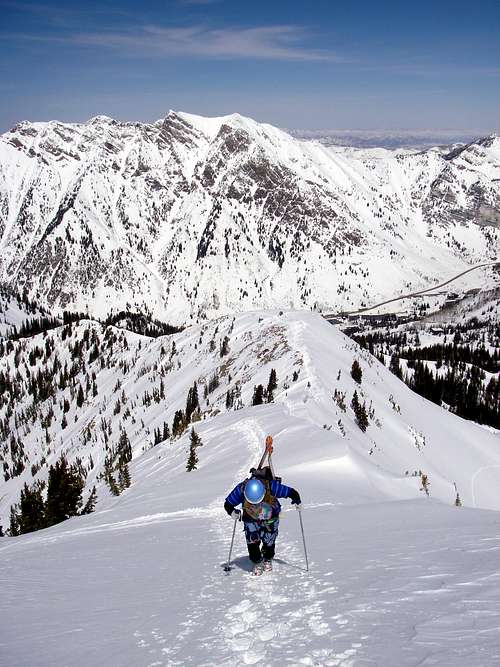
Troy hiking up The Temptation Ridge
Little Cottonwood Canyon
Little Cottonwood Canyon is a backcountry skiers paradise. Big Cottonwood Canyon maybe more popular with backcountry skiers but if you ask any seasoned backcountry skier where the best/biggest lines of Utah are located they will have to answer Little Cottonwood Canyon. Home of some of the Wasatch Range's steepest couloirs and highest peaks it is no wonder why so many place Little Cottonwood Canyon as the best of the best for big mountain skiing the state of Utah.
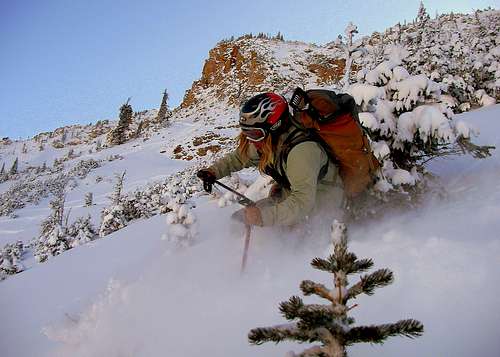
Me skiing Mount Baldy Pre-season
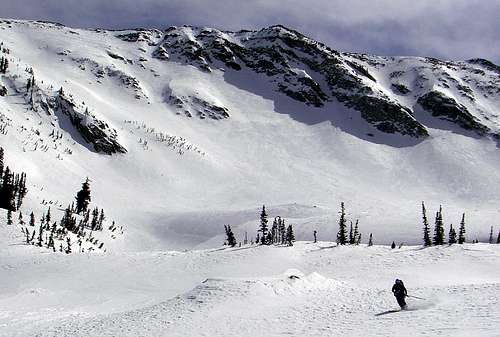
Troy skiing Red Baldy
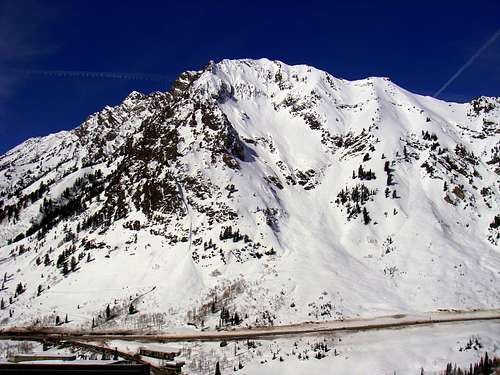
Mount Superior's South Face just after we skied it
Some of the major trailheads in this canyon are the White Pine Trailhead, Cartiff Pass Trailhead, and the Catherines Pass/Twin Lakes Trailhead. These trailheads access some of the Wasatch's greatest peaks such as Mount Superior, Red Baldy, Lone Peak, The Pfeifferhorn and Mount Wolverine.
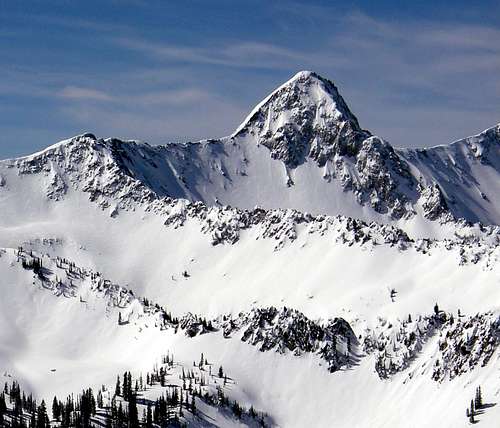
Utah's famous Pfiefferhorn
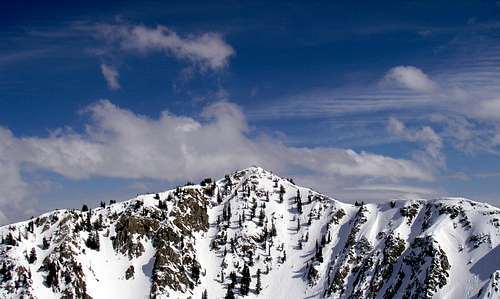
Mount Wolverine as seen from Patsy Marley
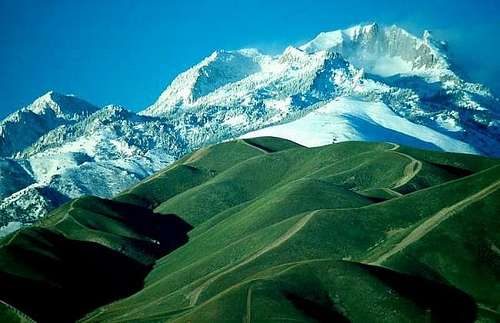
Lone Peak. Photo Credit 46 and 2
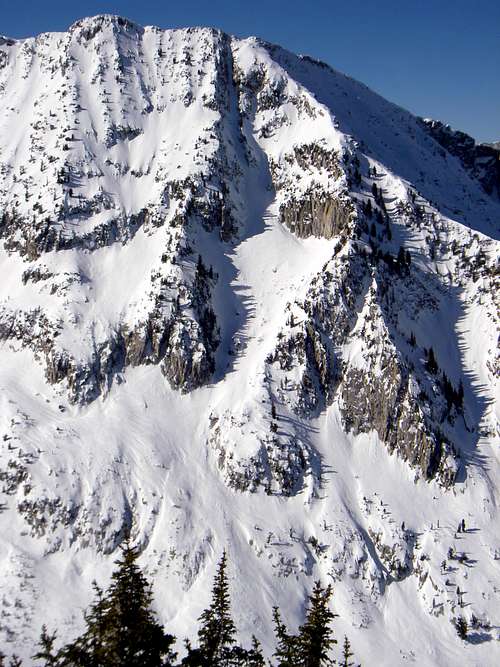
The Hypodermic Needle as seen from the Obelisk
Some couloirs worthy of checking out in Little Cottonwood Canyon are The Hypodermic Needle, The Suicide Coulior, Tanners Slide Path, Snowbird's Pipeline Couloir and The Little Pine Couloir. All of the above mentioned couloirs are steep and avalanche prone. If you can catch these couloirs on a safe enough day they are each epic to say the least.
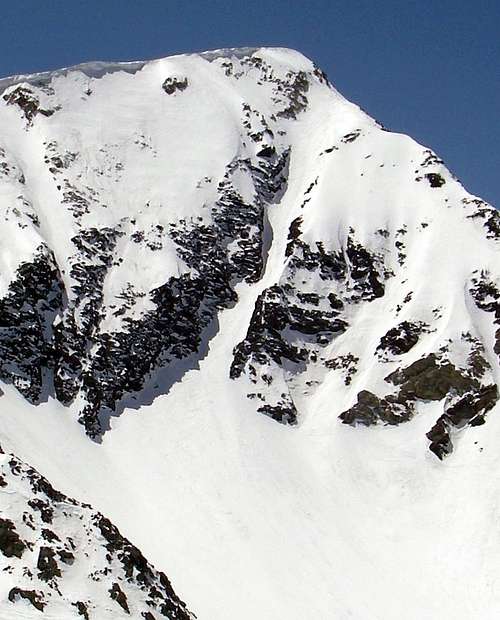
The Pipeline Couloir off of the American Fork Twins in May
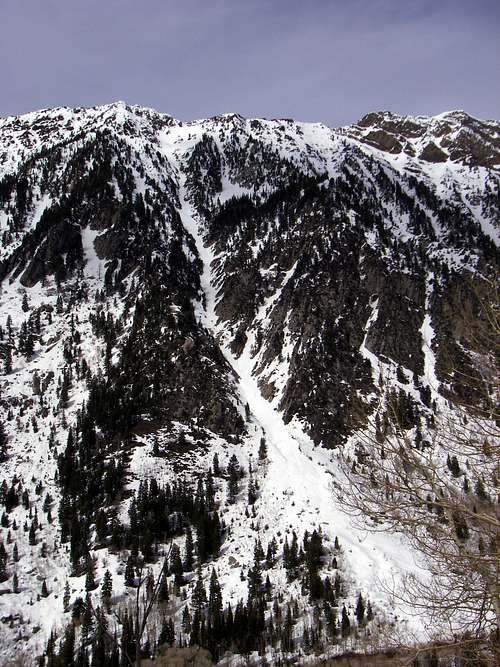
The Limber Pine Couloir
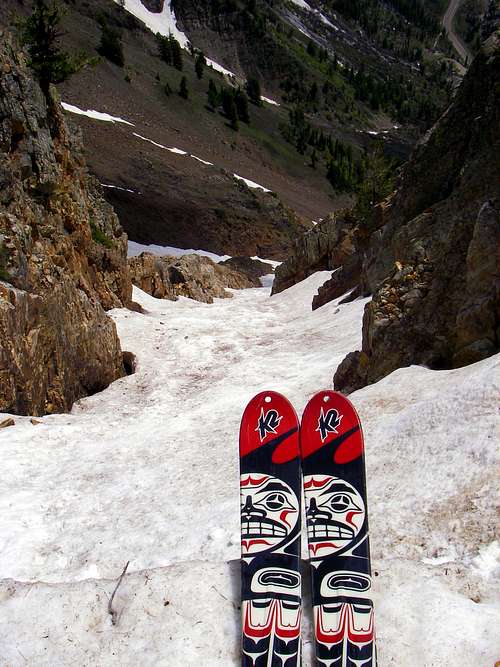
Looking down into the Suicide Chute on Mount Superior
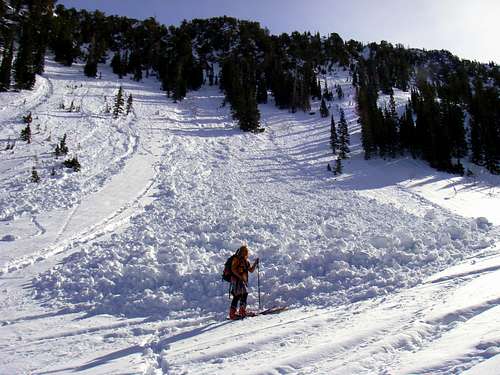
Me standing in a huge debrie pile from a recent wet avalanche in Red Pine Fork
One of the major advantages of Little Cottonwood Canyon is the access is super easy. Because of Snowbird and Alta Ski Resorts the road is usually open and plowed, with plenty of traffic for hitch hiking. However it should be mentioned that UDOT closes the highway for avalanche control work if there is as little as 4 inches of new snow + tons of wind which this = lots of winter closers. Luckly the road is usually only closed for a few hours. Remember that when the road is closed it is illegal to be outside of the ski resort lodges during UDOT's avalanche control work.
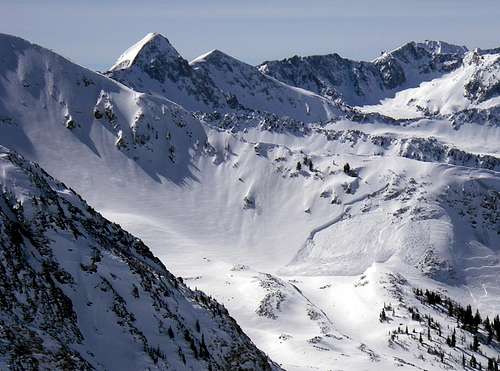
A large explosive triggered avalanche just off the Temptation Ridge
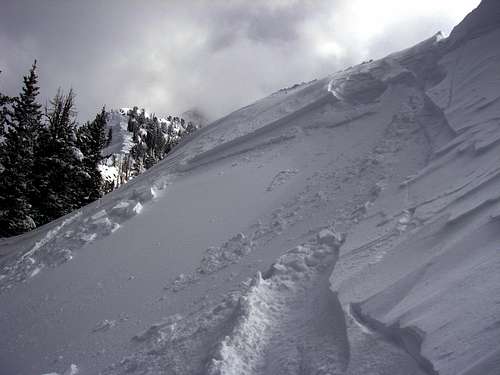
An avalanche I triggered while skiing Temptation Ridge
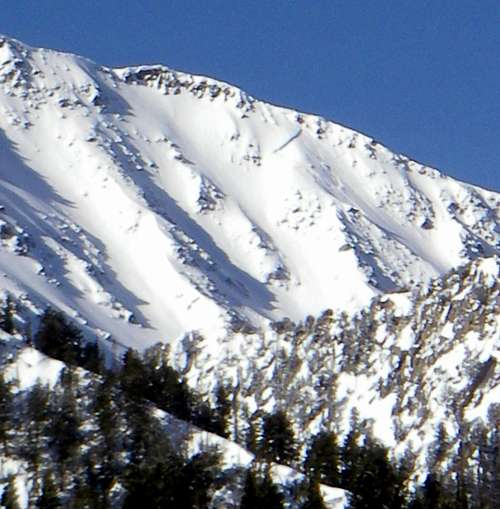
A cornice triggered monster avalanche in Coalpit Gulch
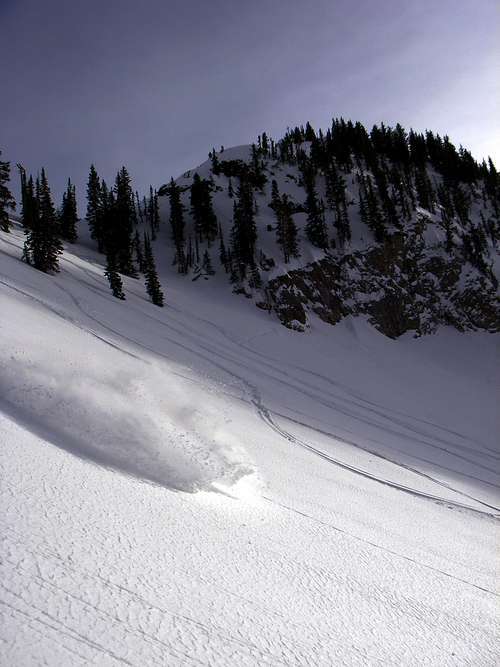
Troy skiing Cartiff Pass
Big Cottonwood Canyon
As mentioned above Big Cottonwood Canyon takes first place for the most popular backcountry skiing destination in Utah. Big Cottonwood Canyon is about 15 miles long, thats almost double the length of it's brother Little Cottonwood Canyon. This canyon is so big that one could spend their entire life skiing here and never ski the same line twice. With over 500 inches of snowfall a year, it is no suprize that Big Cottonwood Canyon has been fetured in several issues of Powder Maginzine, Skiing Maginzine and Backcountry Magizine.
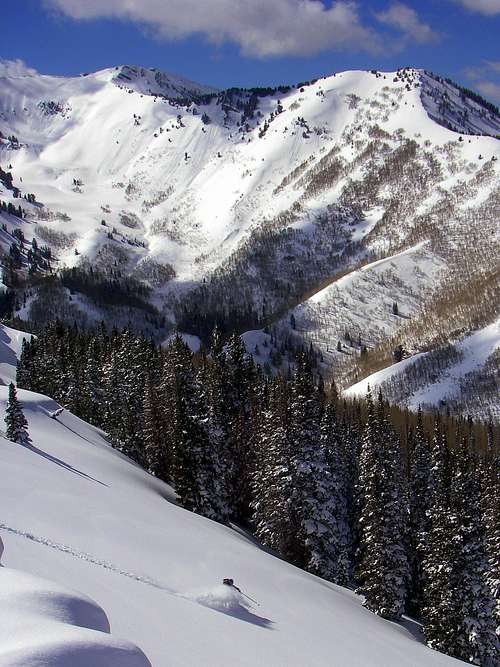
Troy skiing Reynolds Peak
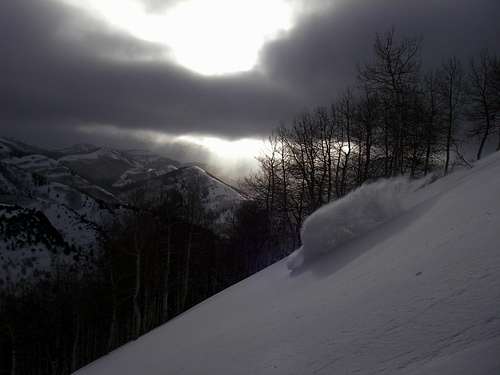
Troy skiing Circle Awl Peak
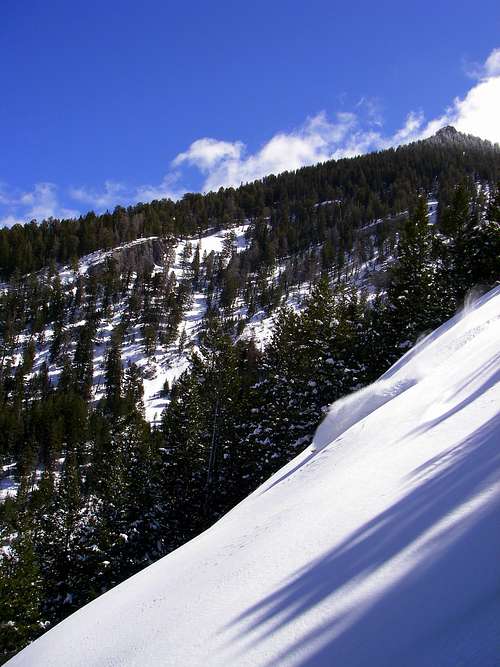
Troy skiing Argenta with the summit of Kessler Peak in the background
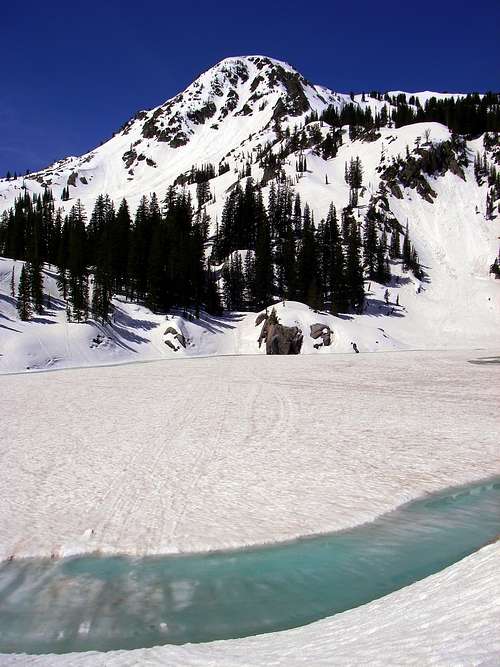
Mount Tuscarora after just skiing the Seagull Couloir
Some of the major (and most popular) peaks in this canyon are Reynolds Peak, Mount Superior, Kessler Peak, Mount Raymond, Mount Tuscarora, and Circle Awl Peak. Each peak has several different approaches as well as trailheads to choose from making getting lost in Big Cottonwood Canyon nearly impossible.
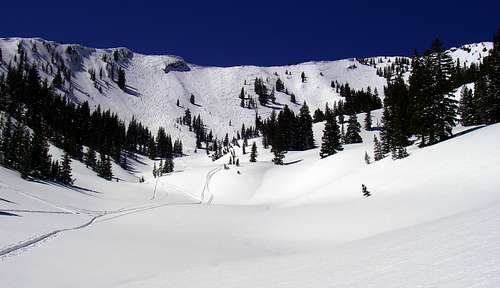
Upper Days Fork
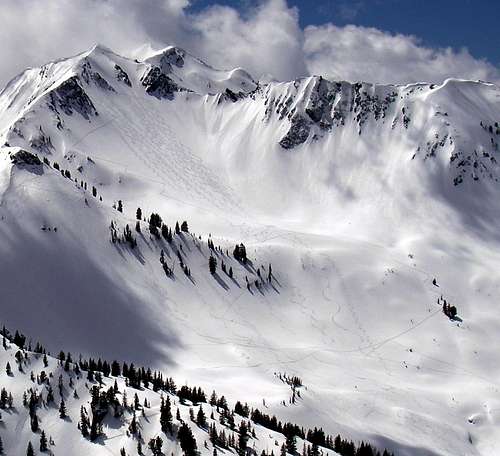
Mount Superior's North Face Aka Cardiac Bowl.
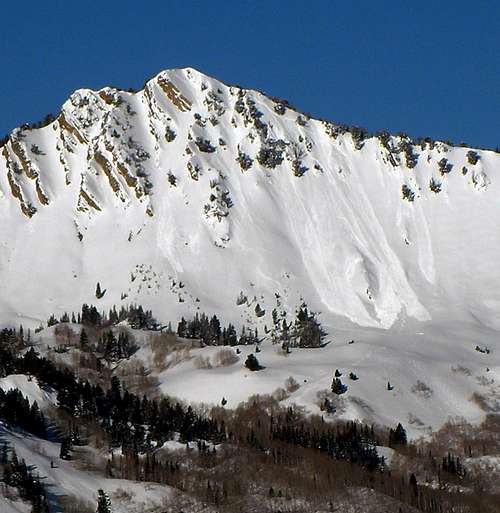
A large avalanche on Mount Raymond
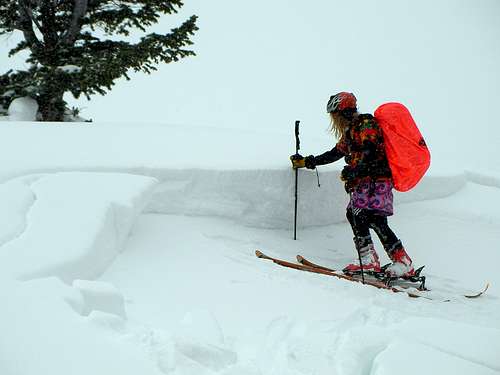
Me checking out an avalanche crown on Reynolds Peak
UDOT does close the road time to time but not nearly as often as Little Cottonwood Canyon. Sometimes only the lower canyon is closed, making the upper half open.....that is if you get up there early enough. On days like these please make sure that you are not in one of the avalanche paths that are going to be bombed.
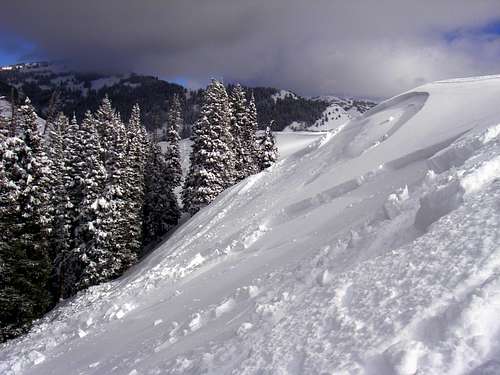
A large avalanche in Mill D North
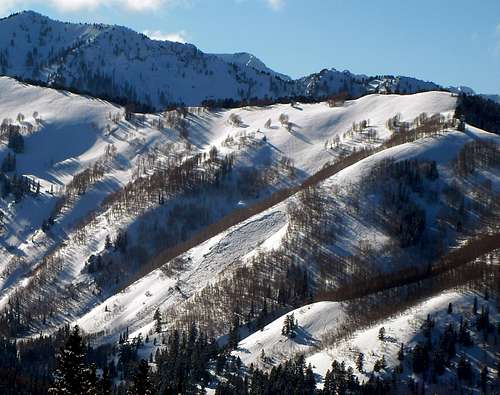
The fatal avalanche in Silver Fork's Meadow Chutes that killed a local backcountry skier this year
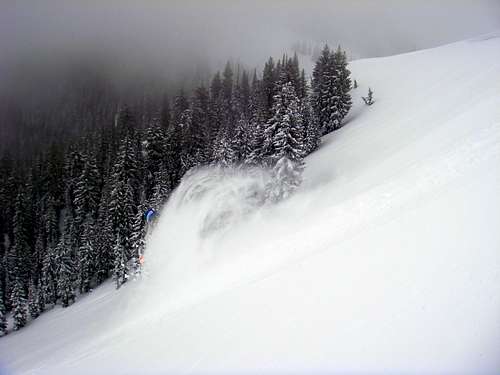
Troy skiing Scotts Bowl (Jupiter Area) post season
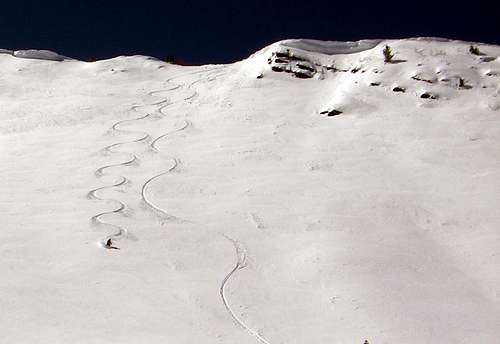
Troy skiing West Monitor
The Park City Ridge
The Park City Ridge is known for wind + shallow snowpack which = lots of avalanche danger early to mid season. This ridge has two sides to it, the Big Cottonwood Canyon side (mostly south facing and way safer avy wise) and the Park City side (mostly north/east facing and really dangerous avy wise). This ridge maintains 10,000 feet for over 6 miles making the skiing possibilities almost endless. The runs here are not as long as Cottonwood Canyons but the views, powder skiing and quick accent routes make the Park City Ridge worthy of any Wasatch Tourer.
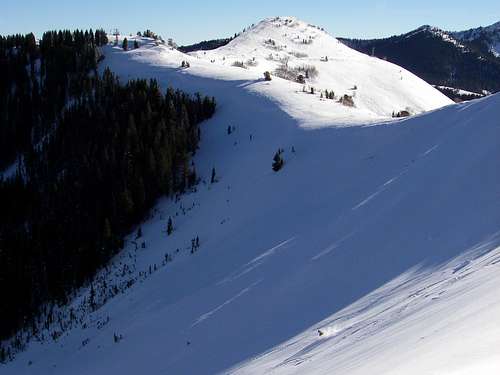
Troy skiing South Monitor
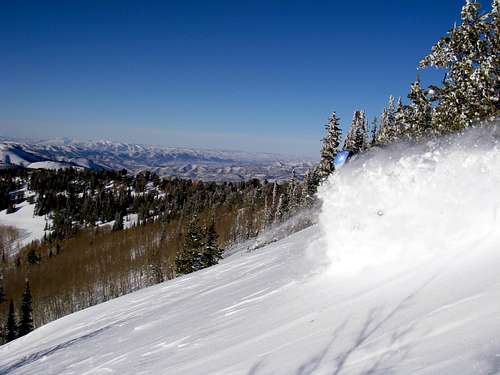
Troy skiing Wills Hill in Willow Fork
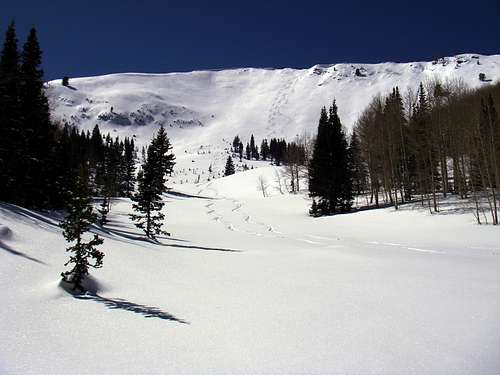
West Monitor
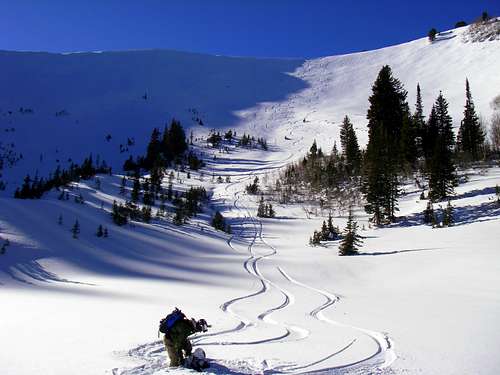
Ron sets up for another lap on South Monitor
The major attractions on the Park City Ridge are Willow Fork, USA Bowl, West Monitor, South Monitor and Park City Mountain Resort's Jupiter area (post season only). The easiest way to approach this ridge is from Big Cottonwood Canyon.
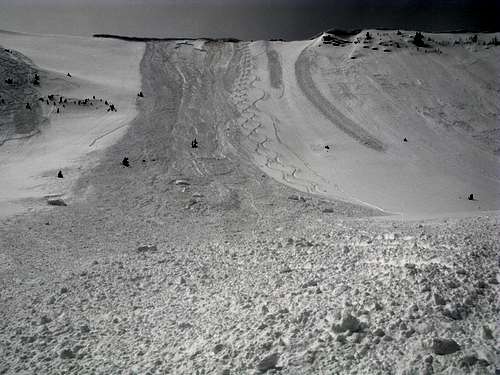 An avalanche on West Monitor. Photo Credit Ed F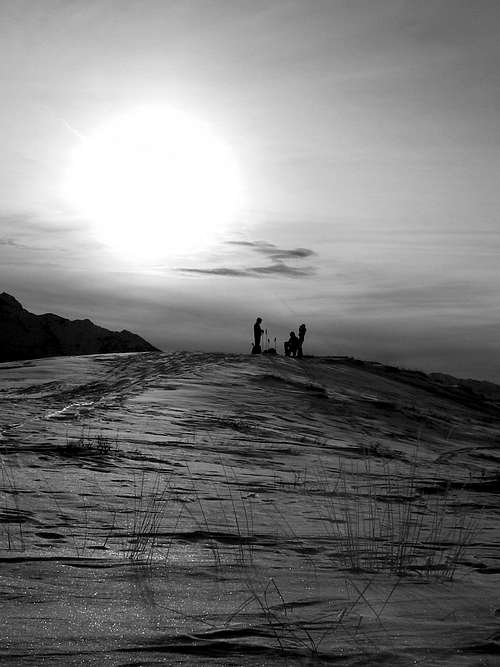
Some skiers on the summit of Little Water Peak
Because of the shallow snowpack, combined with lots of wind there is usually lots of avalanche danger on the Park City side of the ridge. Every year destructive avalanches take down trees, rip up dirt and carve themselves new avalanche paths. Use caution when skiing this ridge.
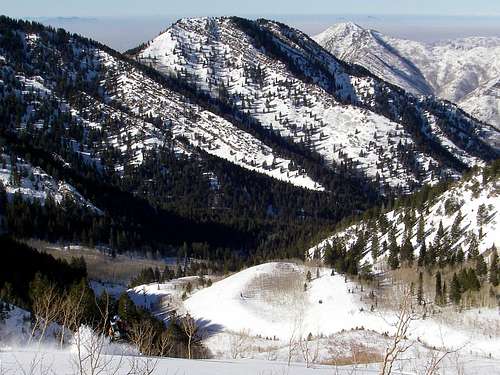
Troy skiing Gobblers Knob
Millcreek Canyon
Millcreek Canyon is known for 2 things, powder and more powder. When the rest of the Wasatch range resembles a ski resort there are still plenty of lines left over in Millcreek Canyon's many north facing drainages. Ranging from steep as hell to gentle as a bunny slope, this canyon has it all. Some would call these north facing drainages the "surface/depth hoar" capital of the Wasatch Range which = big and dangerous avalanches.
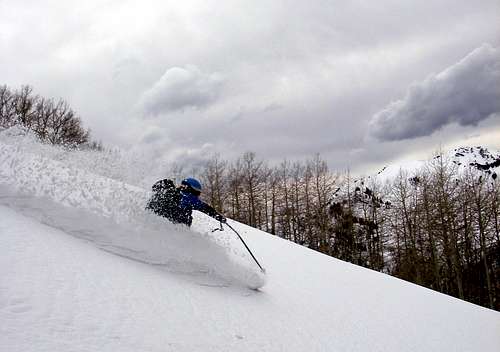
Troy skiing Big Water Gulch just before a spring thunderstorm
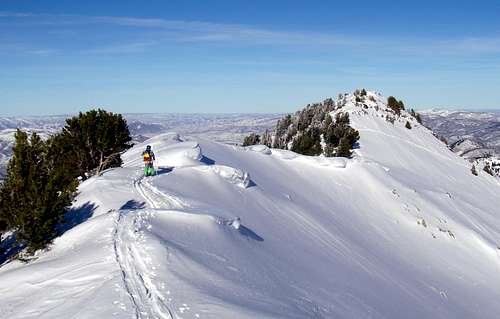
Troy skinning up to the summit of Gobblers Knob
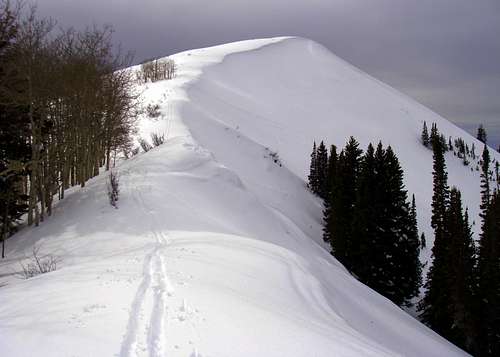
Little Water Peak
Gobblers Knob, Little Water Peak and Mount Aire are some of the more impressive peaks in Millcreek Canyon. Each one has an outstanding veiw and even better skiing. The mountains lower down in the canyon (Granduer Peak and Thanes Peak) usually do not have enough snow to ski down into the valley, however if you do catch them on a above average snowfall year they are worth the effort required.
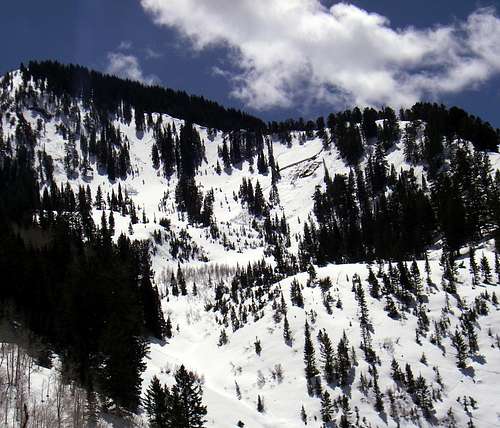
A wet slab on the Millcreek side of Mount Raymond
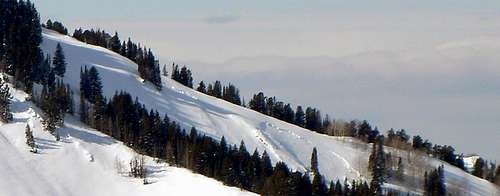
An avalanche in the Wilson Glades
UDOT has yet to close Millcreek Canyon on me over the years. Usually a car that slides off the road is the cause of road closers in this canyon. The road in the winter and early spring time is closed off about halfway up the canyon. This 5-6 mile closed section of the road is flat, popular with dog walkers and can be a living hell on really deep powder days.
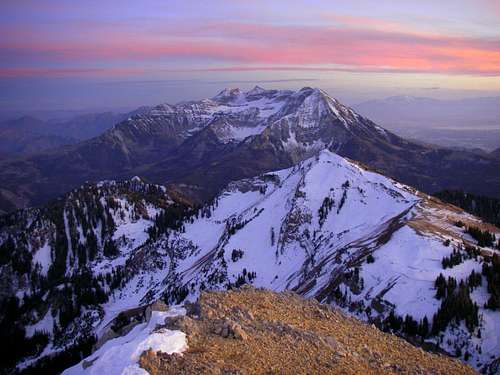
Sharing a sunset with the summit of Box Elder Peak early season
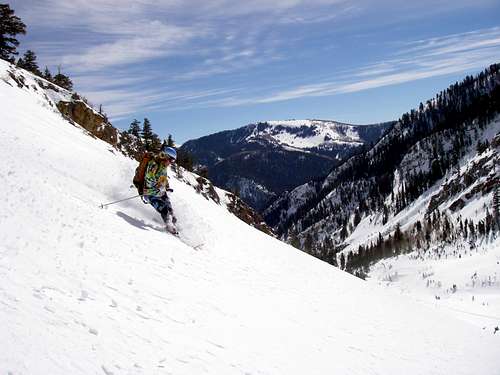
Troy skiing Mary Ellen Gulch
American Fork Canyon
If you are looking to escape the crowds you would figure that American Fork Canyon is likely to be the place. This is not so due to the allowence of snowmobilers and Heli skiers. Even the most remote peaks in the range (Mill Canyon Peak and Aunt Knolls) are skied/tracked out mid-season. Still the high elevation and variety of mountains keeps this canyon a favorite amoung the most hard core backcountry skiers.
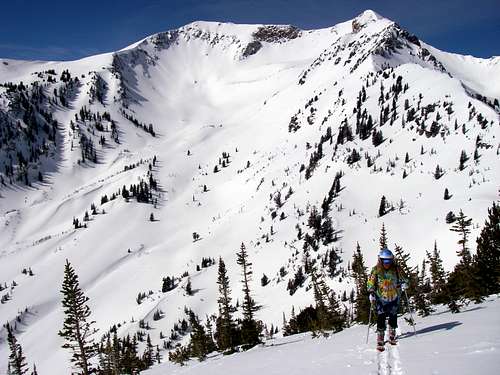
Troy skinning up Mary Ellen Gulch
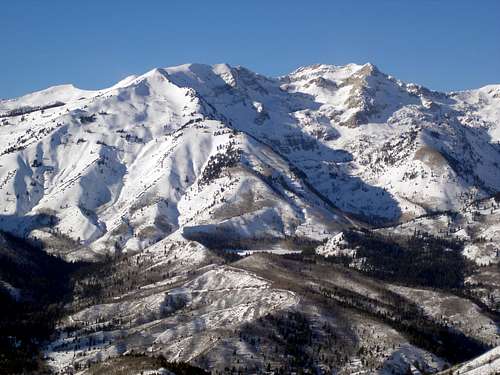
White Baldy's backside with The 3 Temptations on the left. Photo Credit ZeeJay
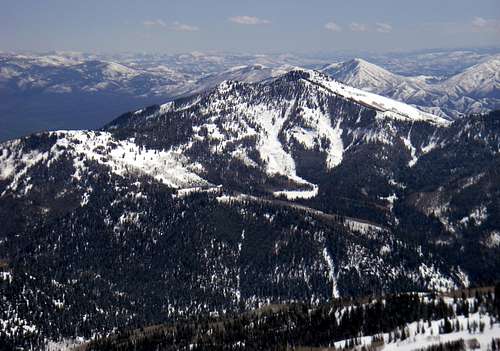
Mill Canyon Peak
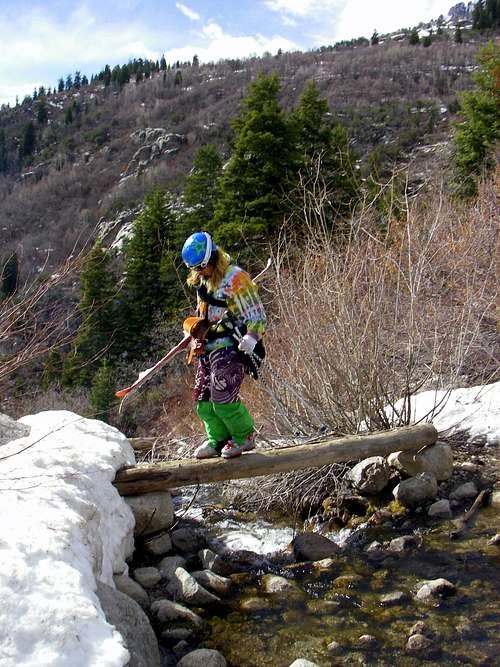
Troy crossing one of many bridges enroute to Box Elder Peak via Dry Creek Canyon
As mentioned above Mill Canyon Peak and Aunt Knolls are full of heli skiers and snowmobilers. However machines of any sort are not allowed on Box Elder Peak and The 3 Temptations, making these the crown and jewels of the canyon.
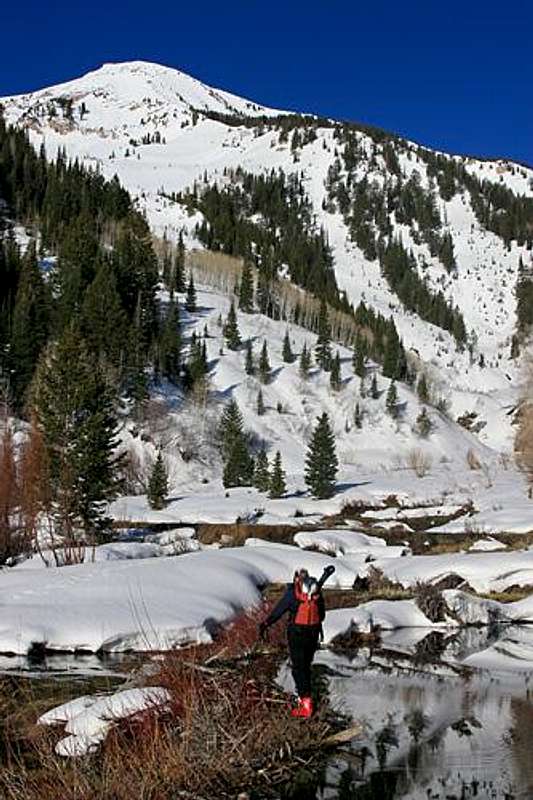
Pond skipping on the way up Box Elder Peak via Deer Creek. Photo Credit Marauders
Troy crossing one of many bridges enroute to Box Elder Peak via Dry Creek Canyon
UDOT does close the road every now and then. In the winter time the road up American Fork canyon ends at Tibble Resivor making this the offical trailhead. Access from the Heber valley, Dry Creek Canyon (Alpine) and Little Cottonwood Canyon are all vesible routes if you are trying to get into American Fork Canyon.
Pond skipping on the way up Box Elder Peak via Deer Creek. Photo Credit Marauders
 Pond skipping on the way up Box Elder Peak via Deer Creek. Photo Credit Marauders
 18 Routes