

-
 24057 Hits
-
 85.86% Score
-
 21 Votes
 Page Type:
|
Mountain/Rock |
|---|---|
 Lat/Lon:
|
40.37920°N / 105.58439°W |
 County:
|
Larimer |
 Activities:
|
Hiking |
 Season:
|
Spring, Summer, Fall, Winter |
|
Elevation:
|
10013 ft / 3052 m |

|
Overview
 Looking south from the summit of Deer Mountain toward Taylor Peak.
01 Mar 2009
Deer Mountain is far from being the loftiest in Rocky Mountain National Park. But like many lower peaks, the payoff to those who summit is fantastic views in all directions. From the summit, hikers can look down upon the gateway town of Estes Park. Views of the surrounding high country are breathtaking and those on the summit can enjoy identifying surrounding peaks and alpine parks.
The mountaintop is characterized by a broad, flat summit plateau studded by several outcrops. The highest of these outcrops is on the southern end of the summit plateau and provides great place to enjoy lunch with a nice view of Estes Park and Lake Estes to the east, as well as the high peaks to the south and southwest.
Relatively low elevation make Deer Mountain a great acclimatization hike for visitors and its proximity to Estes Park and short distance between parking and the summit make this and ideal outing for winter or for those pressed for time.
Special thanks is due to SP member joegrim, the original owner of this mountain page that laid the foundation for what you see here.
Getting There
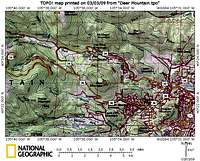 Local Area Map
Click image to enlarge
 General Area Map
Click image to enlarge
Deer Mountain sits 10 miles east of the Continental Divide in the far eastern portion of Rocky Mountain National Park. The summit lies just four miles west of Lake Estes. The nearest major airport is Denver International Airport.
There are multiple routes to the summit of Deer Mountain, and hence several options to use as starting points. Most visitors, however, will want to use the Beaver Meadows entrance to Rocky Mountain National Park to access Deer Mountain.
- If arriving from Denver and points east: Take U.S. routes 34 or 36 through Estes Park, Colorado.
- If arriving from points west or south: Take I-70 to U.S. Rt. 40., then to U.S. Rt.34 through Grand Lake, Colorado.
Red Tape
A pass is required for entry into Rocky Mountain National Park. Click here for the latest park entrance fees. For those without an annual pass, the current fees are as follows:Automobile: $20 per vehicle, valid for 7 days from the date of purchase.
Pedestrians, bicycles, motorcycles and mopeds: $10 per person, valid for 7 days from the date of purchase.
It is important to follow all rules and regulations set by the National Park Service. As this is a National Park, pets are not allowed on hiking trails.
Finally, camping is permitted in designated campsites only. This includes front-country and backcountry camping. Pay close attention to the special rules for backcountry camping in the National Park.
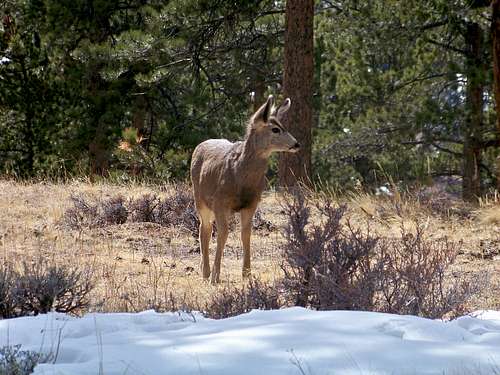
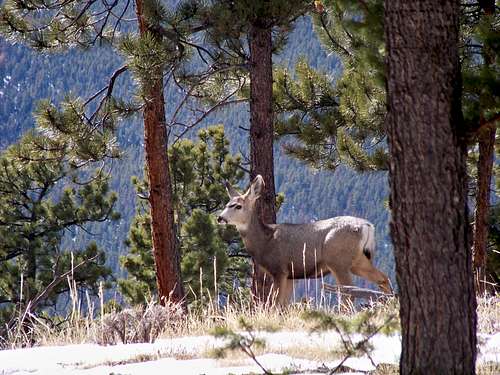
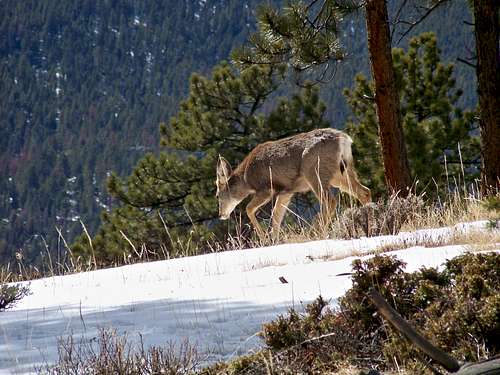
Click on images to enlarge.
Camping & Lodging
 Longs Peak from Deer Mountain Summit
01 Mar 2009
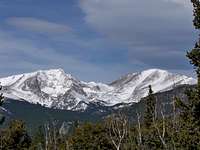 Northwest from Deer Mountain Summit
01 Mar 2009
An almost unlimited variety of camping and lodging options exist in and near Rocky Mountain National Park. With options ranging from climbers bivouacs to National Park car camping within the park and mom & pop campgrounds and motor lodges on up to luxurious multi-family cabins and high-end historic hotels, a visitor can find camping or lodging options to suit almost any need here.
 Hairy Woodpecker Feeding Chick
Photo by Arthur Digbee
CAMPING WITHIN THE PARK
CAR CAMPING
The National Park Service operates six car camping sites within the National Park: Five general use sites and one group camping site.
BACKCOUNTRY CAMPING
Backcountry camping in Rocky Mountain National Park falls in to several categories each with its own complex set of rules and regulation:
• Designated Sites
• Crosscountry Areas
• Stock Sites
• Bivouac Areas
• Winter Areas
Here are some very helpful campsite resource websites by the National Park Service:
- Detailed backcountry camping information
- List of backcountry campsites
- Rocky Mountain National Park Camping general information
LODGING NEAR THE PARK
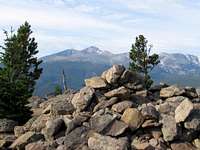 Deer Mountain summit
 Southeast view from summit
ESTES PARK
Estes Park is the eastern, and primary, gateway community serving Rocky Mountain National Park.
Visit the Estes Park Chamber of Commerce Website for detailed information about lodging in this community.
GRAND LAKE
The community of Grand Lake serves as a gateway community to the western side of Rocky Mountain National Park.
Visit The Grand Lake Chamber of Commerce Website for information about hotels, cabins and mom & pop campsites in the area.
Weather & Seasons
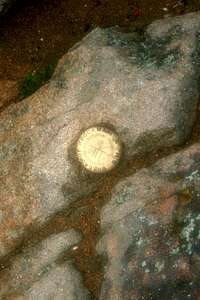 Benchmark on Deer Mountain
Photo by Arthur Digbee
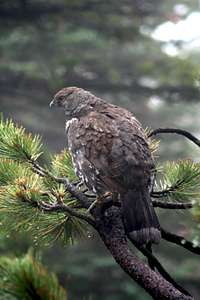 Grouse on Deer Mountain
Photo by Arthur Digbee
Deer Mountain is accessible year round except during the most severe winter weather. Large Winter and Spring snowfalls may bring deep snow requiring flotation (showshoes or skis) but heavy traffic on the trails leading to the summit likely mean a packed footpath unless snow has recently fallen.
External Links
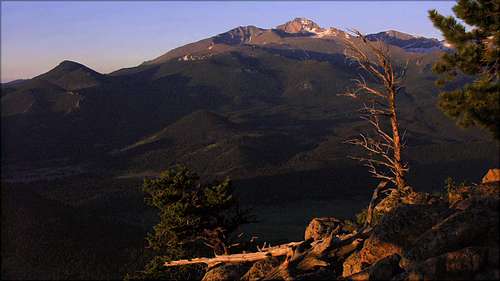 Taking in the sunrise from Deer Mountain
By Mountain Jim
Deer Mountain Trail Slideshow
 1 Routes