


 Page Type:
 Lat/Lon:
 Date Climbed/Hiked:
 Activities:
 Season:
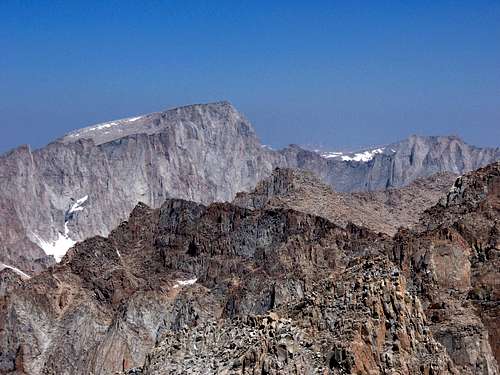


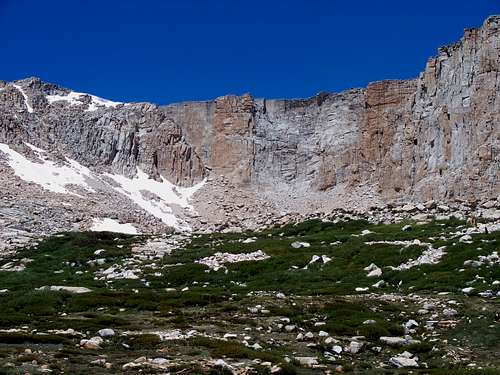
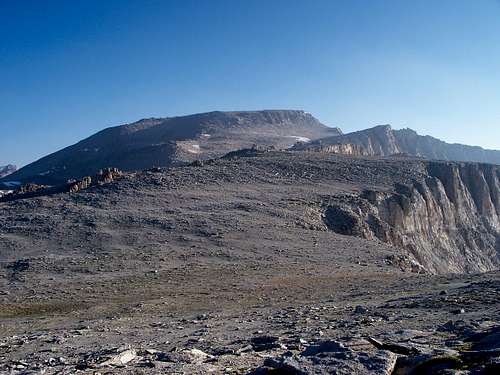
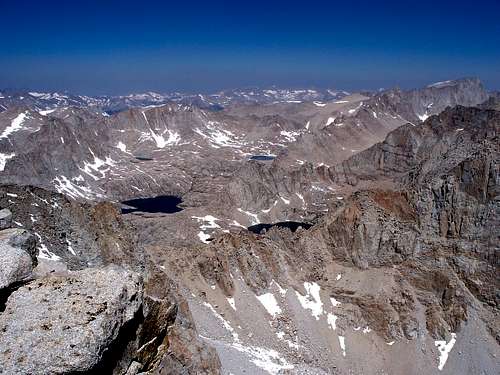

Marcsoltan - Nov 2, 2008 4:52 pm - Hasn't voted
Re: Route might have beenThank you so much for your constructive comment Mockba. The existing page you sent a link for is Mt. Langley via the "Old Army Pass" and mine is via the "New Army Pass." You may have already done this mountain and know that the two different routes are quite different. In fact the trail for the Old Army Pass splits from my route after roughly 2.5 mile from the trailhead, and it joins it back again 3 miles from the summit. This is a roughly 9 to 10 mile trip, one way of course.
I tried to attach my report to the main page on Langley by JohnK, however it doesn't
seem to have worked. I did get the exact title in the list of links, Mount Langley via New Army Pass" but when I click on it I get a different one done by Romain who had done a loop via my route. I looked around Romain's page and there was no sign of mine there either.
As far as the coordinate are concerned, I did put in my own GPS' Map Source coordinates, slightly different than the main pages' coordinates, and for some unforeseen reason my west coordinates had turned into an East one. I am sure I can take care of that from my wife's computer later, since mine has been acting funny.
However, I will attach my report to the link you sent as an alternate route. I am not sure if I should use "related, parent or what. May be you can comment on that. Thank you for such great comments and pointers. And, thank you for your understanding.
Best Regards,
Marc

Dmitry Pruss - Nov 2, 2008 7:52 pm - Voted 10/10
Re: Route might have beenNo Marc, I haven't done it, although I studied it as one possible way to sneak GeoPooch on Whitney LOL. Eastern Sierra is kind of far from here and I've hardly done anything there.
I think the problem you have with "attaching" is that there are two buttons on "attaching" page, a "Find" button up on top and the "Attach" buttin lower down. After you "found" the page you needed, and selected "Attach as parent", then you need to press the "Attach Objects" button and it makes your choice final.
GPS coordinates and East / West confusion, that may be even easier to solve. Western longitudes are negative. Just add "-" sign and it should do.
Marcsoltan - Nov 2, 2008 8:26 pm - Hasn't voted
Re: Route might have beenThank you again, MOCKBA, for all the help. I am sure I did all that you are saying about attaching it, except that I chose "related instead of parent", and it did get attached. However, when I click on my link I get a different page other than mine.
Well, I haven't attached my page to the link you gave me "Langley from OLD Army Pass" yet. But, I will choose "parent" option and do that one too.
I am sure you have noticed that I did put the coordinates in, and when I clicked on it it did take me to the correct page, eventhough I show Eastern longitude. I will try it your way by adding the negative sign.
GeoPooch would love the hike if you could bring him/her out.
Many thanks for all your time, your votes and your advice.
cheers,
marc

EasternSierra - May 20, 2010 3:57 pm - Hasn't voted
SnowHey when did do New Army Pass? I have a permit to climb Mt. Langley for the July 4th 2010 weekend and I'm wondering if New Army Pass or Old Army Pass will have less snow in the early season. Just looking at the topo map, New Army Pass has a more southern facing slope so I'm guessing that one would have less snow. Just a guess though. If anyone has some good information on this,let me know.
Marcsoltan - May 20, 2010 5:40 pm - Hasn't voted
Re: SnowWe did the hike on July 4th-2008. We got lucky because four people worked very hard to open the New Army Pass the day before we went for the summit. We got close to the pass, I still had to chop footholds in the snow because that last little bit is pretty steep. We had taken crampons and rope to belay if we had to, but we never used them. I am not sure what the situation is this year. BTW, the Old Army Pass was still brimming with snow, and we didn't see any foot prints coming up it.

dexml - Jun 30, 2010 10:20 pm - Hasn't voted
Re: SnowHey ES, Heading out to Langley this weekend too so maybe I'll see ya on the trail. Probably gonna stick to New army pass myself. I'm expecting snow on both routes but judging from the topo and other reports (http://www.summitpost.org/phpBB2/viewtopic.php?t=53516&highlight=langley&sid=aff3cdce061ba0eb905f0a04e5797016) it should have considerably less snow than New Army.
Cheers,
-Alex
Marcsoltan - Jun 30, 2010 11:11 pm - Hasn't voted
Re: SnowNew Army Pass would be my first choice too.
Sorry, not this 4th of July. Staying away from the crowds.
Good luck, have lots of fun,
cheers,
Marc

SoCalHiker - Jun 30, 2010 11:59 pm - Hasn't voted
Re: SnowI was in the Cottonwood Basin last weekend (June 26) and there was still considerable snow on top of New Army Pass. It usually has considerably less snow than Old Army Pass.
Comments
Post a Comment