

-
 9013 Hits
-
 85.36% Score
-
 20 Votes
 Page Type:
|
Mountain/Rock |
|---|---|
 Lat/Lon:
|
44.20244°N / 10.38011°E |
 Activities:
|
Hiking, Scrambling |
 Season:
|
Spring, Summer, Fall |
 Elevation:
|
5259 ft / 1603 m |

|
Overview
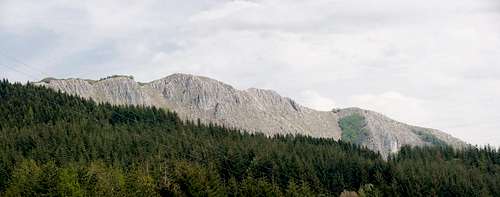 Pania di Corfino Pania di Corfino |
In the Apennino Tosco-Emiliano, the group around Tuscany's highest mountain, Monte Prado runs out in a long ridge towards the west. After gradually descending for 450m it suddenly ends in a wide face above the village of Corfino, a face that reaches more than 1km in width and 300m in height. The name of the cliff? Pania di Corfino.
Pania di Corfino is a mid sized mountain, reaching 1603m, not only set apart by its location far away from the Apennine main ridge but also by the fact that it is a limestone mountain in a range of sandstone. Thus it is a spectacular sight among the rounded mountains of the Apennino Range. It rather resembles the Dolomites-like towers of the Alpi Apuane though the rock composition is much more brittle than that of the marble mountains on the far side of the Garfagnana Valley.
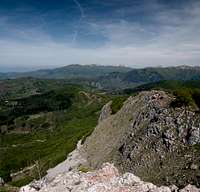 |  |  |
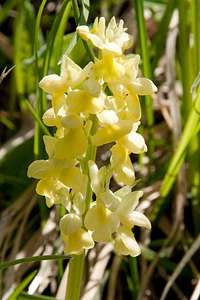
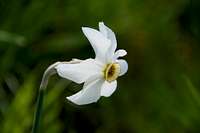
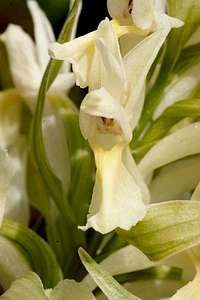
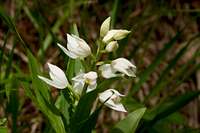
Pania di Corfino is a karst mountain and thus displays the typical features: a spectacular west face, which is so brittle that it has decomposed into a multitude of spires and towers, a summit plateau covered with a wonderful alpine meadow and dolines (i.e. depressions which were created by the collapse of underground caves). This is the perfect habitat for a variety of flowers like wild daffodils and peonies as well as an endless number of orchids. Consequently, beneath the west face of the mountain, a botanical garden has been established, displaying the variety of the area's flora. Since 1980 the area has been set aside as the Parco Naturale dell'Orecchiella.
 |  |  |
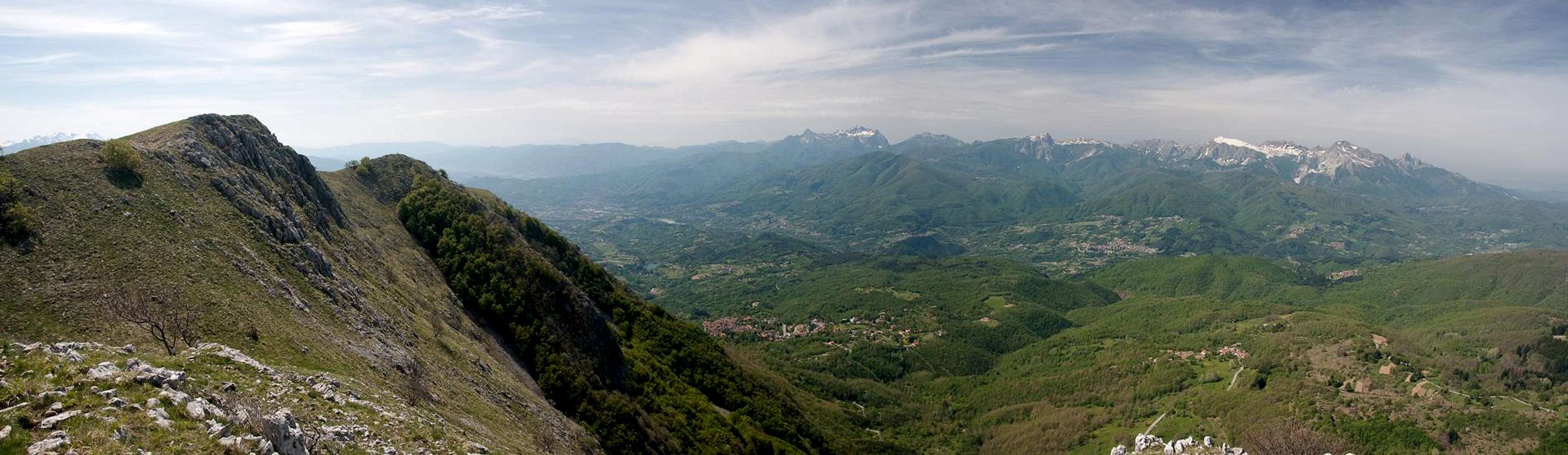
The climb to the summit of Pania di Corfino is short and makes use of the only weaakness in the west face of the mountain. Between the north and central summits of the mountain a steep gully leads to the summit plateau, a gully which can be reached by ledge like ramps from the botanical garden. The ascent is not difficult but very cumbersome as you have to scramble across the debris of the decomposing face. On the top wonderful views of the Alpi Apuane await you.
360° Summit Panorama
  |
Getting There
 |
The best trailhead for the climb to Pania di Corfino is the small parking lot at Rifugio Isera (a youth summer house). You can also start from the Centro Visitanti dell'Orichiella, which is about 1km uproad from the exit to Rifugio Isera on the Orichiella Road. However, you'll have to hike back along the road. This latter trailhead is more reasonable if you want to combine the Pania di Corfino climb with any of the hikes in the natural park.
- From Pisa or Firenze (Florence) take motorway A11 to Lucca
- Switch to SS12 in direction Abetone
- At Borgo a Mozzano switch to SP2
- At Castelnuovo di Garfagnana switch to SP72, direction Passo delle Radici
- Two km after Castelglione di Garfragnana follow the signs to Corfino
- Drive through the village and follow the signs to Parco Naturale dell'Orichiella
- Rifugio Isera is located to the right of the road (signs), which ends at the Centro Visitantes dell'Orichiella
Red Tape
 |  |  |
 |  |  |
 |  |  |
Pania di Corfino is part of the Parco Naturale dell'Orichiella, which is a precursor and an extension of the Parco Nazionale dell'Appennino Tosco-Emiliano. The usual restrictions for such parks apply. Visit the park's site for more information.
Accommodation
 Rifugio Isera underneath the west face of Pania di Corfino
The closest town to Pania di Corfino is Castelnuovo di Garfagnana. The big cities - Modena and Bologna as well as Firenze and Lucca are about an hour away from the mountain so staying there is a definite possibility.
If you want to stay closer you can make use of Agriturismo, holiday farms, which offer rooms, apartments and food. Good places are somewhat hard to find if you don't speak Italian. The site of the Parco Nazionale dell'Appennino Tosco-Emiliano has a listing here:
Lodging in Parco Nazionale dell'Appennino Tosco-Emiliano
Weather Conditions
Maps & Books
Maps
- Apennino Toscoemiliano (Maps 18 - 24)
Editioni Multigraphic
1:25000
Overview
Editioni Multigraphic on Mapfox.de
- Tuscanny - Florence (Road Map)
Freytag & Berndt
1:150000
ISBN: 978-3-7079-0281-5
Maps Online
Books
- Tuscany North / Toskana Nord
Wolfgang Heitzmann / Renate Gabriel (translation: Gill Round)
Rother Verlag
ISBN: 978-3-7633-4812-1 (English)
ISBN: 978-3-7633-4115-3 (German)
 1 Routes