


 Page Type:
|
Mountain/Rock |
|---|---|
 Lat/Lon:
|
27.05723°S / 68.48441°W |
 Activities:
|
Mountaineering |
 Elevation:
|
21286 ft / 6488 m |

|
Introduction
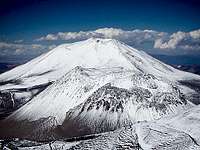 Snowy volcanoes
The name of the peak doesn't make you feel welcome. El Muerto - The dead one. If you look beyond the name it's a beautiful peak well worth to climb. It's the 16'th highest peak on the South American continent and is right on the border between Argentina and Chile. It doesn't recieve many attemps and the main reasons are: The closest neighbor is Ojos del Salado, South America's second highest peak and world's highest volcano. El Muerto is very hard to reach from the Argentinian side. It was first climbed in 1950.
The glaciers on the Argentinian/south side offers some good snow and ice climbing and a nice change from scree peaks of the Puna. It's never really steep, even if you have the choice of going up to 60 degrees, but it's long, tough and demanding. The views from the summit are fantastic!
A landscape of blue lagoons, volcanoes and the vasteness of the plateau is stunning.
Getting There
From ArgentinaNOTE: It's only the last 10 entries in the table which is relevant and they have to be used from the bottom and up when walking in.
From Chile
I don't know anything about this and am grateful for any help on this. My guess is you follow the trails to Ojos del Salado and then head for El Muerto instead.

A temporary photo!
Shot by Gremo.
Walking up the glaciers of El Muerto. In the backround, from left to right: Volcan del Viento(6028m), Nacimiento (6436m), Volcan Santiago Olmedo (6250m) and Cazadero/Walter Penck (6658m).
Red Tape
Argentina - NoneChile - A border permit is required. DIFROL is the authority.
Camping
Camping is allowed everywhere in the area and is the only way to spend the nights. The closest huts are those located on the Chilean side of Ojos del Salado, but they are too far off to be of any use for climb of El Muerto.The Weather
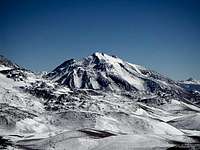 Snowy El Muerto
On the Puna the weather changes can very quick and really high winds are common. Pay close attention to the gathering of clouds around the higher peaks, it can be a sign of bad weather coming in. Blizzards are common and even if they usually only last for a short time they can be fierce.
Fiambal� - the base
The sleepy little town is perfect as a base for the climb. Three cheap hotels to choose from. A compact little centre with some supermarkets where you can find all the basic provisions. One internet caf�, an ice cream parlor and some nice thermals close by makes the picture complete.Water
It's a very dry area and on the walk in it's very hard to find water. When you're above 5000 meters there are usually penitentes fields, snow and small glaciers to melt water from. In the daytime there are small melt off streams. When walking up to or down from the high elevations be sure to bring a lot of water!When to climb and mountain conditions
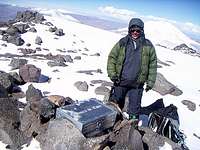 Chest on the summit
The usual months to climb in the area is in the South American summer. December, Januari and Februari. This is when it's the warmest. Even then you have to be prepared for night temperatures down to minus 20 C and on the summit it can be very cold on a chilly day. The winds makes frost bite and issue.
El Muerto is not like most of the other peaks in the area, at least if you choose to climb the south face. Be prepared with crampons, an axe and boots that really can take snow and ice. Gaiters is a must. Walking poles are really of help.
Organizing the climb
If you need a ride to the starting point at Cazadero Grande, you can either go by taxi, which will drop you on the road side, or rent a vehicle, preferable a 4x4 which can take you about 10km off road. The latter is preferable. Almost the same price and you don't have to deal with a very boring walk over a huge sand field.Jonson Reynoso is the real expert of the area. He can arrange transport, mulas, rent you some gear and has tons of information about the area.
He's located in a little shop on a corner at the main square of Fiambal�. Posters about "Direct TV" and other film related stuff is what to look for.
Altitude warning!
The elevation around El Muerto is very high. You have to be very well acclimatized before even going to the the foot of the peak. Our base camp was at 5300 meters and there were some passes over 5600 meters on the way. The place where the 4x4 or taxi drops you at is located at 3600 meters and that's high enough to get sick.Many climbers try to spend about a week around Las Grutas border post to acclimatize. A suitable acclimatization peak there is the easy San Francisco.
The walk in is long and if you get sick up there you are in deep trouble. There are two long days out, even with mula support on the lower stretches (the mulas can usually go to about 5000 meters).
I even heard of climbers with altitude sickness who had had to enter Chile illegally to get down on lower ground quicker than they could have on the Argentinian side. Better to acclimatize properly!
 2 Routes
Guillaume.Ceyrac - May 21, 2015 11:20 am - Voted 10/10
HeightHello Nadios, Recently some sources like John Biggar are reporting that El Muerto is a bit higher (thanks to new SRTM measurements) with an altitude of 6510m. This makes El Muerto a new entry on the list of Andeans +6500ers for peakbaggers...