


 Page Type:
|
Mountain/Rock |
|---|---|
 Lat/Lon:
|
53.11700°N / 3.99645°W |
 County:
|
Conwy |
 Activities:
|
Hiking, Mountaineering, Trad Climbing, Bouldering, Ice Climbing, Mixed, Scrambling |
 Season:
|
Spring, Summer, Fall, Winter |
|
Elevation:
|
3010 ft / 917 m |

|
Overview
|
" Tryfaen (3,010 ft.)… is the most remarkable rock mountain in Wales ; it has two pillar stones on its summit, from which it is often said that the name (= ' three rocks ') is derived… it is enough to point out that the assumed third stone is not there, and could not have disappeared without a trace, while the name would equally well mean 'three peaks,' which the mountain certainly has when viewed from either east or west. … The mountain is practically a ridge of rock running in a southerly direction from the head of Llyn Ogwen towards Glyder Fach, from which it is separated by a sharp dip, Bwlch Tryfaen. This dip, which may be reached either from Cwm Bochllwyd on the west or from Cwm Tryfaen on the east, offers by far the easiest ascent of the mountain." W.P. Haskett Smith - Climbing in the British Isles Volume II: Wales and Ireland (1895) |
For those familiar with British mountains, Tryfan is instantly recognisable. Its distinctive rocky, blade-like shape dominates the view from Nant Francon and from every direction it shows off nothing but steep crags and striking ridges. Although it’s the smallest of the Welsh 3,000 footers, it packs a mighty punch, for here can be found some of the best mountaineering, scrambling and rock climbing anywhere in Britain. So rocky is Tryfan, that it it’s said that it’s impossible to climb it without using one’s hands; I don't know whether or not this is true, and who would want to try such a thing? After all, it’s the quality of its climbing and scrambling that makes this mountain so special. Its rock faces are teeming with routes, from the relatively straightforward scrambles on the North Ridge to a host of technical rock climbs that litter its various buttresses and gullies. Traditionally, Tryfan was regarded as a mountain for the climbing novice, a nursery for those wanting to climb the more serious precipices of Y Lliwedd. However, today, the range of grades has been extensively broadened to encompass everything from Moderate to E5 6b – there really is something for everyone here.

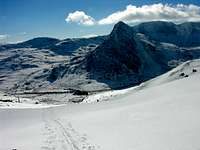
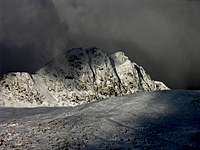
Most people ascend via the mountain’s iconic North Ridge, a Grade 1 scramble, which takes the climber from Llyn Ogwen directly to Tryfan’s monolith capped summit. Although the route is not hard, it can be modified to include harder passages, and when combined with an ascent of Bristly Ridge on Glyder Fach’s northern slope, becomes part one of the finest routes in the whole of Wales. The route can get very busy however, and for those who prefer their mountains a bit quieter, climbing early in the morning, or late on a summer’s evening, is probably the way to go.
Adam and Eve
Sitting atop Tryfan's spectacular summit are two angular monoliths, Adam and Eve. In 1798, while searching for botanical specimens, The Rev. Peter Williams alarmed his companion Rev. William Bingley by leaping across from Adam to Eve and so began the long tradition of daring individuals jumping between the two. The leap confers the upon the jumper the "freedom of Tryfan", and is made that little bit more risky (and exciting) by the presence of Tryfan's East Face, several hundred metres in height, dropping away below them.
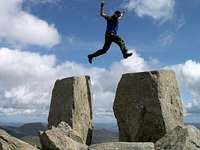 Jumping…(Photo by daveyboy) Jumping…(Photo by daveyboy) |
 …Adam…(Photo by Nanuls) …Adam…(Photo by Nanuls) |
 …and Eve(Photo by Nigel Lewis) …and Eve(Photo by Nigel Lewis) |
Routes
This section attempts to summarise what Tryfan has to offer the visiting hiker, climber and mountaineer, be they aspirant or expert. In doing so, it will inevitably lean towards giving focus to what are thought to be the most popular or highest quality routes and in doing so, will sadly miss out on some of the less known, but fondly thought of lines. The author recommends therefore, that any reader planning to visit the Glyderau should also consider consulting one of the many high quality guidebooks that are available for the area, a perhaps less than comprehensive list of which, can be found in the Guidebooks section of this page.
Scrambling
Tryfan has an enormous amount to offer the scrambler and consequently, is one of Snowdonia's most popular mountains. Its numerous faces are home to many scrambles and low end technical climbs, only a few of which are listed below. Some of these routes can easily claim to be some of the best for their grade in the country and are extremely worthwhile objectives for anyone visiting the area. For full descriptions of most of these routes see Steve Ashton’s excellent guide, Scrambles in Snowdonia. Descriptions of harder scrambles, which may also be classified as easy rock climbs, can also be found in the Climbers' Club's Ogwen guide. Please note that the following section isn’t intended to be a comprehensive guide to the mountain’s scrambles, but more of a way of pointing the reader in the right direction.
By far, the mountain’s most popular route is the scramble up it's North Ridge (Grade 1), which rises without deviation from the shores of Llyn Ogwen to Tryfan’s twin monolith capped summit. The route is wonderfully varied, with leisurely walking punctuated by steep sections of rock, generously furnished with holds and richly endowed with interesting features. The route can be made as easy or as hard as one likes, with the best line being as close to the crest of the ridge as possible. Many will combine the route with a descent of the mountain’s slightly less interesting South Ridge (Grade 1), while those looking for a long day out could do both routes as part of one of Snowdonia’s best mountain days, the Bochlwyd Horeseshoe (Grade 1).
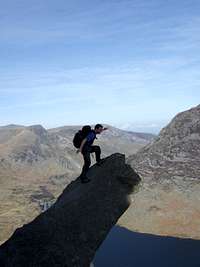 The Cannon(Photo by Nanuls) The Cannon(Photo by Nanuls) |
 The North Ridge (Photo by Nanuls) The North Ridge (Photo by Nanuls) |
 The North Ridge (Photo by Nanuls) The North Ridge (Photo by Nanuls) |
 The North Ridge(Photo by mountainmanjohn) The North Ridge(Photo by mountainmanjohn) |
By comparison, the routes on Tryfan’s East Face are climbed far less frequently, being in general, much more serious in nature. Undoubtedly the easiest of these, is an ascent of Little and North Gullies (Grade 1; Route 3 – see topo below), which is an excellent introduction to gully scrambling and takes a wondering line up Tryfan’s Central Buttress via the two aforementioned gullies.
Those with a taste for gully scrambling, but who also require something a bit more strenuous, could look to South Gully (Grade 2 or 3; Route 2), which provides continually interesting scrambling over short steps within a broad, largely scree filled gully. It’s one of the mountain’s most direct routes, taking the scrambler from the Heather Terrace directly to Tryfan’s summit. Nor' Nor' Gully (Grade 2/3) is also climbable, but suffers from an overabundance of scree and loose rock and is described in Ashton’s guidebook as "Unpleasant”. Those looking to avoid this unpleasantness can take Nor' Nor' Groove (Grade 1/2; Route 5), which is a sort of a gully within a gully and is actually rather good.
The East Face isn’t all gully scrambling though, for the buttress yield a number of interesting and arguably more exciting scrambles. South Buttress has a Grade 3 route (Route 1) that follows an intermittent line along its left flank. Central Buttress has little that could be described as a scramble, while North Buttress has a Grade 2 route (Route 4), which deviously avoids the difficulties usually associated with the rock climbs in this area via a discontinuous series of ledges, runnels and grooves.Nor’ Nor’ Buttress and Bastow Buttress also have their routes in the form of Nor' Nor' Buttress Variant (Grade 3; Route 6) and Bastow Buttress Variant (Grade 2/3; Route 7), two similar routes that provide interesting and more difficult approaches to the North Ridge.
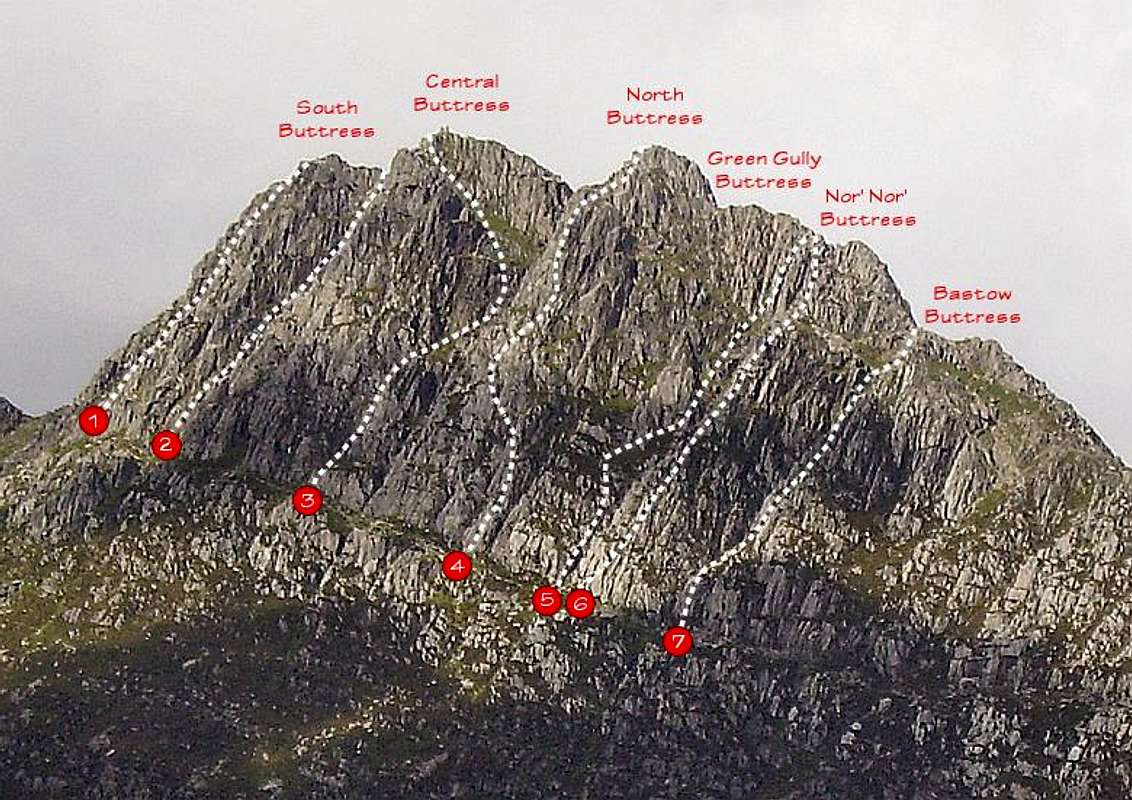
Scrambles on the East Face of Tryfan (see text for route names). Photo credits to daveyboy. See the original photo here: Tryfan from the A5.
The Milestone Buttress sport’s three interesting scrambles:
Milestone Buttress Approach (Grade 3), Milestone Gully Grade 1/2) and Milestone Continuation (Grade 3). Each of these involve pleasant, good quality scrambling over slabs, cracks and chimneys and have the added advantage of being the most easily accessible of Tryfan’s routes.
Beyond the busy Milestone Buttress the West Face promises a great scrambling adventure, with scores of broken rock faces just calling out for exploration. There are many routes here, many of which fall within that grey area that encompasses both hard scrambles and easy rock climbs. The best of these are probably the Wrinkled Tower (Grade 3) and the slightly easier West Face Route (Grade 2 or 3).
It’s also worth noting that the rock climb Tryfan Bach Arête (Diff), which is the most striking feature of the eponymous Tryfan Bach, is sometimes referred to as the Tryfan Bach Approach (Grade 3) and is occasionally used as a more interesting means of reaching the Heather Terrace and the routes on the East Face.
Rock Climbing
Tryfan is among Snowdonia’s most popular rock climbing venues and for good reason too. The mountain’s crags are described in the newly updated and lavishly presented Climbers’ Club Ogwen guide. Supplementing this detailed guide are a number of general guides, which will perhaps be more suitable for the occasional visitor; these are, in order of date published:
Rock Climbing in North Wales by Paul Williams (Constable) North Wales Rock by Simon Panton (Ground Up) North Wales Classics by Jack Geldard (Rockfax)
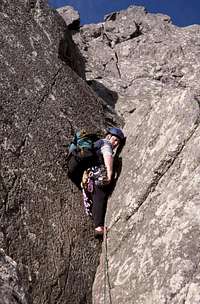 Grooved Arête (HVD)(Photo by Dan Bailey) Grooved Arête (HVD)(Photo by Dan Bailey) |
 Direct Route (VD) (Photo by DrJonnie) Direct Route (VD) (Photo by DrJonnie) |
 First Pinnacle Rib (VD 4b) (Photo by Nanuls) First Pinnacle Rib (VD 4b) (Photo by Nanuls) |
 Second Pinnacle Rib (VD 4b)(Photo by Nanuls) Second Pinnacle Rib (VD 4b)(Photo by Nanuls) |
For those interested in such things, the first guidebook to North Wales rock, Rock Climbing in the British Isles, Volume 2 Wales and Ireland, was published way back in 1895 by W.P. Haskett Smith. This was followed by a more ‘modern’ incarnation of the guidebook in 1906 in the form of G.D. and A.P. Abraham’s Rock Climbing in North Wales. The first dedicated guide to climbing in the Ogwen Valley, Climbing in the Ogwen District, was written by J.M. Archer-Thompson and published by the Climbers’ Club’s in 1910. It was the Club’s second ever guide.
As is the case throughout the UK, rock climbs on Tryfan are graded using the combined adjectival and technical grading systems. To get an idea of what this means, Rockfax have a frankly excellent table plus explanation on their website.
Tryfan Bach (SH 672 601)
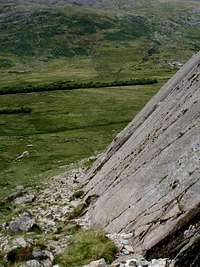
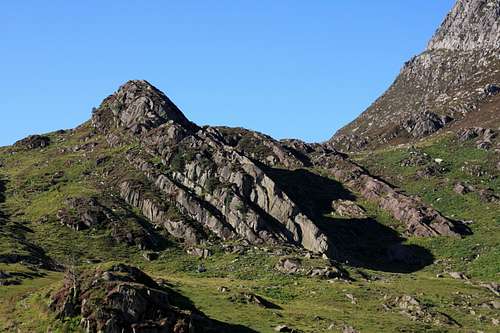
Sitting alongside Tryfan is a miniature version of the main mountain itself, known appropriately as Tryfan Bach, which literally means Little Tryfan. It’s a well know feature of the valley, located just a short walk up the hill from Gwern Gof Uchaf Farm (where there is parking and camping). The majority of the routes can be found on its expansive slabby West Slab, where lines from Moderate to Severe can be found. It’s a great venue for beginners or those looking for an easy day, the only thing preventing it from being perfect is the fact that the routes are all at least two pitches long, making it less than ideal for groups.
One hundred metres west of Tryfan Bach is an even smaller version of the mountain, Tryfan Bychan (Littler Tryfan). It takes the form of a rough-textured slab, no more than 8 metres in height, and gives a number of problems up to around 5a in difficulty. In the words of the Climbers’ Club’s Ogwen guide, “A good venue for non-strenuous bouldering”.
East Face of Tryfan (SH 664 594)
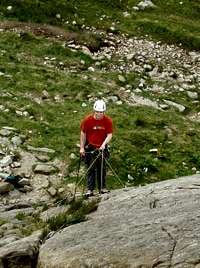
The East Face is by far, the most spectacular feature of the Ogwen Valley, it’s steep and relentlessly rocky facia belies its moderate height - Tryfan only just exceeds 3,000 feet, yet it looks like it belongs among the peaks of some Alpine range. The early pioneers of the sport were of course drawn here, and so, its precipices are steeped in climbing legend and lore. It’s said that it was here that ropes were first used to protect climbers, but this, as many stories from those early days, has never been truly verified.
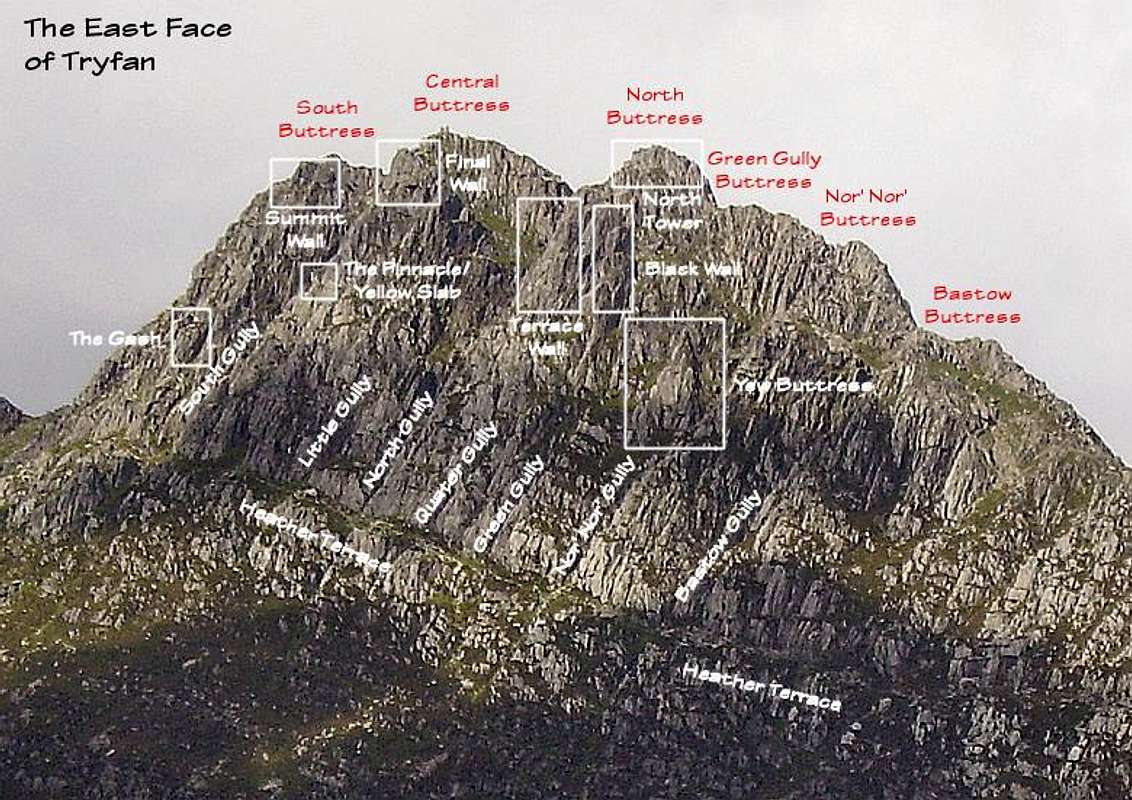
The East Face of Tryfan. Photo credits to daveyboy. See the original photo here: Tryfan from the A5.
Most of the routes start from the prominent diagonal ramp known as the Heather Terrace and above this, the face is defined by a series of strong gully lines and prominent buttresses. These features yield some of the best long routes in Wales, which benefit, thanks to their easterly aspect, from a sunny disposition and glorious views. The Face’s longer routes never exceed HVS in difficulty, however, those looking for something a bit harder, short fierce problems may be found in places, with the summit area of the North Tower proving particularly fruitful. Those in search of the traditional experience, will find their interest in the lower grades however, and classic routes such as Grooved Arête (HVD), First Pinnacle Rib (AKA Overlapping Rib Route) (VD 4b), Second Pinnacle Rib (AKA Pinnacle Rib Route) and Gashed Crag (VD) will provide hours of fun for climbers of all abilities. For those looking for something a bit harder Munich Climb (HVS 5a), Scars Climb (HVS 5a), Central Route (VS 5a) and Belle Vue Bastion (VS 4c) prove to be ever popular.
 The Milestone Buttress (Photo by Nanuls)
Milestone Buttress (SH 663 601)
The Milestone Buttress, so called after the now reinstated 10th milepost from Bangor, provides one of the Ogwen Valley’s most accessible and attractive places to climb, having routes that are both very easy and very hard and all on excellent, if not slightly polished, rock. The routes here are of a very traditional nature, many of them dating back to climbing’s embryonic years, and vary between delicate slabs, offwidth cracks and thrutchy chimneys. Consequently, the buttress has been popular with British climbers for as long as the British have been climbing. Many will have cut their multi-pitch teeth here, with routes such as Ordinary Route (D), Direct Route (VD), Rowan Route (D) and Pulpit Route (D) proving ever popular. For the mid grade climber, routes such as Soap Gut (HS 4b), Super Direct (HVS 5a) and Little Gully Wall (HS 4b) offer much interest, while Korero (E6 6b), Au Suivant (E3 6a) and the Wrinkled Retainer (E5 6c), which may not be up to the standards of some of the valleys other hard routes, are well worth seeking out by those with the ability.
West Face of Tryfan (SH 663 507)
More broken and less dramatic than its eastern counterpart, the West Face of Tryfan is often ignored by visitors to the Ogwen Valley.There is no real good reason for this, other than perhaps the limited breadth of the grades on offer, as many of the lines here are rather good, particularly if you’re looking for long mountaineering style routes. Routes such as Columbyne (VD), Wrinkled Slabs (M) and Cannon Ridge (S) are well worth a look and can offer good alternative approaches to the North Ridge for those looking for a bit more of a challenge. Most fun can be had however, by exploring the face’s ramshackle buttresses, chimneys and slabs at will, making up one’s own routes and moving wherever looks most pleasurable.
Winter Climbing
 North Ridge Winter Ascent (Photo by BigLee)
Unfortunately the close proximity of Tryfan to the sea and the frequent arrival of Atlantic depressions, which push warm, moist air over the area, even in the middle of winter, mean that climbing conditions are often infrequent and unreliable. Having said that, the last couple of winter’s (2009 and 2010) have been pretty damn good and if you’re lucky enough to be in the area when conditions are right, then the mountain offers one of the most interesting winter climbing venues in Wales.
Winter routes in Snowdonia are graded using the Scottish Winter Grading system, which uses ascending Roman numerals to rate the difficulty of climbs. The system can be difficult to get to grips with for those unfamiliar with it, since it makes no distinction between snow ice, water ice and mixed routes. Therefore, when choosing a route, reading the description is critical.
There are currently three sources of route information for the Glyderau. These are, in order of date published:
Welsh Winter Climbs by Malcolm Campbell and Andy Newton (Cicerone) Welsh Winter Climbing by Mark ‘Baggy’ Richards (Ground Up) Welsh Winter Climbs Wiki style site
By far, Tryfan’s most popular winter route is the 600 metre long North Ridge (Grade II), which roughly follows the line of the summer scramble. The difficulties of this route increase gradually as the climber gets higher, however, nearly all difficulties are avoidable with the right route choice. The upper section can be very icy, and if the crest of the ridge is followed religiously it can be both exposed and awkward. A Descent is probably best made by the mountain’s South Ridge, which has climbing to around Grade I.
East Face of Tryfan (SH 664 594)
The East Face, which can be accessed via the Heather Terrace, is home to a number of long routes, mostly of the gully variety and mostly in the lower grades. When frozen and covered in snow, routes that usually take the form of unattractive summer scrambles become far more rewarding winter lines. On the face’s northern end, these are Bastow Gully (Grade I) and Nor' Nor' Gully (Grade II), while in the south, slightly harder climbing can be found in North Gully (Grade II/III), Little Gully (Grade I/II) and South Gully (Grade III). Due to the nature of gully climbing, these routes can become quite unpleasant if conditions are more marginal. Lots of snow and ice are definitely needed here.
Those looking for something a bit harder may want to turn their hand to Green Gully (Grade III/IV) and Deffing Out the Ben (Grade IV). The former route appears relatively easy to begin with but soon becomes more serious, taking a series of short chimneys, followed by an exit over several jammed boulders. The latter follows a logical line up the North Buttress; in all respects it‘s a very enjoyable line, however, exceptional conditions are needed for a complete ascent.
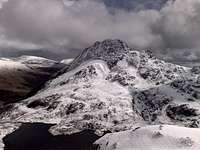 Tryfan(Photo by Georgen) Tryfan(Photo by Georgen) |
 The North Ridge (Photo by BigLee) The North Ridge (Photo by BigLee) |
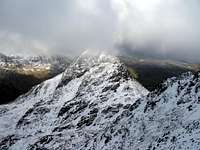 The South Ridge(Photo by igneouscarl) The South Ridge(Photo by igneouscarl) |
West Face of Tryfan (SH 663 507)
Although the best routes on Tryfan are all found on its East Face, just to the right of the Milestone Buttress are several short ice routes that are worthy of mention.
Furthest left are Way off Route (Grade II/III) and the more interesting (if in condition) Direissma (Grade V); the latter tackling a great hanging icicle of some 10 metres height. Just to their right is an easy ice and snow gully known as Down Climb (Grade II). The descent from these three routes can prove problematic and is best achieved by an abseil, or by climbing down Down Climb! If neither option appeals, then a long traverse can be made towards the North Ridge.
100m to the right of the preceding area, is an ice smear that runs down some slabs just to the left of a faint gully, which when in condition holds a route known as Trivial Pursuit (Grade II). The route follows the aforementioned ice smear before disappearing rightwards into the gully. A safe descent can be made via some heather ledges to the south. Another 100m up the right is a rocky rib with a couple of trees growing on it. Just to the right of it and before the huge gully is a large expanse of iced slab which offers a good pitch known as Dead End Slab (Grade III). Descent however, can be difficult and it is best to carry on climbing up easy ledges to the right to gain another rock rib, which is crossed into the huge gully and hence your escape.

Nant Ffrancon with Pen yr Ole Wen on the left and Tryfan on the right (Photo by Nanuls)
Bouldering
Despite being better known for its trad routes, Tryfan’s bouldering is very much focused around the boulders that lie at the foot of the Milestone Buttress, although there are also quality problems to be found further up the mountain side.
There are a growing number of excellent guidebooks that describe, in various degrees of detail, the bouldering problems here. For the climber who is more interested in trad and sport routes than bouldering, the Climbers’ Club’s Ogwen guides and Ground Up’s North Wales Rock have sections on bouldering, the former guide being the better of the two because it provides much more detail. Those after something a bit more comprehensive should look no further than Simon Panton’s North Wales Bouldering / Bowldro Gogledd Cymru, an excellent bilingual guide that is entirely dedicated to the art of bouldering.
The Milestone Buttress Boulders (SH 662 601)
The boulder field below the eponymous buttress is home to a number of superb problems that range from easy strolls to intense pump-fests. Unfortunately, the quality of the landings does not always match those of the problems and therefore, having a decent sized mat and a friend or two to provide protection is advisable. Grades are, for the most part, at the higher end of the spectrum, with problems such as The Pit and the Pendulum (V8) and Pit Traverse (V9) offering the greatest challenges. For those mere mortals (such as myself), who lack superhuman strength, ability or the time, the area also offers some excellent mid grade problems from around V2 to V6, as well as a handful of less interesting easier V0ish lines, which may help pass the time.
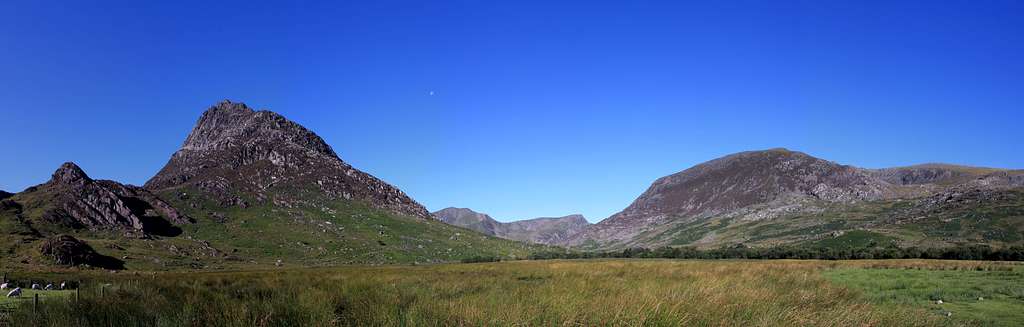
Tryfan and Cwm Ogwen (Photo by Nanuls)
The Orion Boulder (SH 659 598)
This isolated monolith is a touch less accessible than Tryfan’s main bouldering area, but is worth seeking out by the mid grade boulderer. It can be found some 150 metres left of Clogwyn Bochlwyd in a slight depression, not far from the path used to access Tryfan’s West Face. It’s home to just four problems, graded V2 to V4. All problems are worthy of attention, however, the real star (literally if you speak Welsh) of the boulder, is Seren (V4), an absorbing and unquestionable classic line. It probably makes the trip worthwhile all on its own.
Mountain Conditions
This section displays the mountain conditions for the Snowdonia National Park, of which Tryfan is a part. Click on the widget for maps and further details.
This Snowdonia weather forecast is generated by the Met Office Weather Widget
When To Climb
Tryfan can be climbed at anytime of the year via the North or South Ridges, however in poor conditions some routs are best avoided particularly if visibility makes route finding difficult. Of course this all depends on ones ability as a mountaineer/climber, and what might be comfortable for some may seem daunting for others. It is worth noting that some areas of rock, particularly those that have been heavily abraded, can become very greasy when wet.
If your lucky enough to climb the mountain in winter conditions then an ice axe (or ice axes on the harder routes), crampons, a helmet, a rope and a descent winter rack (if going for a more serious route) are all essential.
Red Tape and Access
No red tape or access issues here!
For climbers, hill walkers and mountaineers, the British Mountaineering Council (BMC) runs a Regional Access Database, which holds mountain/crag specific information on matters of conservation and access, including issues such as nesting restrictions, nature designations and preferred parking.
If you are in any doubt about any particular access arrangement, or need to report an incident, you should contact your local BMC Access Representative or the BMC Access Officers for Wales: Elfyn Jones.

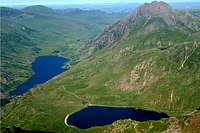
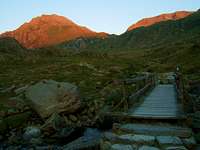
Getting There
Conveniently, Tryfan is located very close to the A5 meaning that there isn't a long approach to the bottom of the mountain making it probably the most accessible mountain in Snowdonia.
If approaching from the north or west, e.g. from Liverpool or Hollyhead, turn off the A55 and onto the A5 at the large junction (SH 593 694) that sign posts for Bethesda and follow the road until Llyn Ogwen where parking is available.
If coming from the east, take the A5 through Bettws y Coed (SH 798 599) and Capel Curig (SH 719 580), which will take you directly to the base of the mountain.
If driving from the south, take the A470 through Blaenau Ffestiniog (SH 700 458) to Bettws y Coed, and turn off onto the A5 towards Bethesda which will take you the same way as if coming from the east.
There is plenty of parking along the A5 near Tryfan, some of which you have to pay for, some of which you don't. My advice is to never bother with the official car parks and just park along the roadside. There is a wide 'pavement' type verge on the southern side of the road that can easily accommodate the width of a car or minibus, and is completely free and never full (even on bank holidays). It also allows you to park even closer to the base of the mountain and the start of the path.
Camping and Accommodation
There is plenty of camping in close proximity to Tryfan, with the following three sites all just to the mountain's east:
Gwern Gof Uchaf Campsite Gwern Gôf Isaf Campsite and Bunkhouse Garth Farm Campsite
There are also a number of YHA hostels in the area, the nearest of which is Idwal Cottage, a short walk from the base of the mountain. The Plas y Brenin National Mountain Centre in Capel Curig also has a bunk house, and has its own indoor climbing wall if you still feel energetic after your day on the mountain. Also the nearby towns of Capel Curig, Bettws y Coed and Bethesda all have various hotels, hostels, B&Bs and campsites.
Maps
Guidebooks
General
Snowdonia: The Official National Park Guide
Hiking
Cicerone Guide: The Mountains of England and Wales: Volume 1 WalesCicerone Guide: Hillwalking in Wales Vol 2Cicerone Guide: Hillwalking in Snowdonia
Scrambling
Cicerone Guide: Ridges of Snowdonia (Also includes hiking routes)Cicerone Guide: Scrambles in SnowdoniaCicerone Guide: The Ridges of England, Wales and Ireland (Also includes rock climbs)Northern Edge Books: North Wales Scrambles Scrambles and Easy Climbs in Snowdonia (Also includes rock climbs)
Rock and Winter Climbing</p align="left">Climbers' Club Guide to Wales: Ogwen (Also includes bouldering problems)Ground Up Guide: North Wales Rock (Also includes bouldering problems)Rockfax Guide: North Wales Classics(Also includes winter climbs) Constable Guide: Rock Climbing in SnowdoniaThe Long Routes: Mountaineering Rock Climbs in Snowdonia and the Lake Districtn-soul Guide: North Wales Bouldering/Bowldro Gogledd CymruCicerone Guide: Welsh Winter ClimbsGround Up Guide: North Wales Winter Climbing
Beta Sites
North Wales BoulderingRockfax Route DatabaseUKClimbing.comWelsh Winter Climbs
External Links
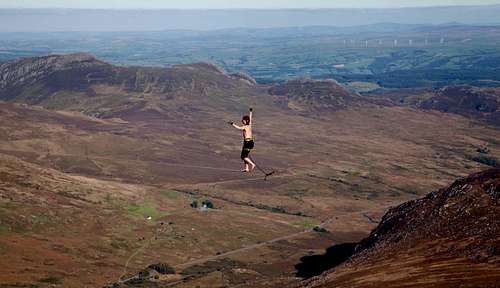 Highline on Tryfan (Photo by mills)
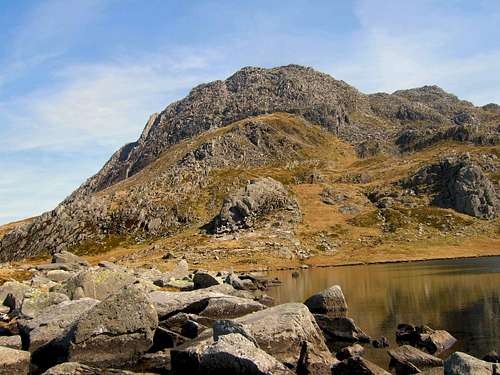 Tryfan's West Face (Photo by JoeHarris)
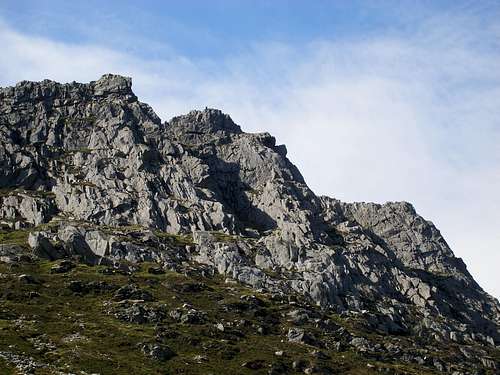 Tryfan's East Face (Photo by Nanuls)
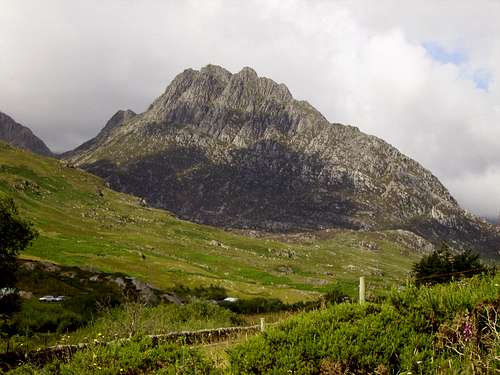 Tryfan from the A5 (Photo by daveyboy)
Government Bodies and Official Organisations
Snowdonia National Park Authority
Association of National Park Authorities
Royal Commission on Ancient & Historical Monuments in Wales
Hiking, Climbing and Mountaineering Organisations and Companies
British Mountaineering Council
Plas y Brenin National Mountain Centre
Weather
Tourist Information
North Wales Tourism Partnership
Local Information from Gwynedd.com
Local Information from Snowdonia Wales Net
Travel
Welsh Public Transport Information
Accommodation
Youth Hostel Association in Wales
Maps and Guidebooks
Cordee Travel and Adventure Sports Bookshop
Wildlife and Conservation
 8 Routes